
The Tragedy of Good Luck
This C1 advanced lesson examines life’s unpredictability through the story of a man whose lost dog leads to a life-saving medical discovery. Students explore philosophical concepts like the butterfly effect, determinism, and Eastern philosophies while discussing how seemingly negative events can produce positive outcomes. The lesson develops critical thinking and storytelling skills through video analysis, personal reflection, and creative narrative exercises.
Lesson overview
- Explore philosophical concepts about fate, chance, and decision-making
- Analyze a video story about unexpected life events
- Practice advanced vocabulary related to medical and emotional experiences
- Develop storytelling techniques using plot twists and narrative structures
| Level | Vocabulary | Video Length | Lesson Time |
| C1 / Advanced | 10 words | 5:55 min | 60-90 min |
Vocabulary
- Elude
- Devastated
- Affection
- Hit it off
- T-boned
- Benign
- Conscious / Unconscious
- Malignant tumor
- Visceral sensation
- Scalp
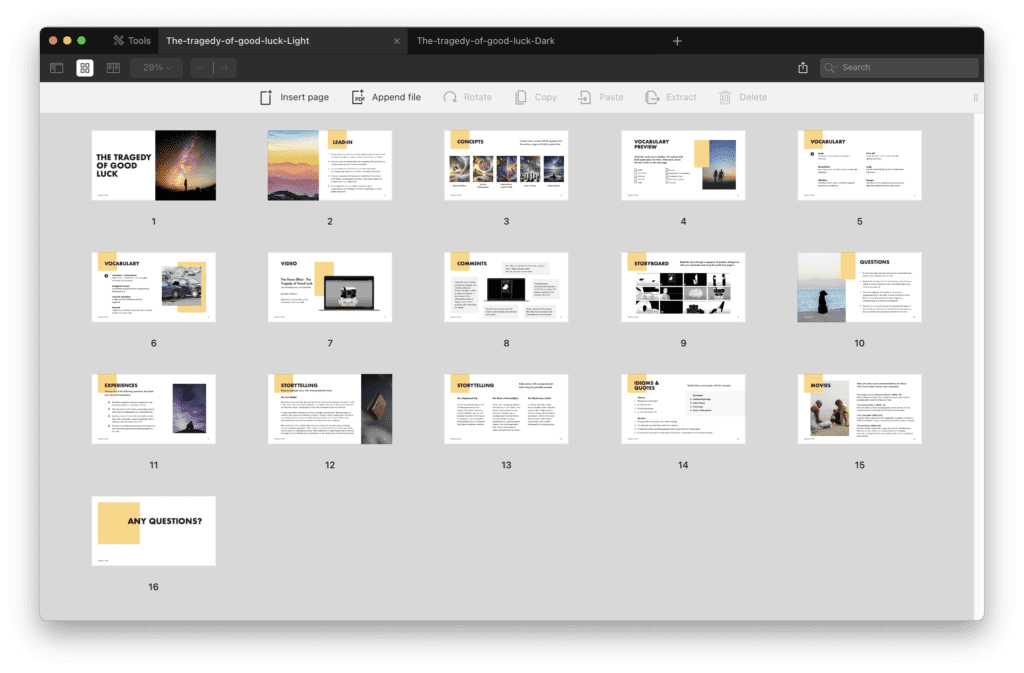
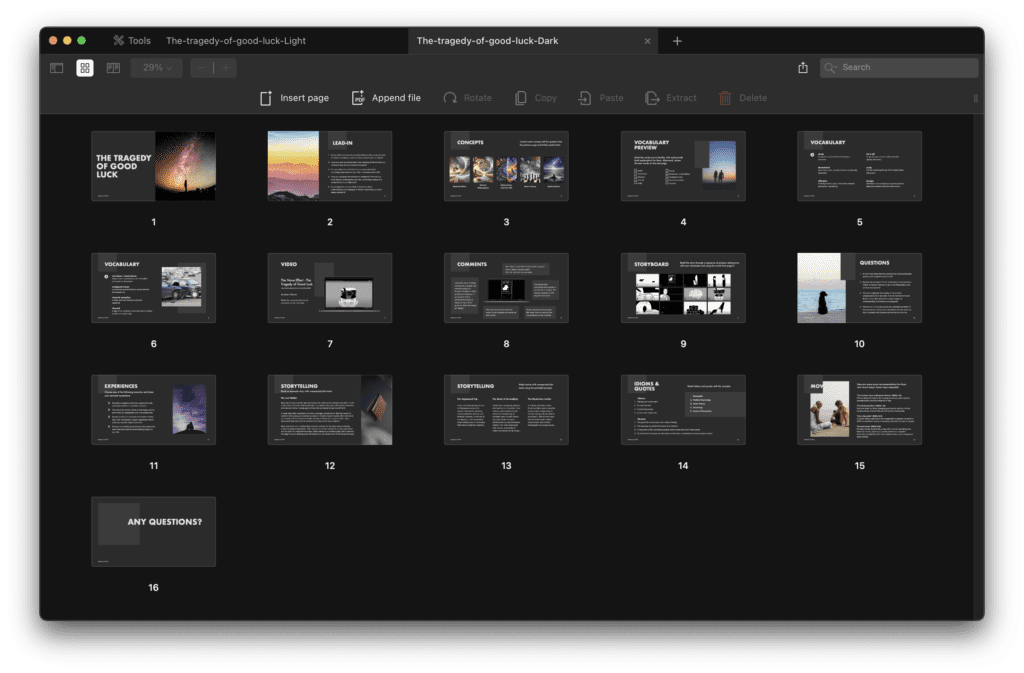
Contents
- Lead-in
- Concepts
- Vocabulary Preview
- Vocabulary
- Video
- Comments
- Storyboard
- Questions
- Experiences
- Reading
- Storytelling
- Idioms & Quotes
- Movie Recommendations
Start with the lead-in questions on page 2 about fate and life choices. Pair these with the philosophical concepts activity on page 3, where students match ideas like the butterfly effect and existentialism to those opening questions. This gives them something to hold onto before they hit the vocabulary and story.
Go through the vocabulary preview on pages 4-6. Words like “malignant tumor,” “visceral sensation,” and “t-boned” will need attention—have students guess meanings first.
Play “The Nova Effect” video. Give students a moment after; it’s an emotional one. The comments section on page 8 is good for discussing different takes on luck and fate. The storyboard activity on page 9 checks comprehension—students retell the story in order using the new vocabulary. Then move to the discussion questions on page 10 about life’s fragility and luck.
Page 11 lets students share their own stories about unexpected life events. Show them the example on page 12 before they write their own using the prompts on page 13. Finish with the idioms and quotes matching on page 14. If there’s time and interest, the movie recommendations can extend the conversation.
