
The Space Race Never Ended
This C1 lesson uses a shortened and adapted story from astrophysicist Neil deGrasse Tyson to get advanced students thinking critically about space exploration, geopolitics, and national rivalry. Students read about real events from the space race, from Sputnik to the Artemis program, and discuss whether countries explore space for science or for power. The lesson works well with adult learners who enjoy current events and big ideas.
Lesson overview
- Discuss key moments in space history using a lead-in timeline activity
- Learn and practice 10 C1 vocabulary words in context, including geopolitics, languish, and leapfrog
- Analyze the political motivations behind NASA, Apollo, and the Artemis program
- Design a Mars landing plaque and defend every creative decision in discussion
| Level | Vocabulary | Reading Time | Lesson Time |
| C1 / Advanced | 10 words | 1079 words / 5 min | 60-80 min |
Vocabulary
- hollowed-out
- sovereign
- battlecry
- leapfrog
- benchmark
- reactive
- proactive
- geopolitics
- languish
- sustain
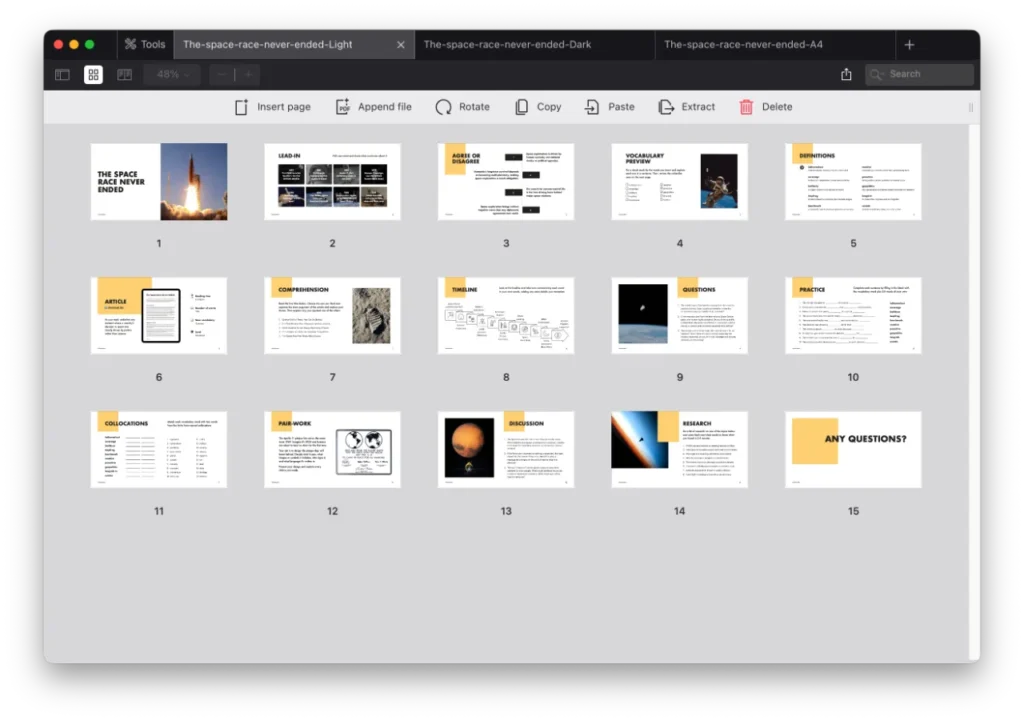
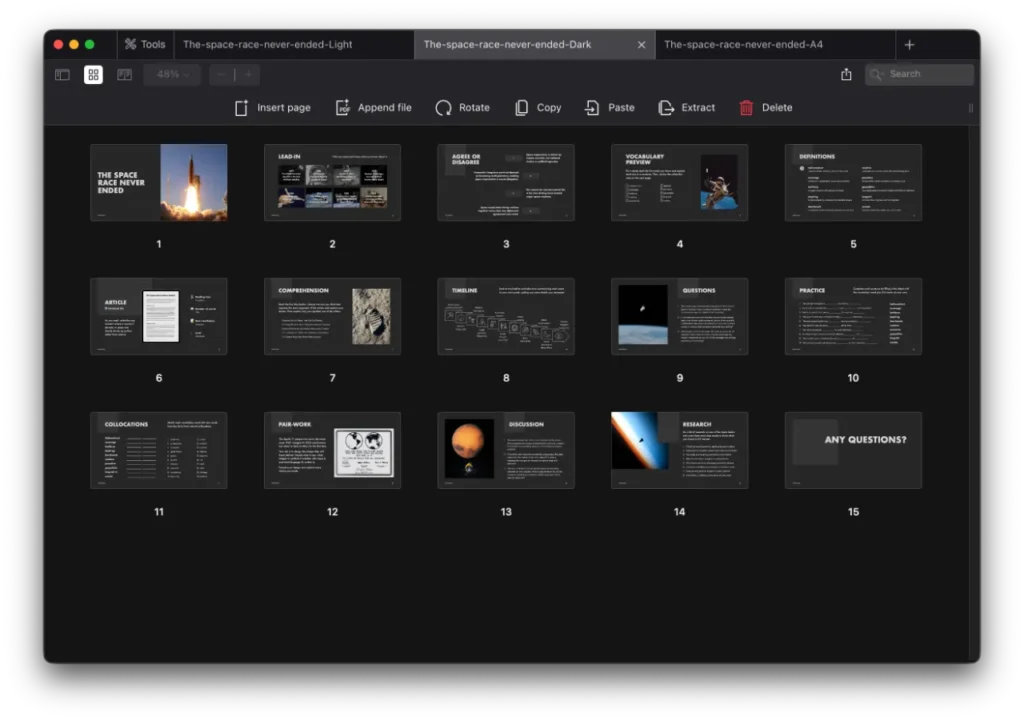
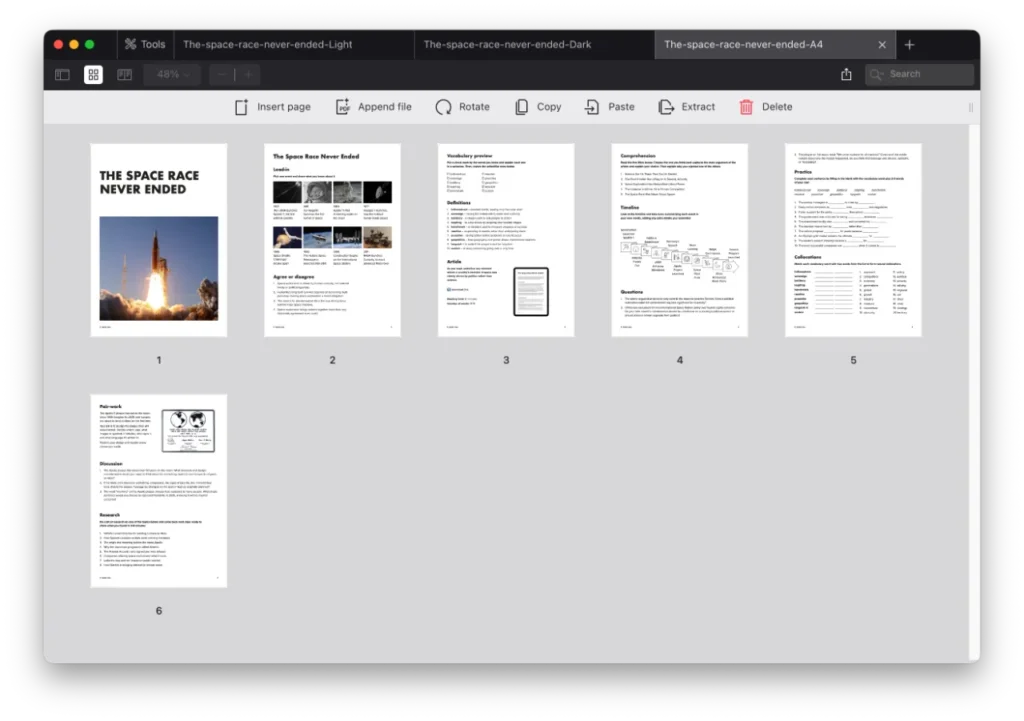
Contents
- Lead-in
- Agree or Disagree
- Vocabulary Preview
- Definitions
- Article
- Comprehension
- Timeline
- Questions
- Practice
- Collocations
- Pair-work
- Discussion
- Research
Start with the lead-in timeline. Students pick one event from the list and share what they know. This works well because it activates background knowledge before the reading and quickly shows you who has strong opinions on the topic. Give students two or three minutes to think before sharing. Don’t correct facts at this stage. Let them talk and build interest.
The agree or disagree statements come next. There are 4 statements in total. Don’t try to cover all of them. Pick four or five that feel most relevant to your student and let the conversation run. At C1 level, students should be pushed to justify their position with examples, not just say agree or disagree. A useful prompt here is “what would someone who disagrees say?” This pushes them out of easy answers.
The article is adapted from a Neil deGrasse Tyson YouTube talk and runs to about 1,100 words. The reading task asks students to underline moments where political decisions drove space exploration rather than science. This keeps them actively engaged rather than reading passively. After reading, the comprehension task asks them to pick the best alternative title from five options and explain their choice. This works well as a pair activity before open class discussion.
The vocabulary practice has two stages. The sentence completion task asks students to fill in the blank with the vocabulary word plus two or three words of their own. This is harder than it looks because students have to produce a natural phrase, not just drop in a word. The collocation task asks them to match each word with two words from a list of twenty. Go through answers together and ask students to say the full collocation aloud to build pronunciation confidence.
Wrap up with the Mars plaque activity. Students design a plaque for the first Mars landing, decide what it says, what symbols it includes, who signs it, and what language it uses. This works best in pairs. Give them five minutes to design and five minutes to present. The follow-up discussion questions push deeper into ideas about legacy, language, and what humanity wants to say about itself.
