
The Science of Colds

This B2 lesson breaks down the science of how colds actually work and why being cold makes you more likely to catch one. Students separate facts from myths, learn vocabulary like “pathogen,” “mucus,” and “airway,” and watch a one-minute video that explains what really happens inside your body during winter. The three role-plays at the end are hilarious and give students a chance to use medical vocabulary while being as dramatic as they want.
Lesson overview
- Sort eight statements about colds into facts and myths and explain your reasoning
- Learn eight science vocabulary words about viruses, the body, and immune defense
- Watch a short video and complete a listening gap-fill about how cold air affects your airways
- Role-play three funny medical scenarios including an overly dramatic patient and a conspiracy theory teacher
| Level | Vocabulary | Video Length | Lesson Time |
| B2 / Upper-Intermediate | 8 words | 1 min | 60 min |


Vocabulary
- airborne virus
- airway
- mucus
- pathogen
- moist
- replenish
- viral particle
- susceptible
Contents
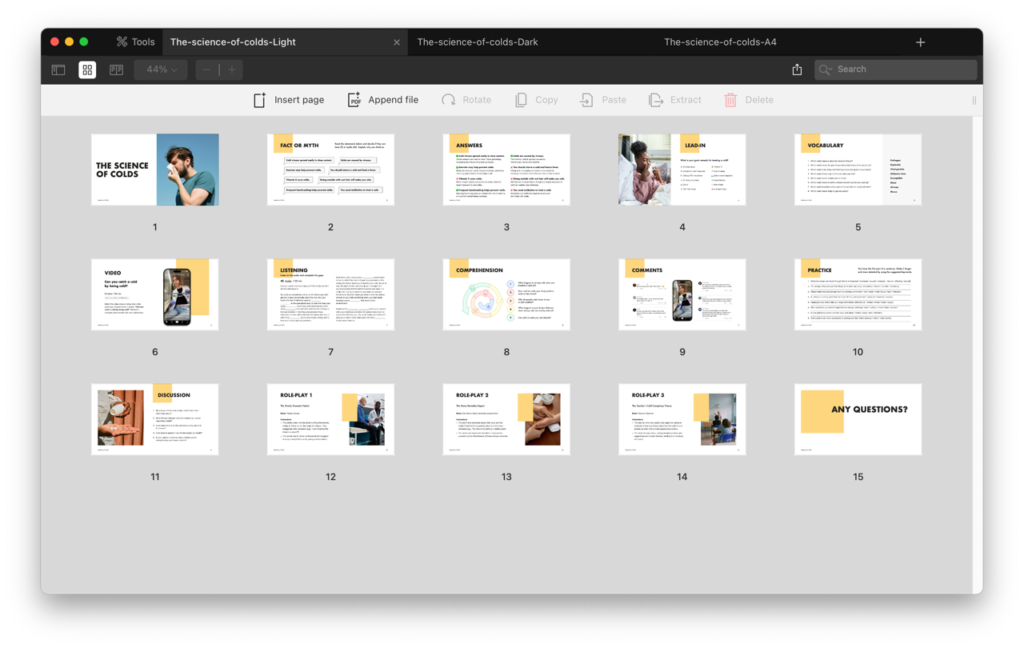
- Lead-in: Fact or myth
- Answers
- Common remedies
- Vocabulary
- Video
- Listening
- Comprehension
- Comments
- Practice
- Discussion
- Role-play
The fact or myth activity makes a strong opener. Students decide whether eight statements about colds are true or false before seeing the answers. “Going outside with wet hair will make you sick” and “You need antibiotics to treat a cold” are the two most common wrong answers. Let students debate in pairs before revealing the truth. The answer key explains each one clearly, so go through it together and ask if anything surprised them. Then do the quick poll about cold remedies. Students pick their go-to treatment from a list that includes chicken soup, garlic, vitamin C, and “just ignoring it.” This always starts a fun conversation about home remedies from different countries.
Cover the eight vocabulary words before the video. Use the question-based matching format on the slide. “Which word means a virus that travels in the air?” leads to “airborne virus.” “Which word is the sticky stuff that traps dust and germs?” leads to “mucus.” Students at B2 level often know “virus” and “immune system” but struggle with more specific terms like “pathogen,” “viral particle,” and “susceptible.” Give clear, physical examples: “Your airway is the tube that brings air to your lungs” or “Susceptible means your body is more likely to get infected because its defenses are weak.”
Play the video once for general understanding. It answers the question “Can you catch a cold by being cold?” in about a minute. Then play it again as audio for the gap-fill exercise. Students fill in nine missing words from the transcript. The key words are “airborne viruses,” “airway,” “mucus,” “pathogens,” “moist,” “replenishing,” “viral particle,” and “susceptible.” After checking answers, work through the five comprehension questions that test whether students understood the cause-and-effect chain: cold air damages airway cells, damaged cells produce less mucus, fewer defenses mean viruses get through more easily.
The sentence expansion exercise asks students to take eight short sentences and make them longer using provided keywords. This builds fluency because students practice connecting ideas and adding detail. After the practice, the discussion questions shift to broader health topics like hydration, air quality, and nutrition. End with the three role-plays. The overly dramatic patient is always a hit because students get to exaggerate wildly. The home remedies expert lets them invent ridiculous cures. The conspiracy theory teacher gives the whole class a chance to be absurd together. These role-plays use the medical vocabulary in a low-pressure, high-energy way that’s perfect for wrapping up.
