
The Power of Choice
This B1 lesson looks at how small daily choices shape our habits and routines. Students watch a short motivational video, compare good and bad daily choices, and practice describing routines using gap-fill timelines and discussion questions. It’s a relatable topic that gets intermediate learners talking about their own habits and what they’d like to change.
Lesson overview
- Learn daily routine vocabulary like “snooze the alarm,” “stay up late,” and “go with the flow”
- Watch a short film about good and bad choices and compare notes with a partner
- Practice describing a full day of habits using guided gap-fill timeline activities
- Discuss personal routines, phone habits, and motivation through paired speaking tasks
| Level | Vocabulary | Video Length | Lesson Time |
| B1 / Intermediate | 15+ phrases | 2:20 min | 60 min |
Vocabulary
- Get up
- Make the bed
- Check the phone
- Brush your teeth
- Breathe in fresh air
- Eat breakfast
- Wash the dishes
- Drink coffee
- Watch videos
- Exercise
- Work
- Read a book
- Stay up late
- Go for a walk
- Drink water
Contents
- Lead-in
- This or that
- Video preview
- Video
- Questions
- Timeline
- Comments
- Your comment
- Discussion
- Worst day ever
- Best day ever
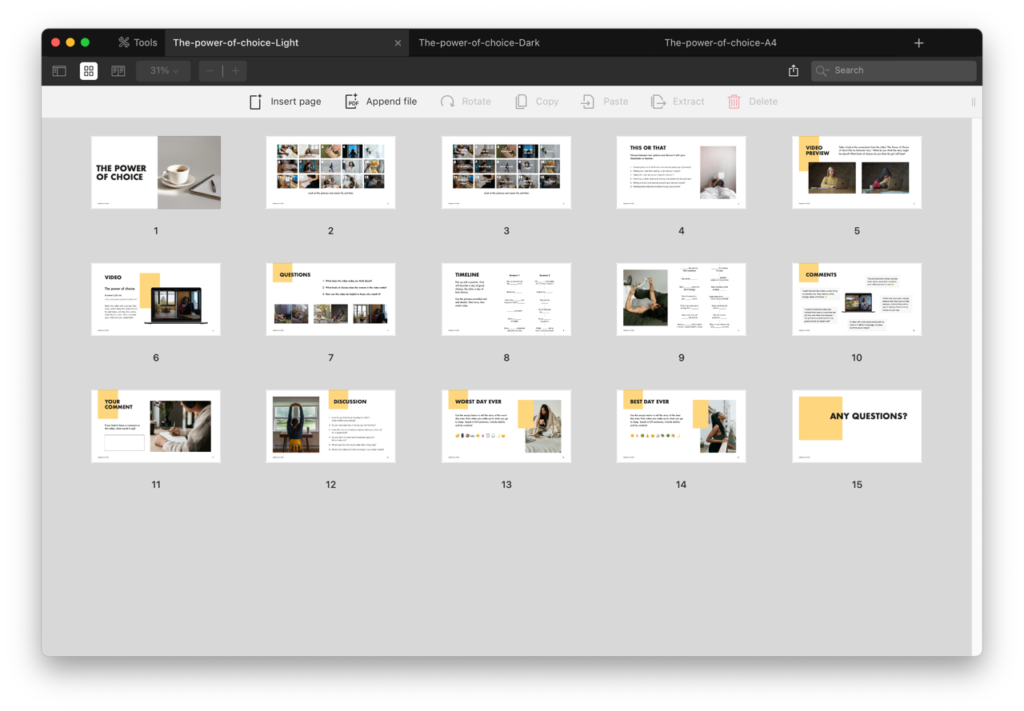
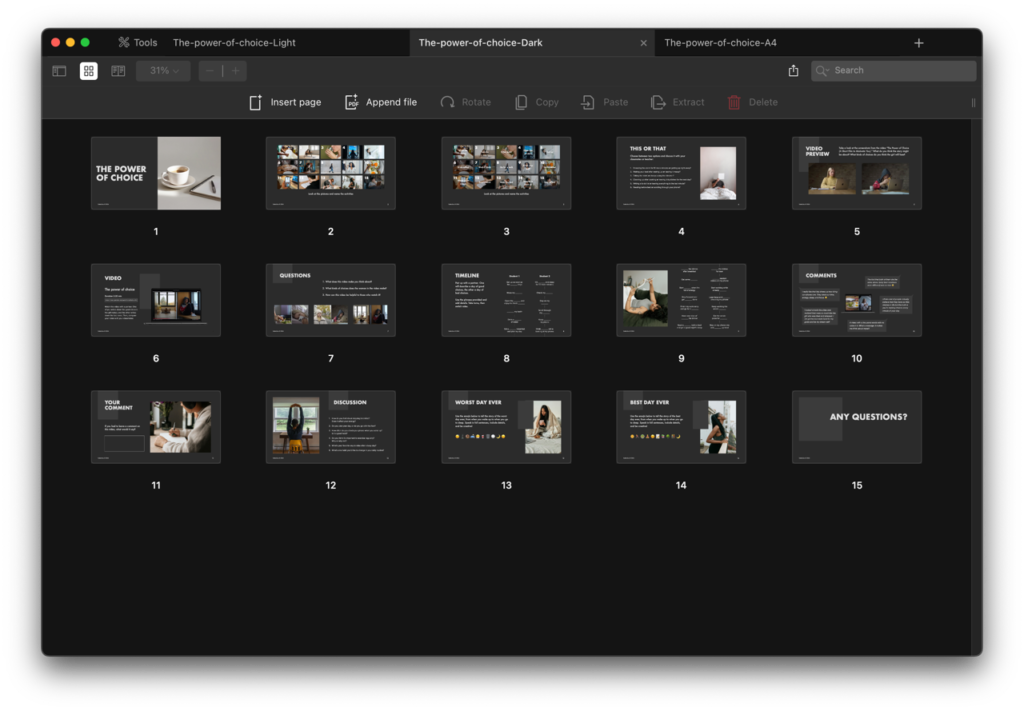
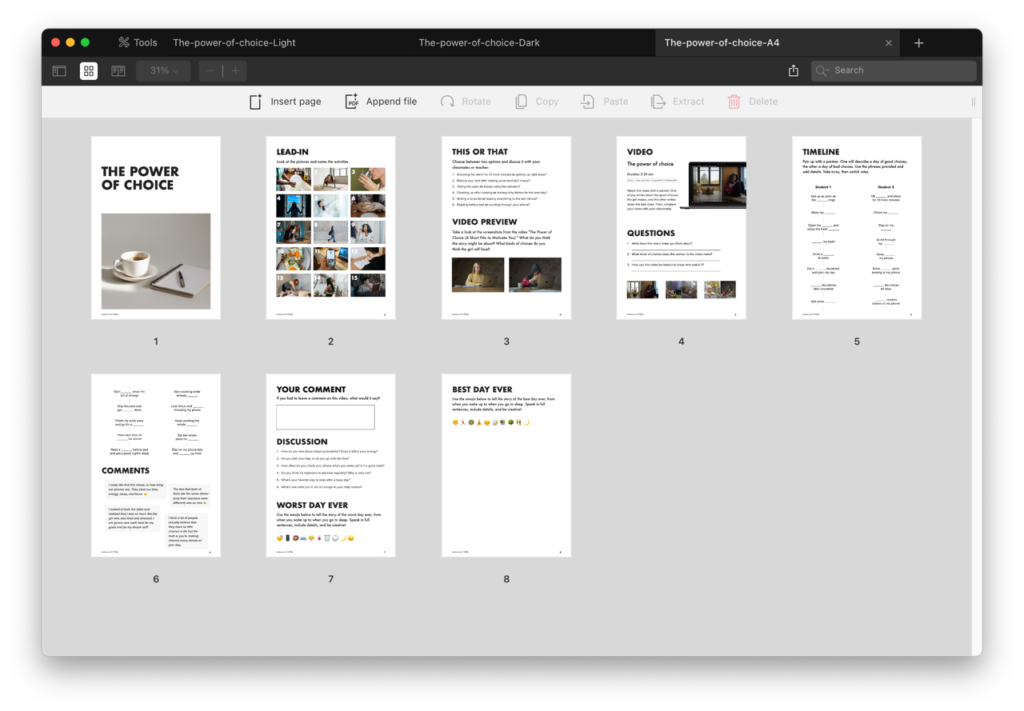
Start by showing the pictures on slide 2 and asking students to name the daily activities. This is a low-pressure warm-up that gets B1 learners producing vocabulary right away. Once they’ve named the activities, move to the “this or that” questions on slide 4. These work well in pairs because students have to pick a side and explain why. You’ll hear things like “I always snooze my alarm” or “I can’t sleep without checking my phone,” which sets up the video perfectly.
Before playing the video, show the screenshots on slide 5 and ask students to predict the story. Then split the class into two roles for the viewing task: one student writes down the good choices, the other writes the bad ones. The video is only about two minutes, so play it twice. After watching, pairs compare notes and discuss the three follow-up questions on slide 7.
The timeline activity on slides 8 and 9 is the main speaking practice. One student describes a day of good choices, the other describes a day of bad choices, filling in the gaps as they go. This keeps B1 students talking in full sentences without feeling lost because the structure is already there. After they finish, have them switch roles so both get practice with each version.
Wrap up with the YouTube comments on slide 10. Students read real comments about the video and then write their own. This is a nice change of pace and gives them a bit of writing practice. If time allows, the “best day ever” and “worst day ever” storytelling tasks on slides 13 and 14 are fun closers. Students use emoji prompts to tell a story from morning to night, which always gets some laughs and creative answers.
