
The Happiest Country
This thought-provoking B2 level lesson explores why Finland consistently ranks as the happiest country in the world according to the United Nations World Happiness Report. Students will examine cultural attitudes, discuss what truly contributes to happiness, and debate the role of wealth versus relationships in life satisfaction.
Lesson overview
- Explore cultural differences in happiness and life satisfaction across nations
- Learn essential vocabulary related to well-being, welfare systems, and emotions
- Develop critical thinking about factors that contribute to personal happiness
- Discuss contemporary issues like social media’s impact on mental health
| Level | Vocabulary | Video Length | Lesson Time |
| B2 / Upper-Intermediate | 10 words | 4:36 min | 60-70 min |
Vocabulary
- Nordic nation
- Demoralizing
- Pretend
- Wealth
- Life expectancy
- Well-being
- Welfare
- Cheerful
- Grim
- Content
Contents
- Lead-in
- Reading
- Vocabulary match
- Vocabulary practice
- Video
- Comprehension
- Discussion
- Debate
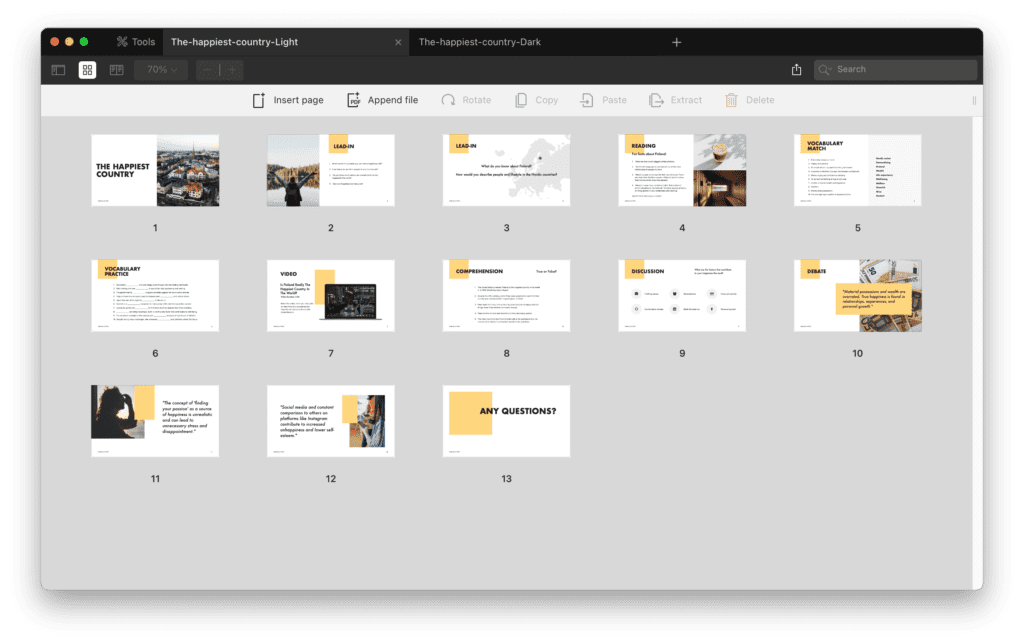
Start the lesson by throwing out the warm-up questions on page 2. These four prompts introduce happiness and get students thinking about how you’d even measure it. Students usually have pretty interesting takes on what happiness actually means, so give them time to chat in pairs before opening it up to everyone.
Move to page 3 and talk about what students know about Finland and Nordic countries. A lot of students have stereotypes about freezing weather or people being super reserved. This makes it way more interesting when they find out Finland is ranked the happiest country.
Page 4 has fun facts about Finland. Students eat up learning about weird cultural traditions like “Kalsarikannit” or pantsdrunk. Ask them to share similar fun facts about their own countries. This loosens everyone up and builds cultural awareness.
Before the vocab activities on pages 5 and 6, explain that these terms show up in the video. The matching exercise introduces words like “demoralizing” and “life expectancy.” The fill-in-the-blank practice on page 6 reinforces these terms in context. Walk around and help students who are struggling with word forms.
The main video on page 7 runs 4 minutes 36 seconds. Play it once straight through without stopping. Then check if they got it using the true or false statements on page 8. Students should catch that Finland ranks high in life satisfaction but not necessarily in joyfulness. This distinction matters for the deeper discussion later.
After the video, use the discussion activity on page 9. Students rank factors like fulfilling career, relationships, and financial stability by importance. This gets them reflecting on their own lives and leads to meaningful conversations. Push them to explain their choices and respectfully challenge each other’s viewpoints.
The debate topics on pages 10 through 12 give them solid practice for argumentative speaking. Split the class into small groups and assign different positions on whether wealth matters for happiness, whether finding your passion is actually realistic, and whether social media makes people less happy. Give them planning time before the debates kick off.
Wrap up by asking what surprised them most about the lesson.
