
The Future of Coffee
Discover how climate change is transforming the coffee industry in this engaging B2 video-based lesson. Your upper-intermediate students will explore the environmental challenges facing coffee production while building essential vocabulary about agriculture and sustainability.
Lesson overview
- Practice specialized vocabulary related to agriculture, climate change, and coffee production
- Develop critical listening skills through an authentic video about environmental threats
- Discuss the economic and environmental impacts of climate change on farming communities
- Debate contemporary issues about caffeine consumption, coffee quality, and environmental sustainability
| Level | Vocabulary | Video Length | Lesson Time |
| B2 / Upper-Intermediate | 8 words | 2:53 min | 60 min |
Vocabulary
- Commodity
- Drought
- Take a heavy toll on
- To ripen
- Acidity
- Plantation
- Pose an existential threat
- Crops
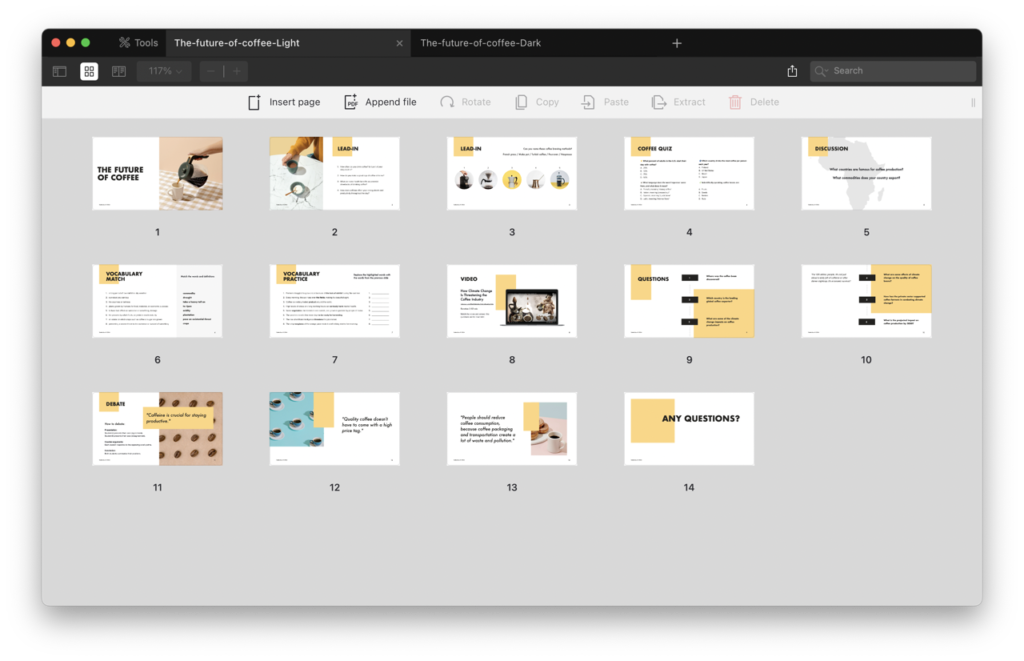
Contents
- Lead-in
- Discussion
- Vocabulary match
- Vocabulary practice
- Video
- Questions
- Debate
Start your lesson with a warm-up that gets students personally invested in the topic. Use the lead-in questions to tap into what they already know about coffee habits and brewing methods. The visual activity where they identify different brewing methods works great in pairs. This naturally gets people talking.
Before showing the video, go over the essential vocab through the matching exercise. Hit words like commodity, drought, and plantation. Have students complete the practice sentences to lock in the understanding. This vocab foundation means they can actually follow what’s happening in the video.
The video is the heart of this lesson. Play the clip about climate change and the coffee industry once for the big picture. Then play it again while students answer the comprehension questions. Pause at key spots if you need to. After they watch, go over the answers together and clear up anything confusing.
The debate activity gives students solid speaking practice. Split them into pairs and assign positions on statements about caffeine, coffee quality, and environmental impact. Give them time to prep their arguments before they present. Push them to use the debate structure provided. Walk around and help with language while they’re preparing.
Wrap up by connecting what they learned to their actual lives. Ask them to think about whether they’d change their coffee habits based on what they just learned. This lesson mixes video, vocab work, and structured debate to keep things engaging. The combo creates plenty of practice opportunities throughout class.
