
The Future, According to 1989
This C1 lesson examines how people in 1989 imagined the homes of 2020 through a retro-futuristic video and critical discussions. Students learn vocabulary like “embedded,” “diffuse,” and “take a back seat” while comparing past predictions to current reality. The activities include analyzing old forecasts, writing messages to the past, and making their own predictions for 2060.
Lesson overview
- Learn 10 advanced terms related to technology, design, and prediction
- Watch a 5-minute video about 1989 home technology predictions
- Compare what people expected with what actually exists today
- Discuss laziness versus innovation and predict life in 2060
| Level | Vocabulary | Video Length | Lesson Time |
| C1 / Advanced | 10 words | 4:50 min | 60 min |
Vocabulary
- clutter
- knob
- embedded
- get in your way
- coating
- diffuse
- solar radiation
- embody
- crucial
- take a back seat
Contents
- Lead-in 1
- Lead-in 2
- Vocabulary preview
- Definitions
- Video
- Comprehension
- Comments
- Writing
- Practice 1
- Practice 2
- Quote
- Speaking
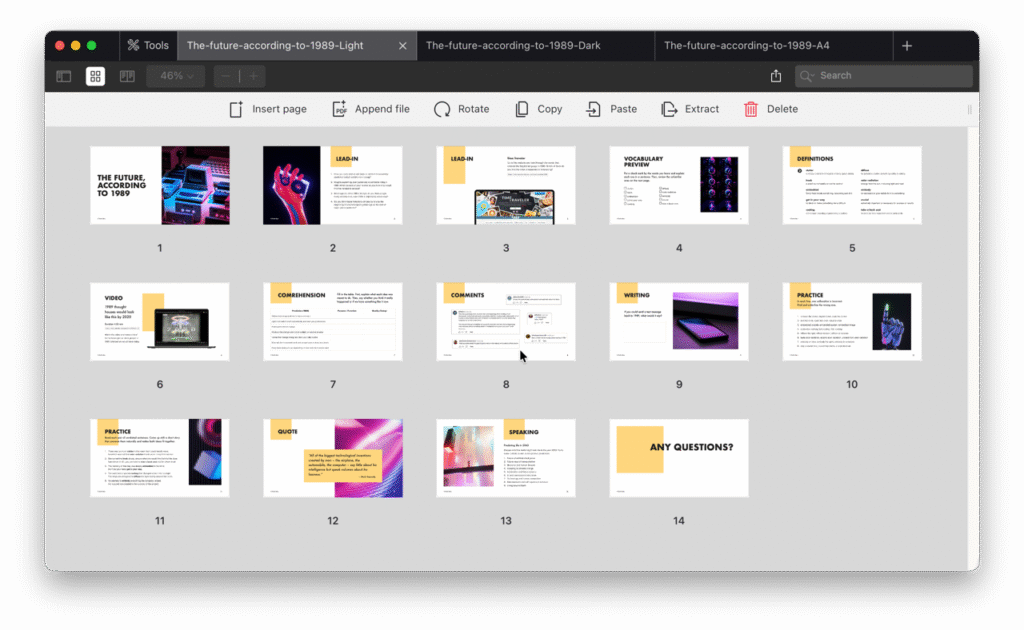
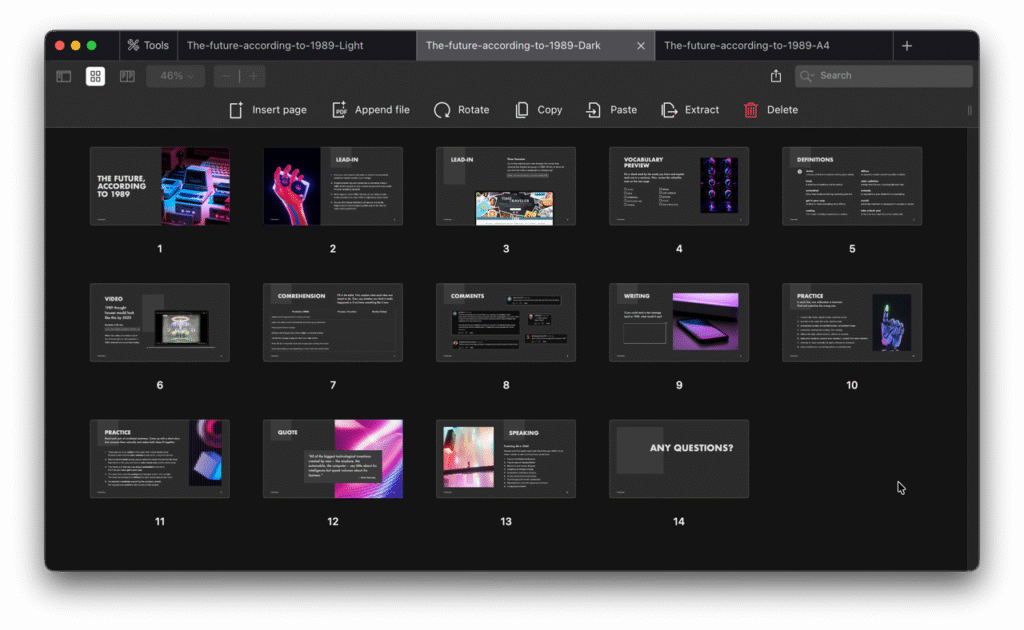
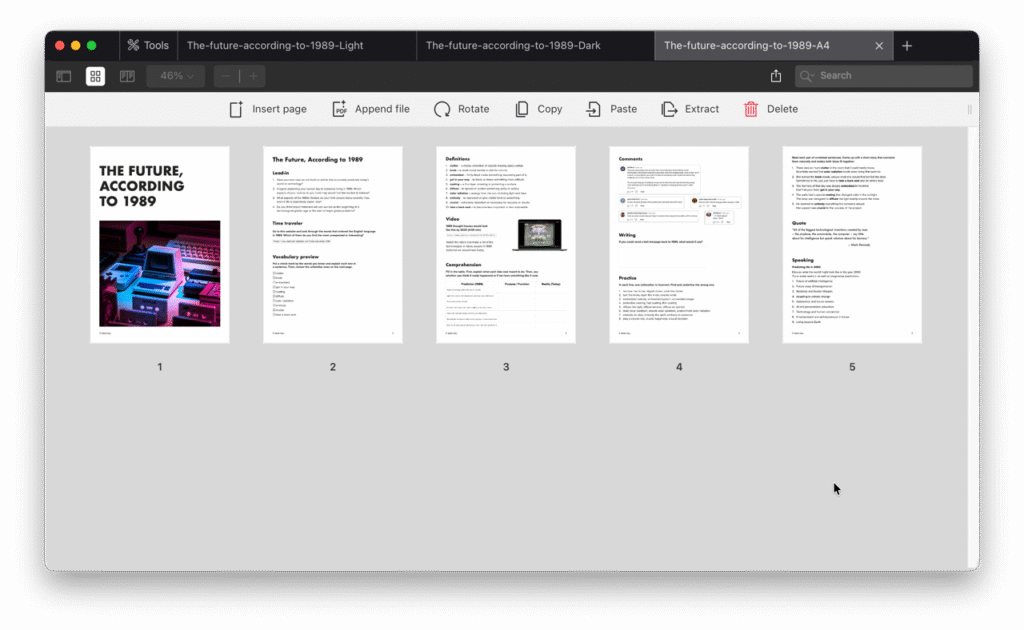
Start with the lead-in questions about old predictions that came true. Ask students to imagine explaining their typical day to someone from 1989. What would shock them most? The Time Traveler activity sends students to a Merriam-Webster page showing words that entered English in 1989. They browse and share which ones surprise them.
Pre-teach vocabulary before the video. Students check off words they know, then review definitions. Drill pronunciation on “embedded” and “diffuse” since these appear frequently. Make sure everyone understands “take a back seat” as an idiom meaning to become less important.
Play the video twice. It’s about 5 minutes and shows 1989 predictions about homes in 2020. First viewing, students list technologies people believed we’d have. Second viewing, they fill in a table with predictions, purposes, and whether these came true. For example, hidden technology built into furniture was meant to reduce clutter, and we do have smart home devices though not exactly as imagined.
After watching, students read viewer comments and respond to one. Then they write a text message they’d send back to 1989. This quick creative exercise uses lesson concepts. The first practice activity identifies incorrect collocations like “cook the clutter.” The second practice gives pairs of unrelated sentences. Students create a short story connecting them naturally.
Show the Mark Kennedy quote about technology and laziness. Students discuss if big inventions reveal laziness or free us for meaningful work. Finish with 2060 predictions. Students choose topics like AI, transportation, or climate adaptation and make both realistic and imaginative forecasts. Encourage them to use lesson vocabulary and think about why some 1989 predictions failed.
