
The Decline of QR-code Menus

This thought-provoking lesson explores the rise and fall of QR code menus in restaurants for C1 advanced learners. Students examine how technology intersects with dining culture through an authentic New York Times article and engaging discussion activities. The lesson develops critical thinking skills while expanding vocabulary related to hospitality, technology, and social interactions.
Lesson overview
- Analyze reasons behind the decline of QR code menus in restaurants
- Expand advanced vocabulary including vanguard, dormant, coax, and conviviality
- Explore the phrase “room for” and its applications in various contexts
- Discuss the balance between technological convenience and human connection
| Level | Vocabulary | Reading Time | Lesson Time |
| C1 / Advanced | 12 words | 7 min / 1344 words | 60 min |
Vocabulary
- show someone the door
- vanguard
- dormant
- deploy
- about-face
- coax
- conviviality
- hinder
- bear the brunt
- jeopardize
- patrons
- eliminate
Contents
- Lead-in
- Vocabulary
- Article
- Questions
- Comments
- Synonyms
- Language tip
- Practice
- Speaking
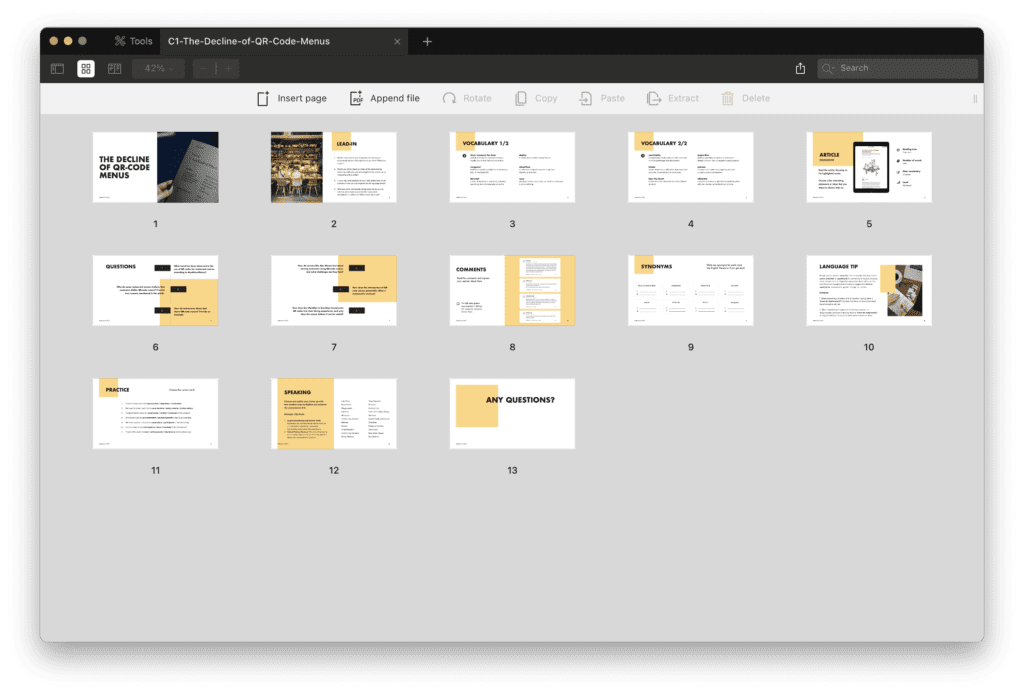
Start with the warm-up questions on page 2 to get students interested in dining experiences and tech preferences. These questions get them thinking about their own restaurant habits and whether they prefer digital or traditional service. Making it personal helps them connect more with what they’re about to read.
Pre-teach the vocab on pages 3 and 4 before they dive into the article. Focus on context and how the words are actually used instead of just throwing definitions at them. Have students guess how these words might show up in an article about restaurant technology. Get them making their own example sentences with the new vocab to make sure they actually understand it.
Have them read the article individually and tell them to highlight stuff they find interesting for discussion later. The article’s about 1,344 words, so figure around 7 minutes of reading time. After reading, use the comprehension questions on pages 6 and 7 to check if they got it and get some deeper analysis going. These questions walk them through the key arguments and perspectives from restaurant owners, servers, and customers.
The comments section on page 8 has real reader reactions with all kinds of different viewpoints. Have students read these and prep responses where they agree, disagree, or add their own take. This builds critical thinking and helps them express opinions. The synonym exercise on page 9 reinforces vocab through actually using it.
Introduce the language tip about “room for” on page 10, explaining how this phrase shows potential and opportunity. The practice on page 11 helps them figure out correct usage in context. Finally, wrap up with the creative speaking task on page 12 where students brainstorm ways to digitize public spaces. This takes what they learned and applies it to bigger contexts while getting them thinking innovatively and discussing together.
Throughout the lesson, push students to consider different perspectives on technology in service industries. Balance the time between analyzing the article and exploring students’ own experiences and what’s happening in their cultures regarding restaurant tech and dining traditions.
