
The City Where I Live
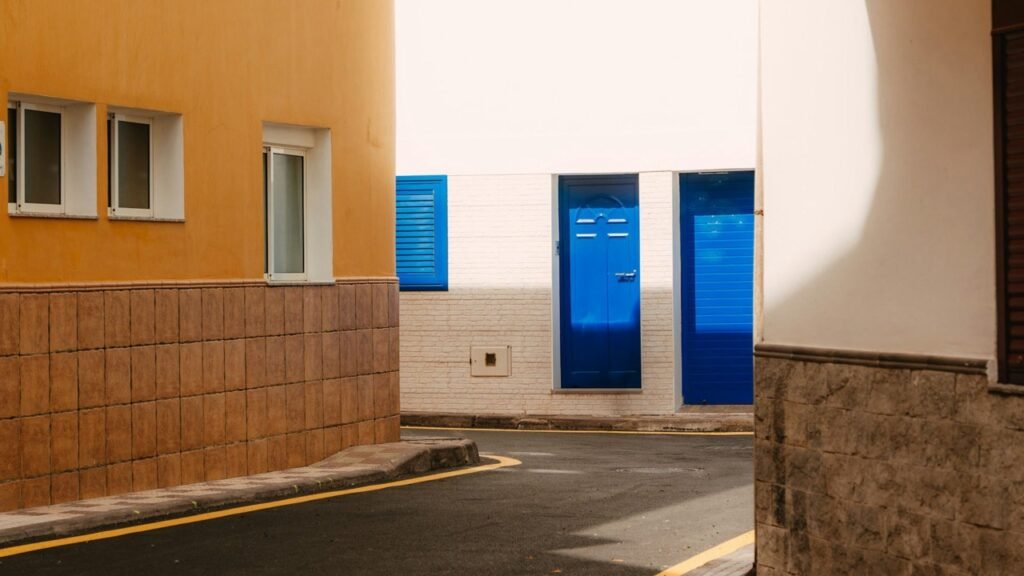
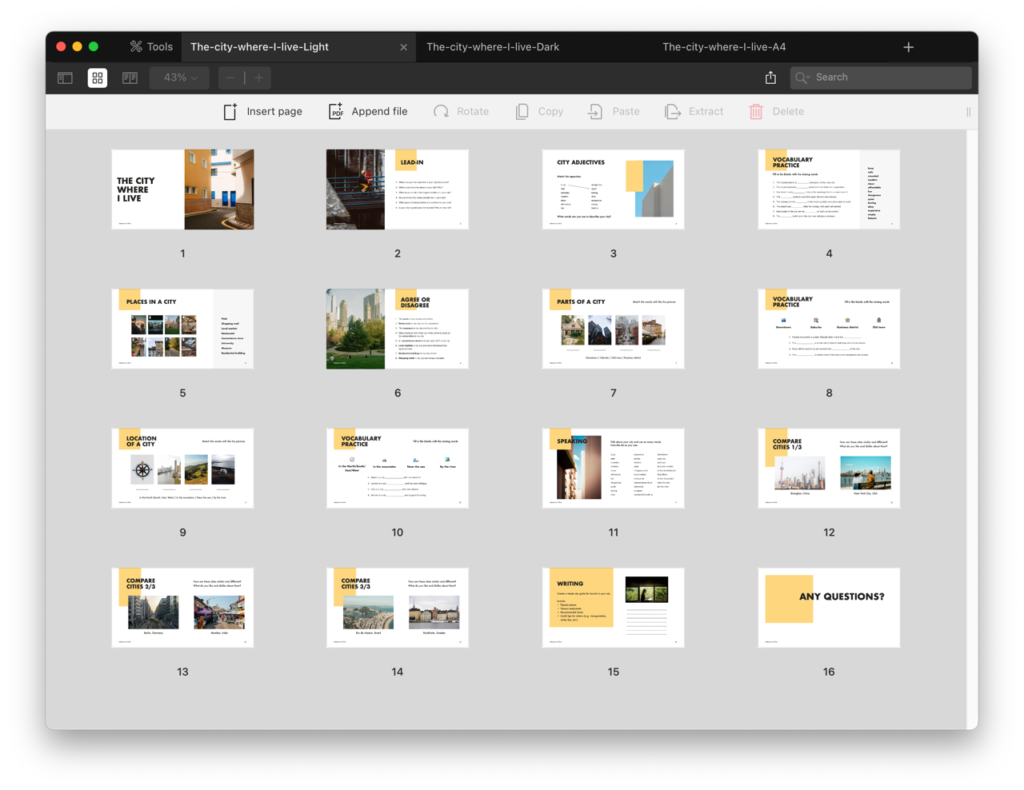
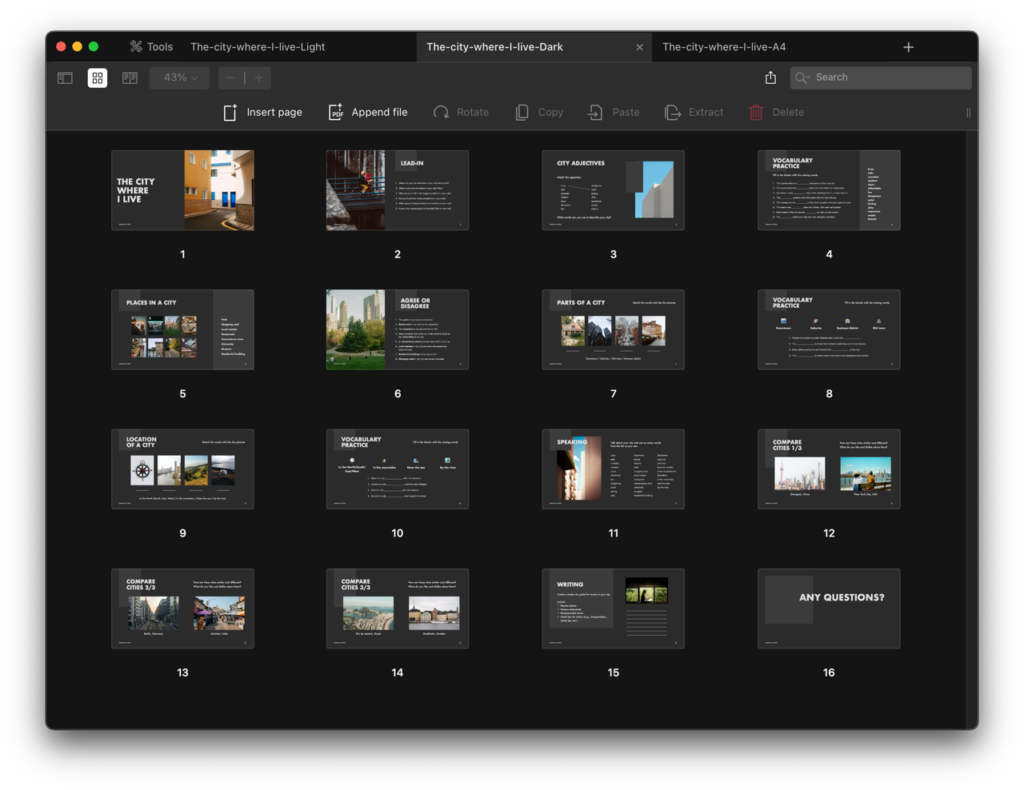
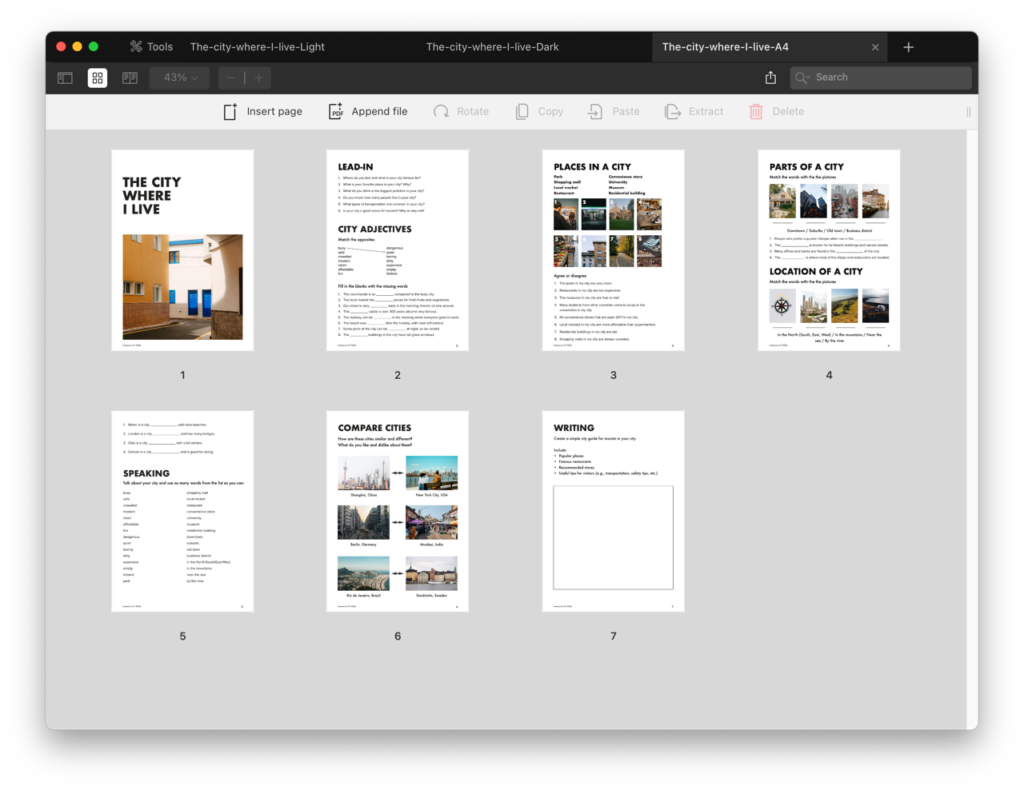
This A2 lesson gives students the words they need to describe their city and neighborhood in English. They learn fourteen adjectives like “crowded,” “affordable,” and “historic,” eight types of places, four city areas, and four location phrases. By the end, students can talk about where they live, compare cities around the world, and write a simple tourist guide for their hometown.
Lesson overview
- Learn 14 city adjectives and match them with their opposites
- Name eight common places in a city and four parts of a city like downtown and suburbs
- Practice filling in blanks with location phrases like “near the sea” and “by the river”
- Compare real cities like Shanghai and New York and write a short tourist guide for your own city
| Level | Vocabulary | Lesson Time |
| A2 / Pre-Intermediate | 30 words | 60 min |
Vocabulary
- busy
- safe
- crowded
- modern
- clean
- affordable
- fun
- dangerous
- quiet
- boring
- dirty
- expensive
- empty
- historic
- park
- shopping mall
- local market
- restaurant
- convenience store
- university
- museum
- residential building
- downtown
- suburbs
- old town
- business district
- in the North/South/ East/West
- in the mountains
- near the sea
- by the river
Contents
- Lead-in
- City adjectives
- Vocabulary practice
- Places in a city
- Agree or disagree
- Parts of a city
- Vocabulary practice
- Location of a city
- Vocabulary practice
- Speaking
- Compare cities
- Writing
Start with the lead-in questions about where students live. “What is your city famous for?” and “Is your city a good place for tourists?” are easy enough for A2 and get everyone sharing personal details. After a few minutes, move to the adjective opposites matching. Students pair words like busy with quiet, safe with dangerous, and modern with historic. Once they’ve matched all seven pairs, ask them to pick three or four adjectives that describe their own city. The gap-fill exercise that follows puts these adjectives into real sentences about markets, subways, castles, and beaches. Check answers together and drill pronunciation on words like “crowded,” “affordable,” and “historic.”
The places in a city section shows eight pictures that students label: park, shopping mall, local market, restaurant, convenience store, university, museum, and residential building. Most A2 students will know several of these already, but “convenience store” and “residential building” might be new. After labeling, the agree or disagree activity uses all eight places in statements about the student’s own city. “Restaurants in my city are too expensive” and “All convenience stores are open 24/7” usually split opinions and push students to explain their thinking with simple language.
Next come the four parts of a city: downtown, suburbs, old town, and business district. Match pictures first, then complete four sentences. Do the same with location phrases: in the north, in the mountains, near the sea, and by the river. The sentences use real cities like Miami, London, Oslo, and Denver so students see the phrases in a natural context. After both exercises, the speaking activity pulls everything together. Students describe their city using as many words from the lesson as possible. A word list is on screen so they can glance at it while talking.
The city comparison slides make a great pair or group activity. Students look at photos of Shanghai and New York, Berlin and Mumbai, Rio de Janeiro and Stockholm, and discuss similarities, differences, and preferences. Keep it simple at A2 by modeling a sentence or two first: “Shanghai is modern and crowded. Stockholm is clean and quiet.” End with the writing task where students create a mini tourist guide for their own city. They include popular places, good restaurants, recommended shops, and tips for visitors. This works well as homework too, and students can present their guides to the class next time.
