
The Brain vs. Big Numbers
This B2 lesson explores why humans struggle to understand large numbers. Students learn vocabulary like “comprehend,” “grasp,” and “threshold,” then watch a video about how our brains process quantities. The activities include pronouncing numbers correctly, learning metaphors with numbers, and discussing how we use numbers to persuade or mislead people.
Lesson overview
- Learn vocabulary related to mental processing, quantity perception, and visual representation
- Watch a video explaining why our brains misunderstand the scale of large numbers
- Practice pronouncing numbers in different formats like fractions, ratios, and measurements
- Master common English metaphors that use numbers from zero to ten
Note: This topic was recommended by one of our subscribers — we love hearing from you!
| Level | Vocabulary | Video Length | Lesson Time |
| B2 / Upper-Intermediate | 10 words, 10 metaphors | 3:34 min | 60 min |

Vocabulary
- Comprehend
- Encounter
- Quantity
- Brain circuit
- Grasp
- Threshold
- Visual
- Metaphor
- Ratio
- Perception
- A second fiddle
- A one-man show
- Third wheel
- A zero-sum game
- On cloud nine
- A 24/7 job
- Two-faced
- Back to square one
- The 1%
- A ten out of ten
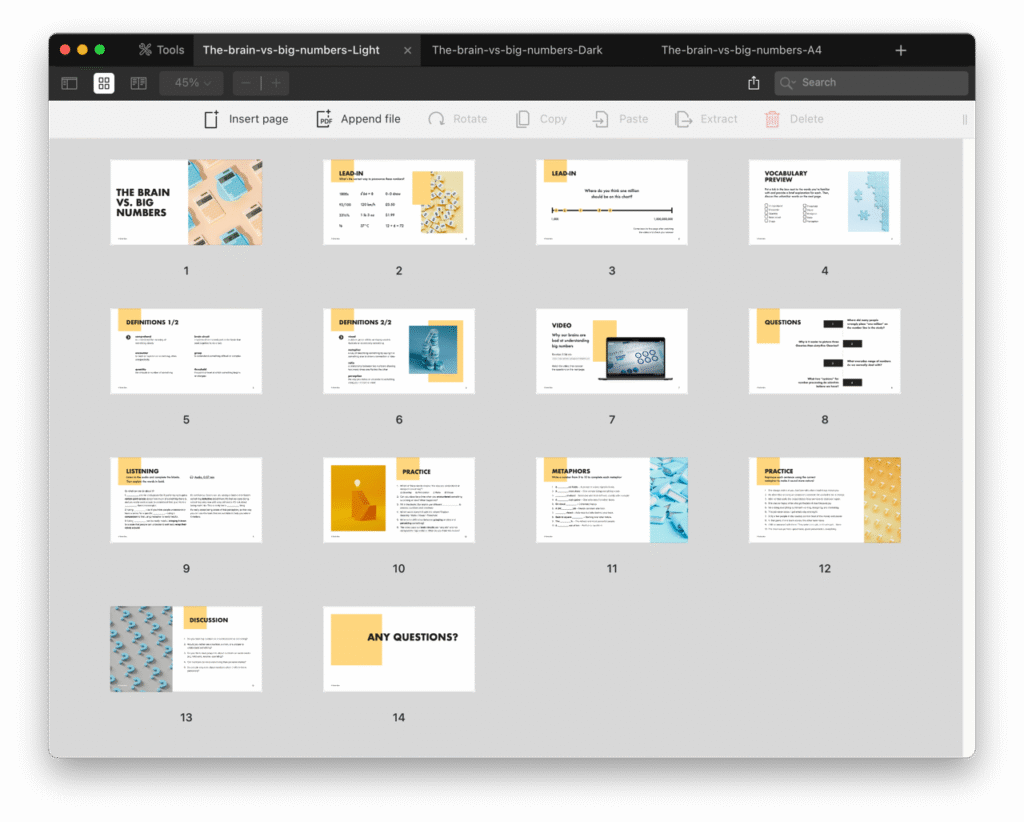
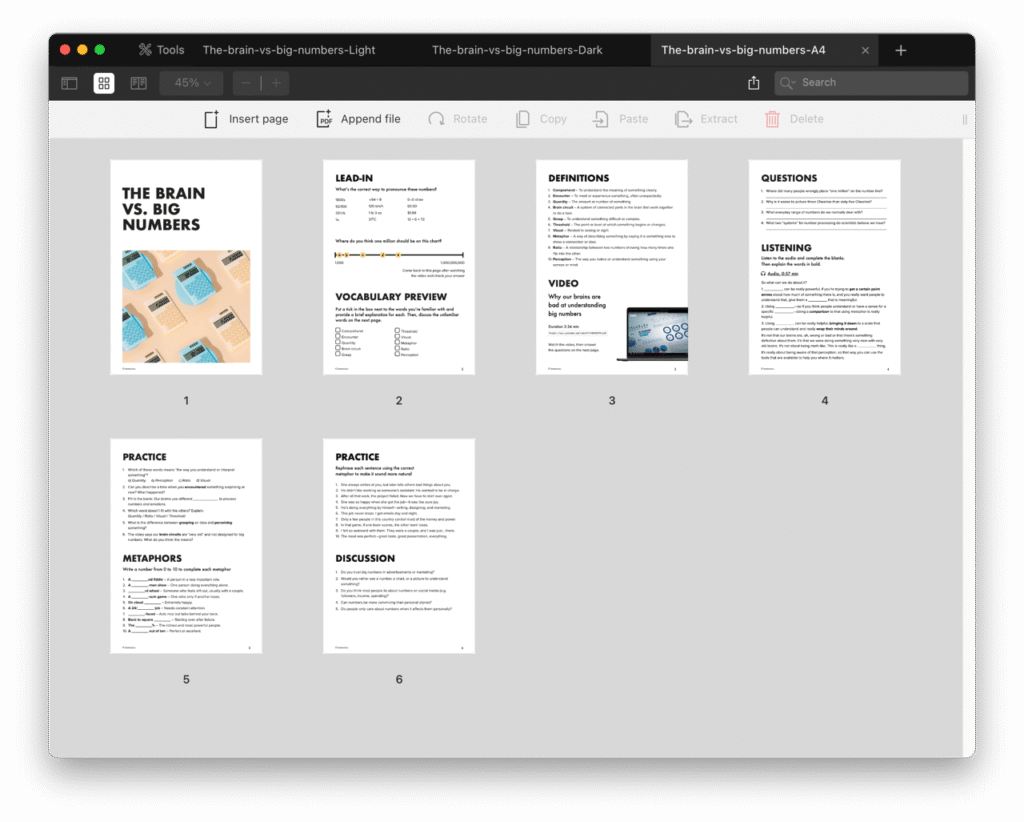
Contents
- Lead-in
- Vocabulary preview
- Definitions
- Video
- Questions
- Listening
- Practice
- Metaphors
- Practice
- Discussion
Start with the pronunciation activity where students say numbers in various formats. The 1800s, fractions like three eighths, sports scores, prices, equations, and units all require different pronunciation rules. This shows students that number literacy goes beyond just counting. The number line prediction has students guess where one million belongs between one thousand and one billion before watching the video. Most people place it too close to the billion, which sets up the video’s main point.
The vocabulary preview covers cognitive and mathematical terms. “Comprehend” and “grasp” are near-synonyms but “grasp” suggests more difficulty. “Brain circuit” and “threshold” explain how our mental processing works. “Metaphor” appears here because the video discusses using comparisons to help people understand big numbers, and it connects to the metaphor activity later.
The video is about three and a half minutes and explains that our brains evolved to handle small quantities like three versus four items, not millions or billions. The study mentioned shows people placing one million at the halfway point between one thousand and one billion when it’s actually much closer to one thousand. After watching, students answer four questions about where people went wrong, why small numbers are easier, what range we normally use, and what two systems exist for number processing.
The listening audio gives three strategies for communicating big numbers effectively: using metaphors, making comparisons to known quantities, and using visuals. Students fill in blanks and explain bolded words. The quote about our brains not being wrong but doing something new with old equipment reframes the problem as one of awareness rather than intelligence.
The practice section checks vocabulary understanding through multiple choice, personal questions, and concept comparison. Question five asks students to distinguish between grasping an idea and perceiving something, which pushes them to think about subtle differences.
The metaphors activity introduces ten common English expressions using numbers zero through ten. “Second fiddle,” “one-man show,” and “third wheel” all use numbers to describe social situations. After completing the phrases, students rephrase sentences using these metaphors. Statement three about starting over becomes “back to square one” and statement six about constant work becomes “a 24/7 job.” This moves from recognition to production.
The discussion questions apply the lesson concepts to real situations. Question one about trusting big numbers in advertising connects to the video’s point about manipulation. Question three about social media lying with numbers touches on follower counts and income claims. Question five asks if people only care about numbers when personally affected, which usually sparks debate about abstract versus concrete thinking.
