
The Beauty Premium Effect
This B2 lesson explores the beauty premium effect, the idea that attractive people earn more, get more votes, and even receive shorter jail sentences. Students watch a video with ten surprising facts, learn vocabulary like “phenomenon,” “perceive,” and “social class,” and discuss whether looks really do matter more than we’d like to admit. It’s one of those topics where the research genuinely shocks people.
Lesson overview
- Learn ten vocabulary words related to appearance, perception, and social advantage
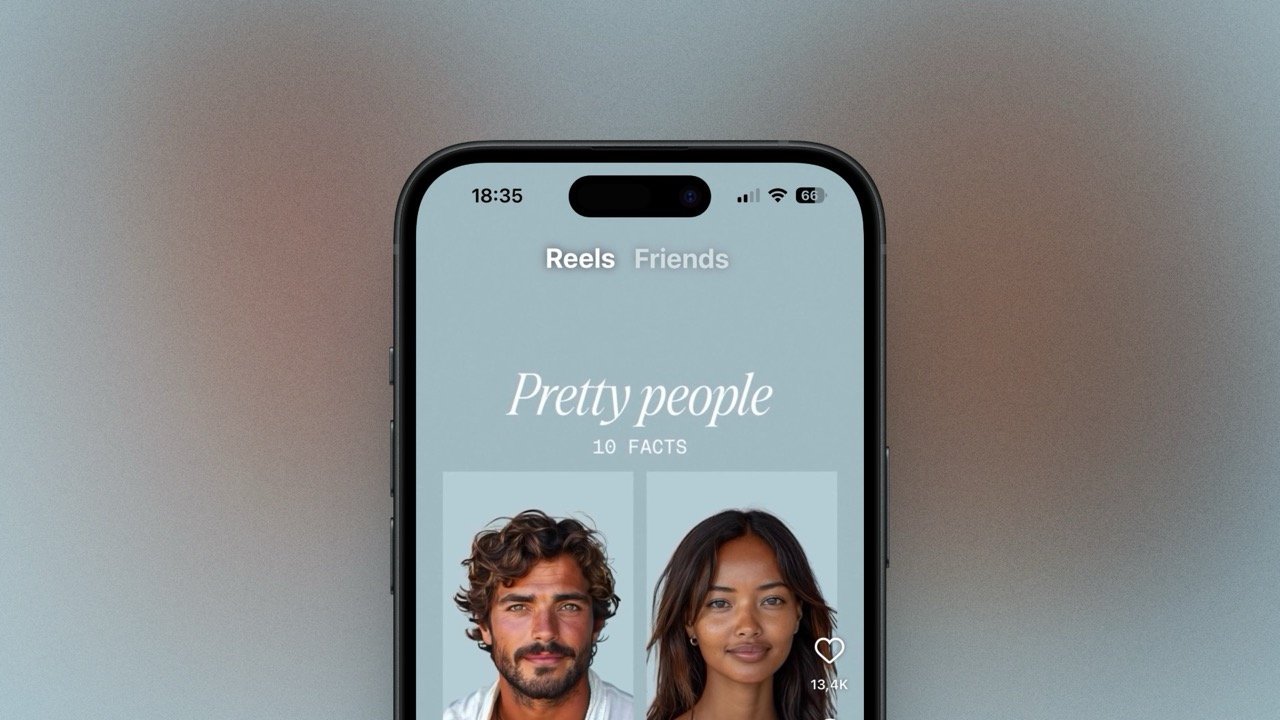
- Watch a video about how attractiveness affects earnings, politics, and dating outcomes
- Read ten research findings and answer comprehension questions about each study
- Debate the fairness of beauty bias and design a social media post challenging beauty standards
| Level | Vocabulary | Video Length | Lesson Time |
| B2 / Upper-Intermediate | 10 words | 1:21 min | 60-90 min |
Vocabulary
- Attractive
- Phenomenon
- Beauty premium
- Perceive
- Appearance
- Influence
- Candidate
- Intelligent
- Income
- Social class
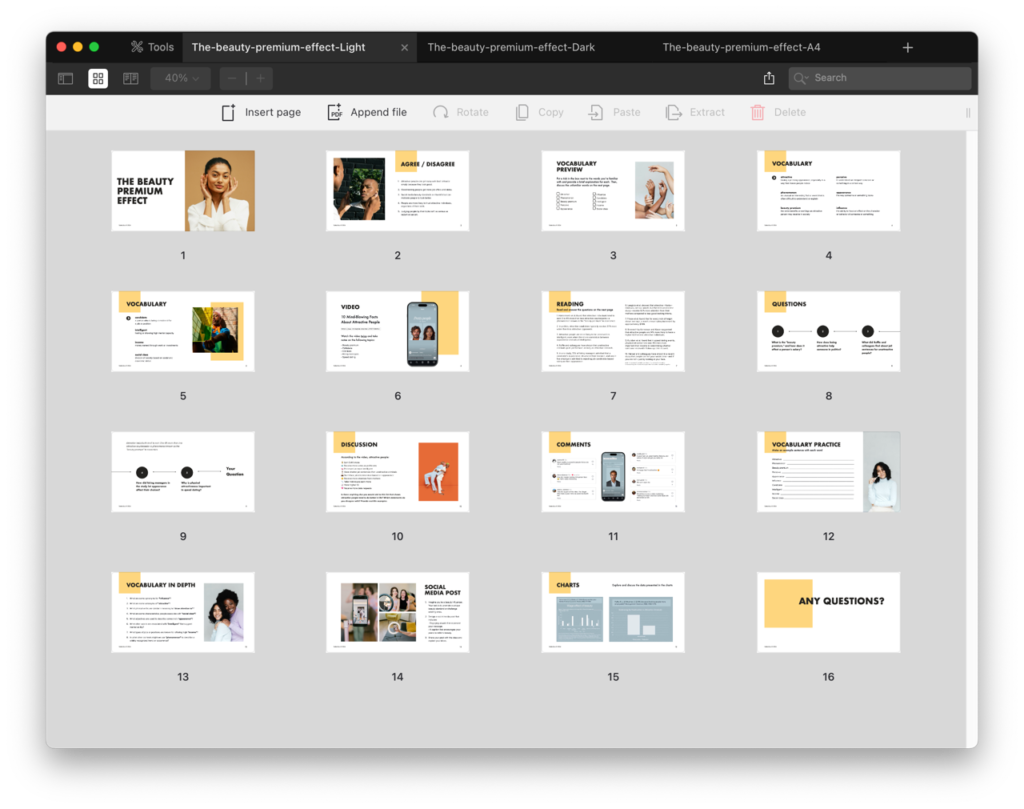
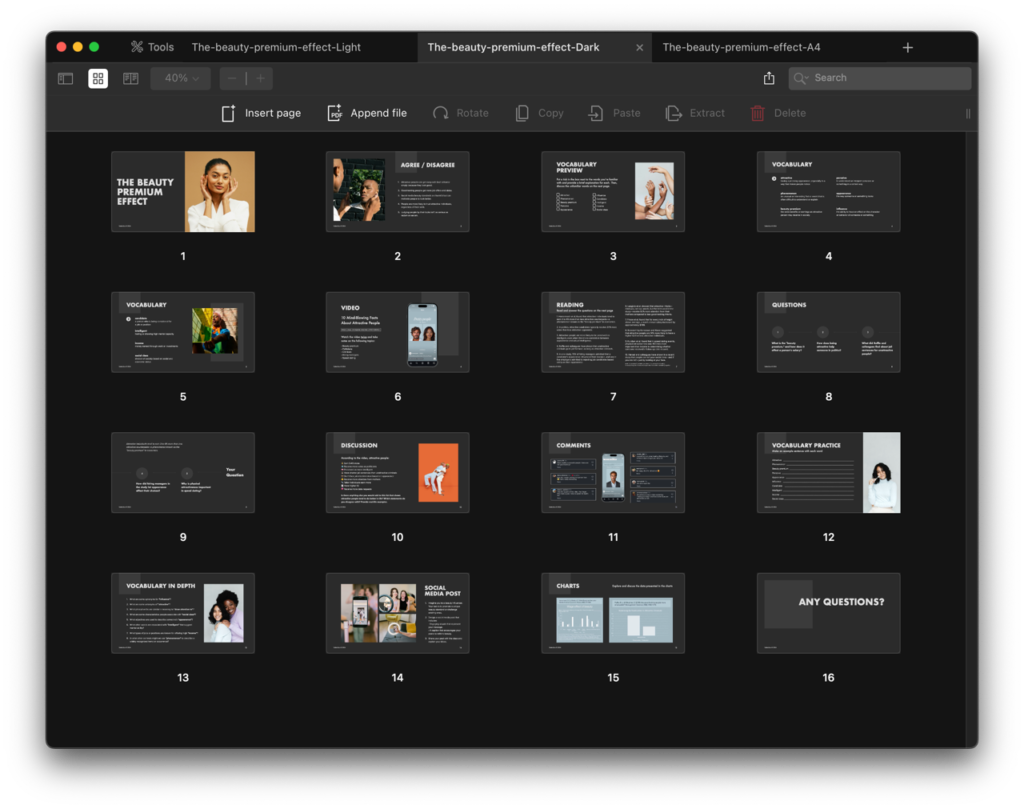
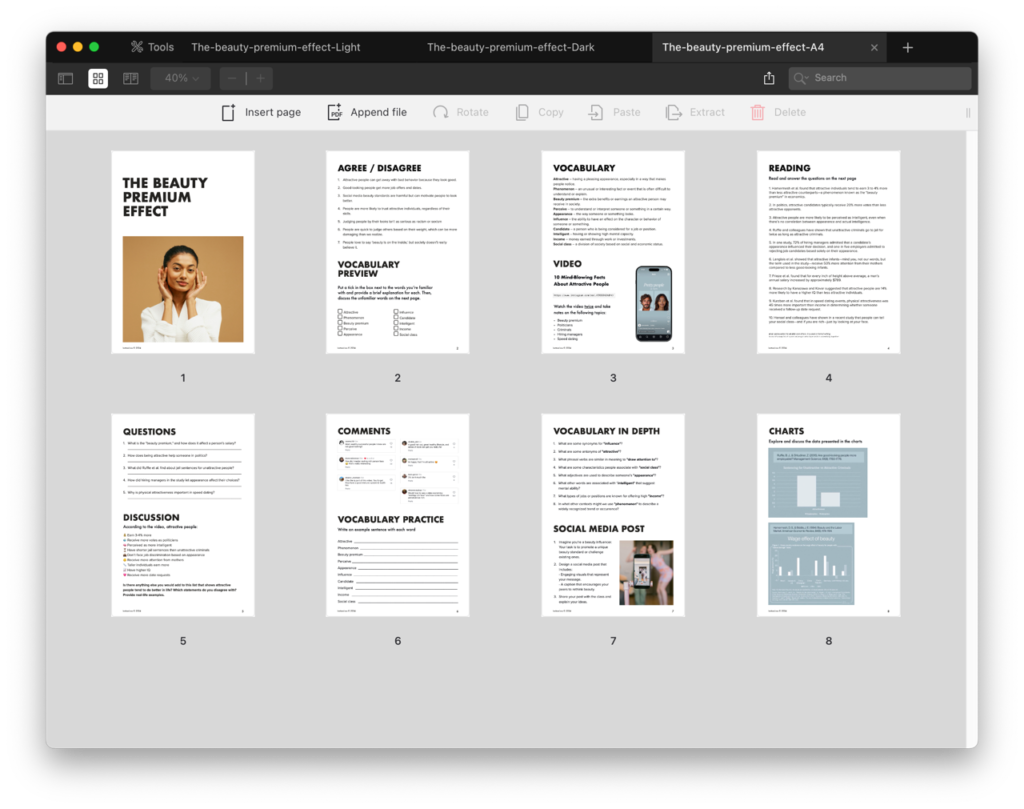
Contents
- Agree or disagree
- Vocabulary preview
- Definitions
- Video
- Reading
- Comprehension questions
- Discussion
- Comments
- Vocabulary practice
- Vocabulary in depth
- Social media post
- Charts
The agree or disagree statements make a strong opener. Throw students straight into questions like “Attractive people can get away with bad behavior” and “Judging people by their looks isn’t as serious as racism or sexism.” These are provocative on purpose. Let the discussion heat up for five minutes or so before moving on. This primes students for the data they’re about to encounter and gives you a sense of their existing beliefs.
Cover the ten vocabulary words next. Most B2 students will know “attractive,” “intelligent,” and “appearance,” but “phenomenon,” “beauty premium,” and “perceive” usually need work. For “beauty premium,” explain it simply: “Research shows that good-looking people earn about 3 to 4 percent more than average-looking people. That extra money is the beauty premium.” For “perceive,” try something like “People perceive attractive people as smarter, even when they’re not.” Once the vocabulary is solid, play the video. Students watch twice and take notes on five specific topics: beauty premium, politicians, criminals, hiring managers, and speed dating.
After the video, move into the reading section with ten numbered research findings. Each one ties back to the vocabulary and the video content. Have students read in pairs and discuss which findings surprised them most. Then work through the five comprehension questions. The discussion on slide ten is where things really open up. Students look at a summary list of advantages attractive people have and decide which ones they agree with, which they’d challenge, and what they’d add from their own experience. Push students to give real examples rather than just stating opinions.
The vocabulary practice section asks students to write original sentences with each of the ten words. Follow this with the vocabulary in depth questions, which go beyond basic definitions. Students find synonyms for “influence,” antonyms for “attractive,” and adjectives that describe “appearance.” These questions build word networks that help long-term retention. Finish with the social media post activity. Students pretend they’re beauty influencers and design a post that either promotes a new beauty standard or challenges an existing one. They write a caption and explain their thinking to the class. The charts on the final slide provide extra data for discussion if time allows.
