
The Art of Cocktails

This B2 upper-intermediate lesson explores the history and culture behind classic cocktails like the Whiskey Sour, Corpse Reviver, and Tom Collins. Students learn bartending vocabulary, discover the fascinating stories behind famous drinks, and practice creative language skills by inventing their own signature cocktails. The lesson combines reading comprehension, cultural discussion, and vocabulary building through engaging activities about cocktail history and bar culture.
Lesson overview
- Explore the historical origins of three classic cocktails
- Learn specialized vocabulary for bartending tools and techniques
- Practice idioms and expressions related to drinking culture
- Develop creative writing skills by inventing original cocktail recipes
| Level | Vocabulary | Lesson Time |
| B2 / Upper-Intermediate | 18 words | 60-90 min |
Vocabulary
- jigger
- shaker
- strainer
- peeler
- juicer
- straw
- wedge
- wheel
- ingenious
- syrup
- liqueur
- spirit
- corpse
- hangover
- remedy
- highball glass
- joint
- hoax
Contents
- Lead-in
- Famous cocktails
- Bar tools
- Discussion
- Vocabulary
- Reading: Whiskey Sour
- Reading: Corpse Reviver
- Reading: Tom Collins
- Comprehension questions
- Idioms
- Phrases
- Signature cocktail
- Writing
- Extra
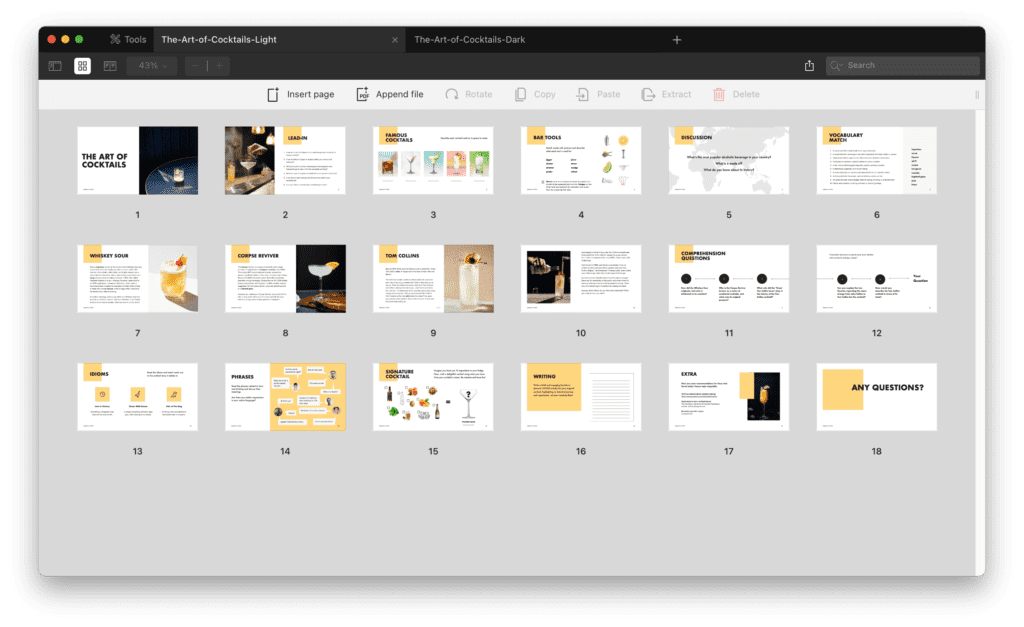
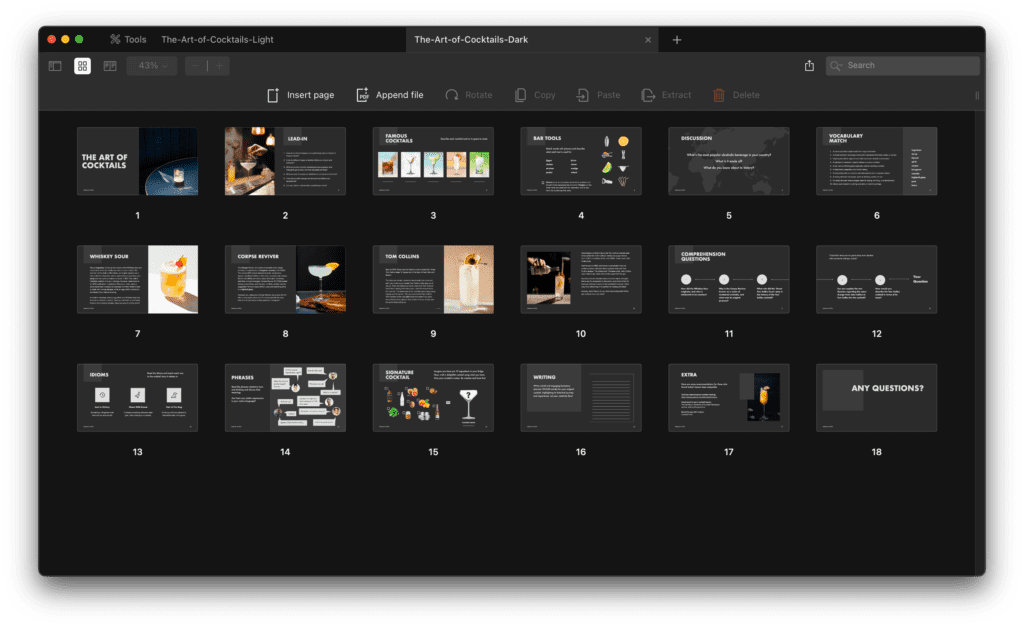
Start with the lead-in questions on page 2 about alcohol culture and bar experiences. This topic can be sensitive depending on your class, so read the room. The famous cocktails activity on page 3 works as a quick warm-up—students describe the drinks visually before learning their names (Old Fashioned, Martini, Margarita, Pina Colada, Mojito).
The bar tools matching on page 4 introduces vocabulary they’ll need for the rest of the lesson. Have students work in pairs to match terms with images and explain how each tool works. Page 5 asks about popular drinks from students’ home countries, which usually gets good discussion going.
Pre-teach the vocabulary on page 6 before the cocktail stories. The three readings about Whiskey Sour, Corpse Reviver, and Tom Collins (pages 7-10) can be split among small groups—each group learns one drink, then shares with the class. Keeps everyone busy and gets them reading and speaking.
Use the comprehension questions on pages 11-12 to check understanding. The idioms activity on page 13 ties back to the cocktail histories, and students tend to remember these because the expressions come straight from the stories they just read.
Page 14 covers common bar phrases students might hear in English-speaking countries. Practice through role-play—students take turns as bartenders and customers. The signature cocktail activity on pages 15-16 lets students get creative: brainstorm ingredients, name their drink, write a backstory. These can be shared aloud or posted around the room. The writing part works as homework if you’re short on time.
