
Tech & Internet Culture

This B1 lesson explores tech and internet culture through vocabulary building, reading exercises, and discussion activities. Intermediate students learn essential digital terminology from emojis and memes to gaming consoles and cryptocurrency while examining modern online careers. The lesson uses relatable content about influencers, streamers, and digital life to make contemporary technology vocabulary accessible and practical.
Lesson overview
- Learn vocabulary for internet culture including social media and digital communication
- Practice tech-related terms from gaming, AI, and virtual reality
- Develop reading skills through stories about digital-age careers
- Discuss modern technology trends and online culture
| Level | Vocabulary | Lesson Time |
| B1 / Intermediate | 16 words | 60-80 min |
Vocabulary
- Influencer
- Meme
- Emoji
- Hashtag
- DM
- Vlog
- Podcast
- Viral
- Streamer
- App
- Avatar
- VR
- AI
- eSports
- Crypto
- Console
Contents
- Lead-in
- Vocabulary 1
- Questions
- Vocabulary 2
- Questions
- Reading 1
- Reading 2
- Agree or Disagree
- Vocabulary practice
- Word search
- Speaking
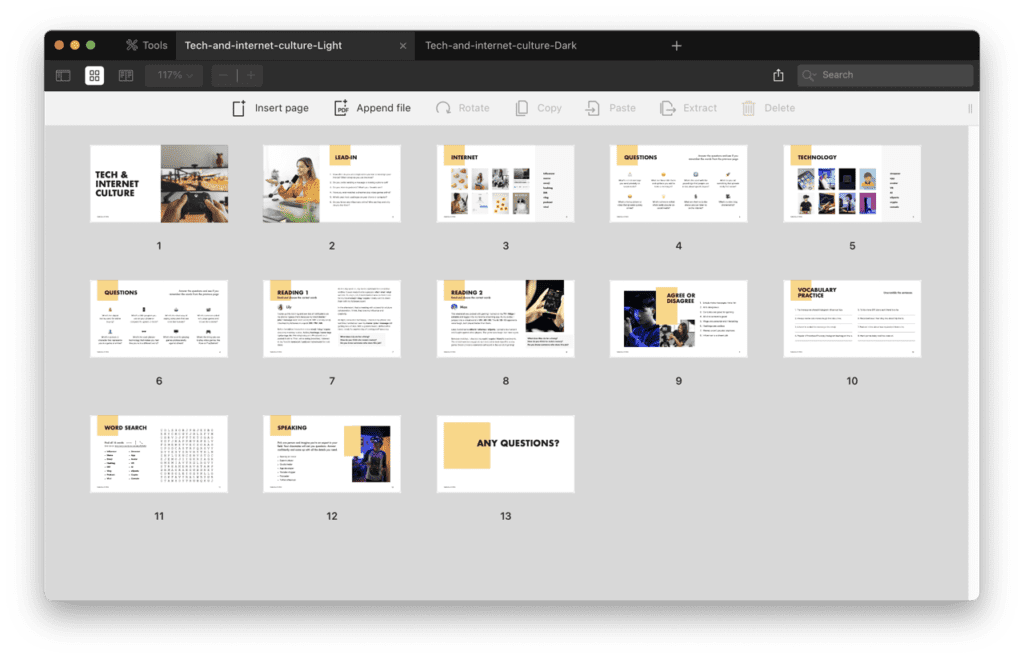
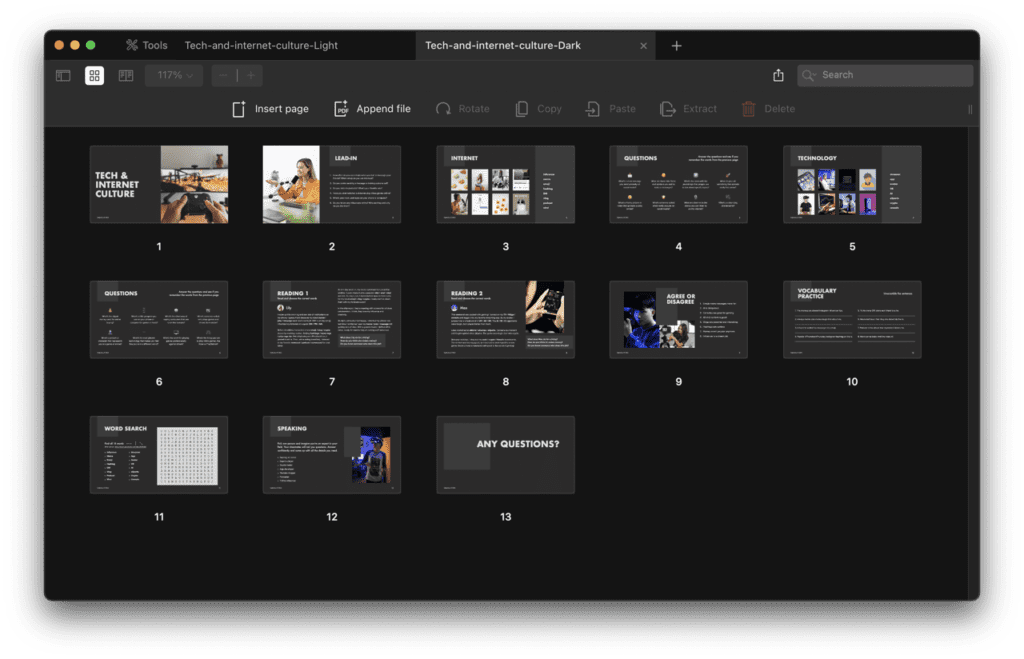
Open with the lead-in questions on page 2 about students’ digital habits. The six questions cover emojis, messaging preferences, podcasts, streamers, apps, and influencers. Students answer honestly about their tech use, which connects the lesson to their real lives right away. Most will have opinions about texting versus calling or which apps they prefer.
Pages 3-6 introduce sixteen vocabulary words in two categories: internet culture (influencer, meme, emoji, hashtag, DM, vlog, podcast, viral) and technology (streamer, app, avatar, VR, AI, eSports, crypto, console). Present each set with the visual matching activity where students match images to words. Then flip to the questions page where they answer definition prompts using the vocabulary. Visual recognition first, then verbal production.
The reading activities on pages 7-8 present two short narratives. Reading 1 follows Lily, an influencer who creates vlogs and posts memes. Reading 2 describes Max, a gamer into eSports and crypto trading. Both include multiple-choice vocabulary embedded in the text. After each reading, discuss how these people make money and what their work actually involves.
Page 9 offers eight agree/disagree statements about tech and internet culture. Topics like “AI is dangerous” and “Influencer is a dream job” spark genuine debate. Let students disagree with each other. The goal is extended speaking practice using the vocabulary in natural arguments.
The sentence unscrambling on page 10 works well as individual work followed by pair checking. The word search on page 11 reviews all sixteen vocabulary items. Use it as a timed competition or quiet individual work depending on class energy.
Close with the speaking activity on page 12 where students roleplay as experts in digital careers. One student becomes a gaming streamer, crypto trader, or TikTok influencer while classmates ask interview questions. The expert invents details about their work. This lets students use vocabulary confidently in an imaginative context.
