
Tech in Daily Life

This A2 lesson teaches the names and uses of fourteen everyday devices, from smartphones to telescopes. Students guess devices from pictures, match them to descriptions, and practice reading about how people use technology at home and work. It’s a hands-on topic that keeps students engaged because they already use most of these things every day.
Lesson overview
- Learn the names of fourteen common devices and what each one is used for
- Read two short texts about people using technology and answer comprehension questions
- Listen to true or false sentences about devices and check understanding
- Write and share your own true or false sentences about everyday technology
| Level | Vocabulary | Lesson Time |
| A2 / Pre-Intermediate | 14 words | 60 min |
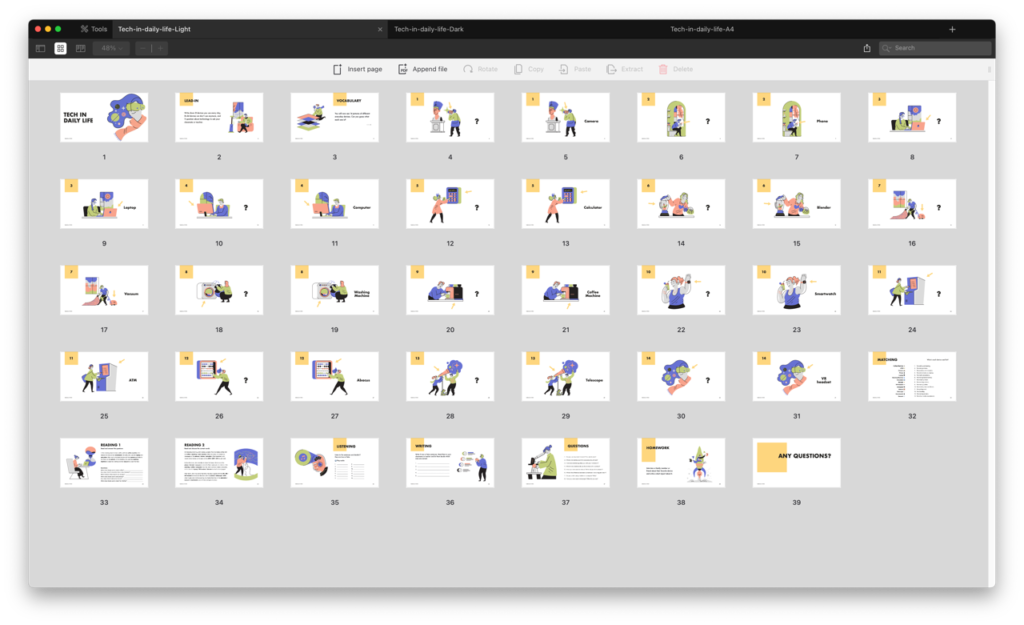
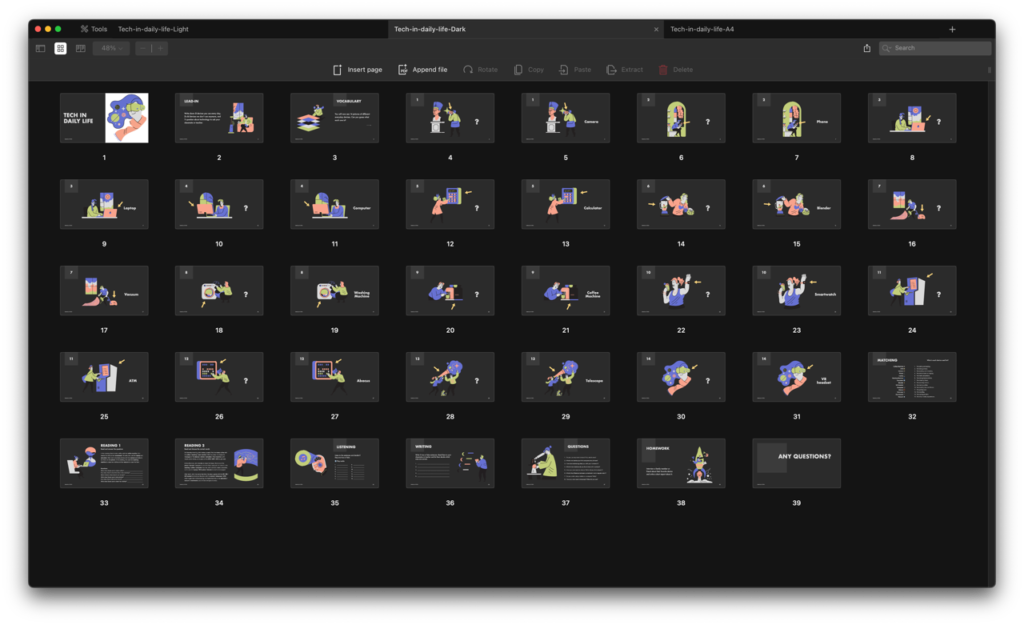
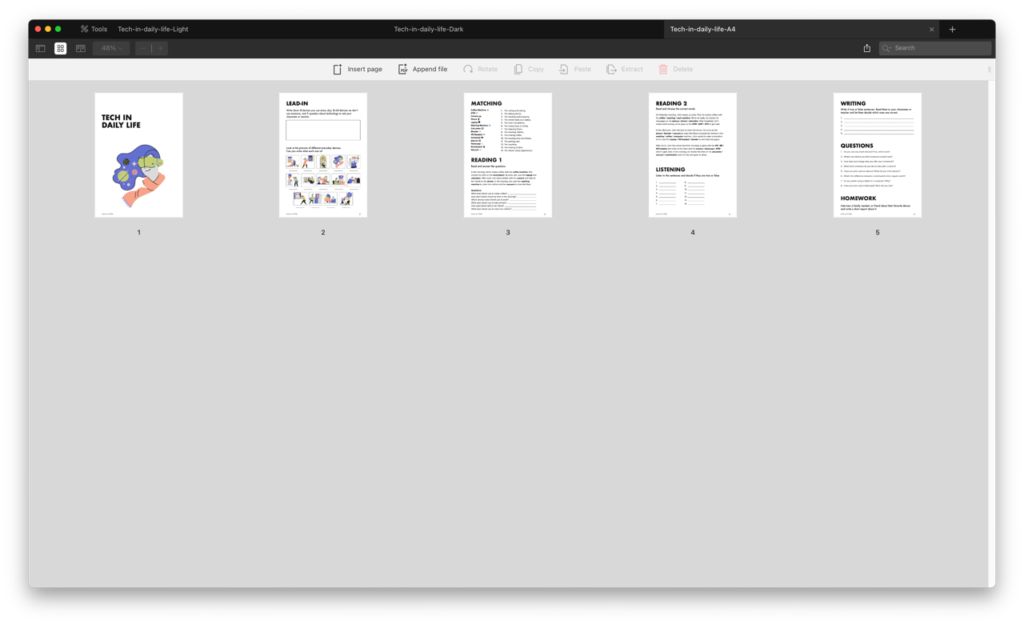
Vocabulary
- Camera
- Phone
- Laptop
- Computer
- Calculator
- Blender
- Vacuum
- Washing machine
- Coffee Machine
- Smart watch
- ATM
- Abacus
- Telescope
- VR headset
Contents
- Lead-in
- Vocabulary
- Matching
- Reading 1
- Reading 2
- Listening
- Writing
- Questions
- Homework
The lead-in gets students thinking right away. They write down three devices they use daily, two old devices nobody uses anymore, and one question about technology to ask a classmate. This quick activity usually produces fun answers, especially the old devices part. After sharing, move into the picture guessing section. Fourteen device images appear one by one, and students try to name each one before the answer is revealed. Go through these at a steady pace and help with pronunciation along the way. Words like “vacuum,” “blender,” and “abacus” can be tricky for A2 learners to say correctly.
After the picture reveal, do the matching activity where students connect each device to its use. Phrases like “for calling and texting” and “for cleaning floors” are simple enough for A2 but still reinforce the vocabulary. Then move to the first reading text about Sarah’s day. Students read a short paragraph and answer six comprehension questions about which devices she uses and when. The second reading is a gap-fill where students choose the correct word from three options in each sentence. This one is a bit harder because some of the wrong answers are funny or obviously wrong, which keeps it light.
The listening activity follows. Students hear fourteen sentences and mark each one true or false. Play the audio twice if needed, pausing between sentences so students have time to write. After checking answers, the writing task flips the activity around. Students write five true or false sentences of their own about devices, then read them to a partner or the class. This is always a good time because students try to trick each other with tricky false statements.
Finish with the discussion questions. These are simple but open enough to get real conversation going, like “What’s one device you think everyone should have?” and “Do you prefer a tablet or a computer?” For homework, students interview a family member about their favorite device and write a short report. This gives them real-world speaking and writing practice outside the classroom.
