
Talking to the Police

This B1 lesson teaches practical phrases for interacting with police in different situations. Students learn vocabulary like “pull over,” “noise complaint,” and “trespassing,” then read three dialogues about traffic stops, reporting problems, and asking for directions. The activities include error correction, sentence unscrambling, and role-plays based on realistic scenarios.
Lesson overview
- Learn vocabulary for traffic stops, reporting issues, and requesting police assistance
- Practice three realistic dialogues about being pulled over, filing complaints, and asking for help
- Distinguish between good and bad advice when interacting with law enforcement
- Develop speaking skills through role-plays covering ten common police interaction scenarios
| Level | Vocabulary | Lesson Time |
| B1 / Intermediate | 18 phrases | 60-90 min |
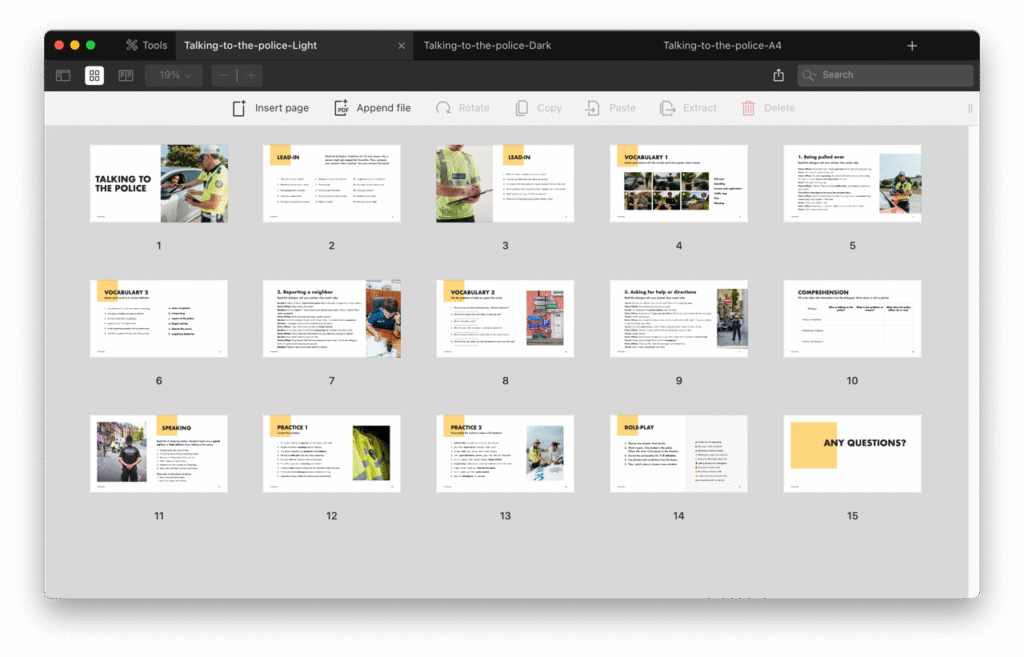
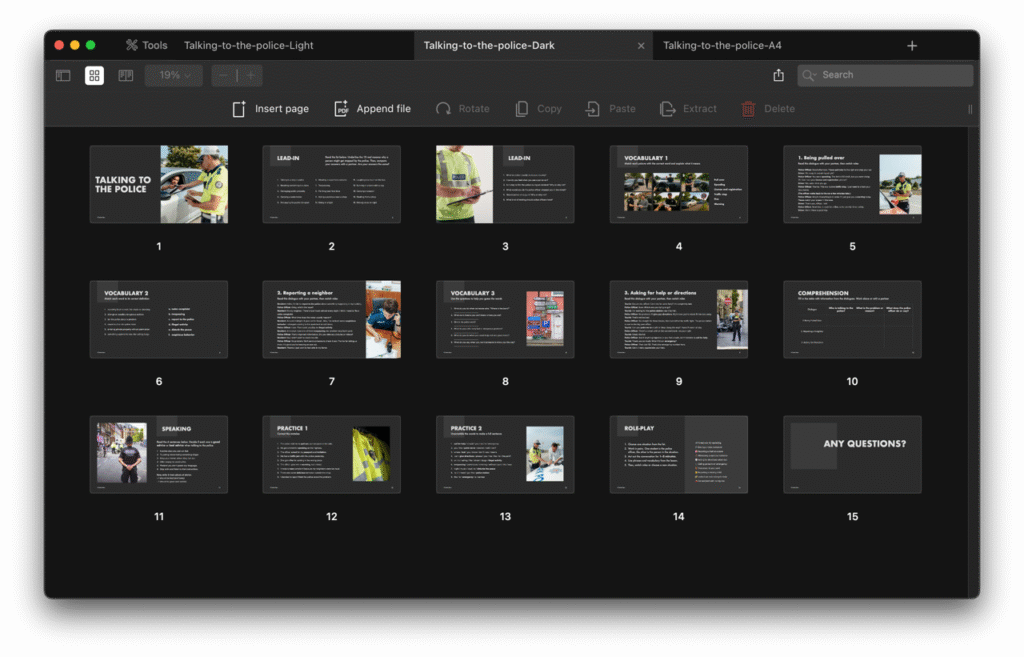
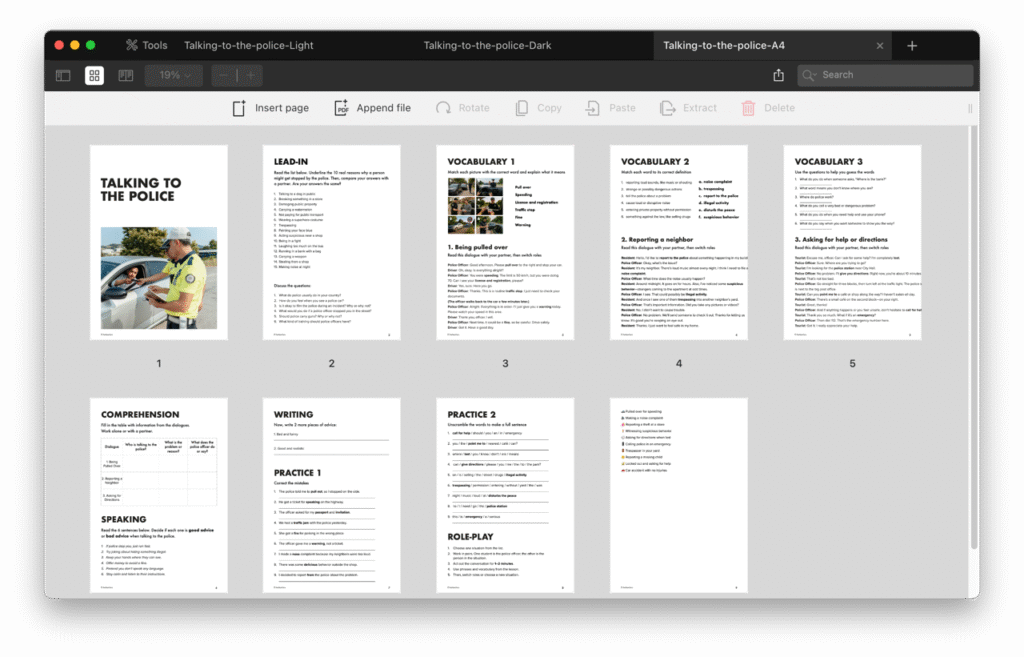
Vocabulary
- Pull over
- Speeding
- License and registration
- Traffic stop
- Fine
- Warning
- Noise complaint
- Suspicious behavior
- Report to the police
- Disturb the peace
- Trespassing
- Illegal activity
- Give directions
- Lost
- Police station
- Emergency
- Call for help
- Point me to
Contents
- Lead-in 1
- Lead-in 2
- Vocabulary 1
- Being pulled over
- Vocabulary 2
- Reporting a neighbor
- Vocabulary 3
- Asking for help or directions
- Comprehension
- Speaking
- Correct the mistakes
- Unscramble the sentences
- Role-play
Start with the lead-in where students identify ten real reasons police might stop someone from a list of fifteen options. The fake ones like “talking to a dog in public” and “carrying a watermelon” add humor while the real ones like “trespassing” and “acting suspicious” introduce vocabulary that appears later. The discussion questions about police in their country activate personal experiences and opinions.
The vocabulary section uses pictures matched to words like “speeding” and “fine.” Students explain what each one means after matching. The first dialogue shows a traffic stop where a driver was speeding. Read it twice with students switching roles so everyone practices both parts. The officer gives a warning instead of a fine, which shows how these interactions can end positively when drivers cooperate.
The second vocabulary set covers noise complaints and suspicious behavior. The dialogue about reporting a neighbor includes multiple issues like loud music, strange visitors, and trespassing. This is more complex than the traffic stop because the resident describes several concerns. The third vocabulary uses questions to help students guess words like “lost,” “emergency,” and “give directions.” The tourist dialogue shows a helpful interaction where the officer provides directions and safety information.
The comprehension table has students extract key information from all three dialogues. They identify who’s talking, what the problem is, and what the officer does. This checks whether they understood the main points. The speaking activity about good versus bad advice includes obviously terrible suggestions like “offer money to avoid a fine” mixed with good ones like “keep your hands where they can see.” Students then write one funny bad piece of advice and one realistic good one.
The error correction practice has sentences with mistakes like “pull out” instead of “pull over” and “nose complaint” instead of “noise complaint.” Some errors are vocabulary swaps, others are word choice problems. The unscrambling activity practices sentence structure using vocabulary from the lesson. The role-play gives ten situations and students act out conversations in pairs. Having ten options means students can repeat the activity several times with different scenarios without getting bored.
