
Talking About Money

This A2 lesson teaches ten common money verbs like “save,” “borrow,” “donate,” and “withdraw.” Students match words to definitions, choose the right verb in context sentences, and talk about how they’d spend specific amounts of money. It’s practical vocabulary that students will use outside the classroom every day.
Lesson overview
- Learn ten money verbs and match them to their definitions
- Practice choosing the correct verb in sentences about saving, spending, and borrowing
- Read a short story about a boy saving for a trip and fill in missing vocabulary
- Discuss real spending scenarios like planning a weekend trip on a $60 budget
| Level | Vocabulary | Lesson Time |
| A2 / Pre-Intermediate | 10 words | 60 min |
Vocabulary
- borrow money
- make money
- save money
- spend money
- waste money
- owe money
- transfer money
- withdraw money
- lend money
- donate money
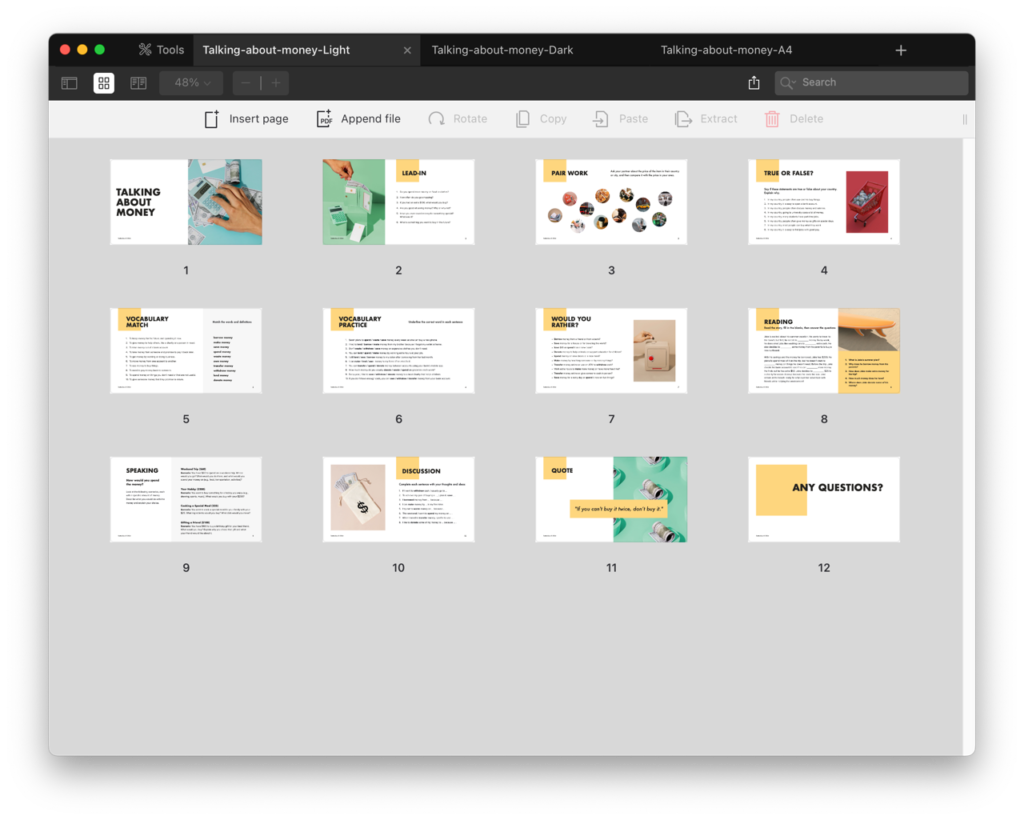
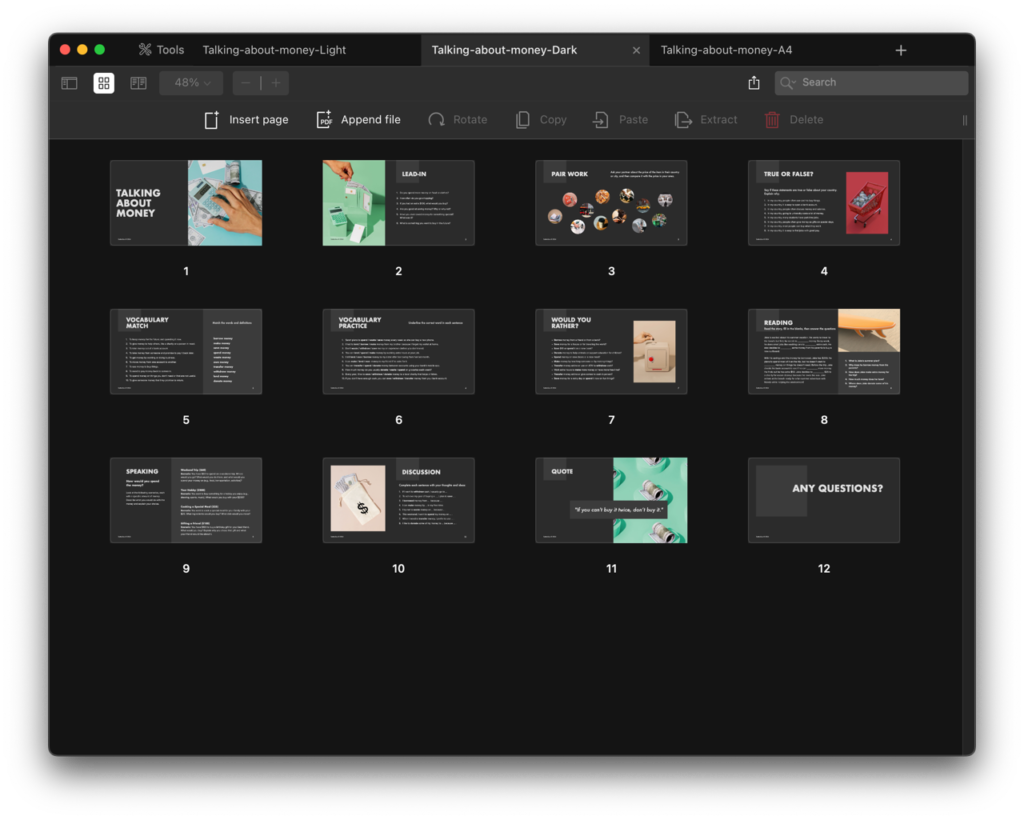
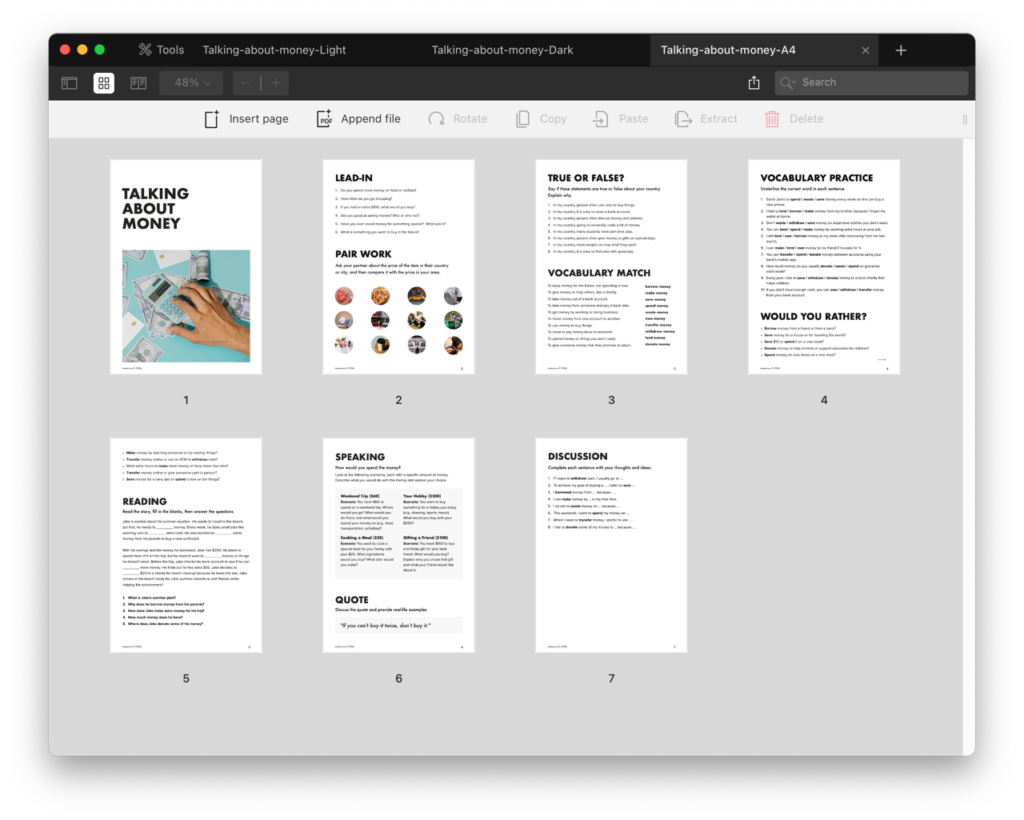
Contents
- Lead-in
- Pair work
- True or false?
- Vocabulary match
- Vocabulary practice
- Would you rather?
- Reading
- Speaking
- Discussion
- Quote
Open with the lead-in questions about spending and saving habits. These are simple enough for A2, and most students have an opinion about what they’d do with an extra $100. The pair work price comparison activity comes next. Students ask their partner how much everyday items cost in their country and compare prices. This is especially fun in classes with mixed nationalities because the price differences can be wild. Follow up with the true or false statements about money and culture. Students decide whether things like “people often discuss salaries” and “most people can buy what they want” are true for their country. This gets them talking while building context for the vocabulary ahead.
Introduce the ten money verbs through the matching exercise. “Borrow” and “lend” are the pair that causes the most confusion at A2, so spend extra time on these two. A clear example like “I borrow money from you, and you lend money to me” usually sorts it out. “Owe,” “withdraw,” and “transfer” might also need repeated examples. After matching, move to the vocabulary practice where students underline the correct verb in ten sentences. Go through answers together and ask students to explain why the other options are wrong. This strengthens understanding beyond just picking the right answer.
The “would you rather” activity is a good energy boost after the practice exercises. Students choose between options like “save money for a house or for traveling” and “donate to help animals or support education.” These simple choices push students to use the target verbs in their answers naturally. Then move into the reading. Students fill in six blanks in a story about Jake saving for a beach trip. The vocabulary fits perfectly because the story uses saving, borrowing, earning, and donating in a realistic sequence. After completing the blanks, students answer five short comprehension questions.
Finish with the spending scenarios. Students get four situations, each with a set budget: a $60 weekend trip, $200 for a hobby, $25 for cooking a special meal, and $100 for a birthday gift. They describe what they’d buy and why. This works well in pairs or small groups because students compare choices and ask each other questions. The sentence completion discussion wraps things up. Students finish eight starters like “I try not to waste money on…” and “I can make money by…” with their own ideas. End with the “If you can’t buy it twice, don’t buy it” quote for a quick final discussion.
