
Talking About Art
This B1 lesson teaches students vocabulary for discussing art and introduces them to the famous Mona Lisa story. Students learn different art forms, watch an engaging video about why the Mona Lisa became so famous, and discuss emotions that artwork can evoke. The lesson combines vocabulary work, video comprehension, and creative speaking activities about art appreciation.
Lesson overview
- Learn vocabulary for different art types and terms related to famous artworks
- Practice listening comprehension through a video about the Mona Lisa’s history
- Develop speaking skills by retelling the Mona Lisa story using keywords
- Explore how art expresses emotions through discussing famous paintings
| Level | Vocabulary | Video Length | Lesson Time |
| B1 / Intermediate | 16 words | 2:17 min | 60 min |
Vocabulary
- digital art
- drawing
- graffiti
- painting
- sculpture
- pottery
- architecture
- photography
- renowned
- master
- to work on and off
- portrait
- uproar
- to suspect
- innocent
- carpenter
Contents
- Lead-in
- Types of art
- Discussion
- Vocabulary match
- Vocabulary Practice
- Video
- Comprehension questions
- Speaking
- Discussion
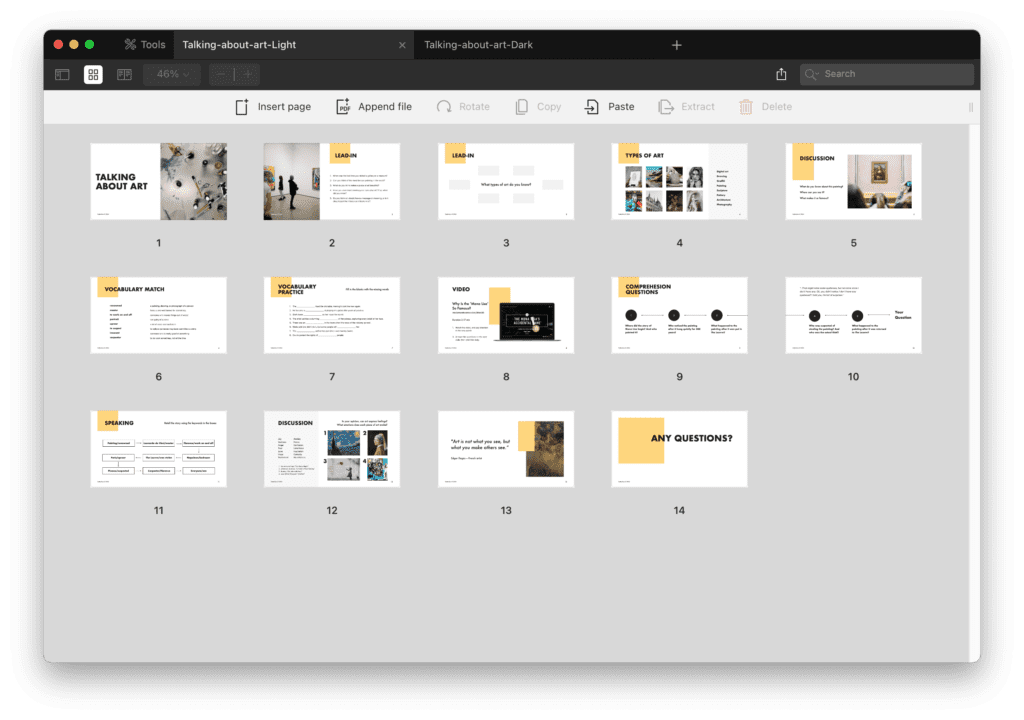
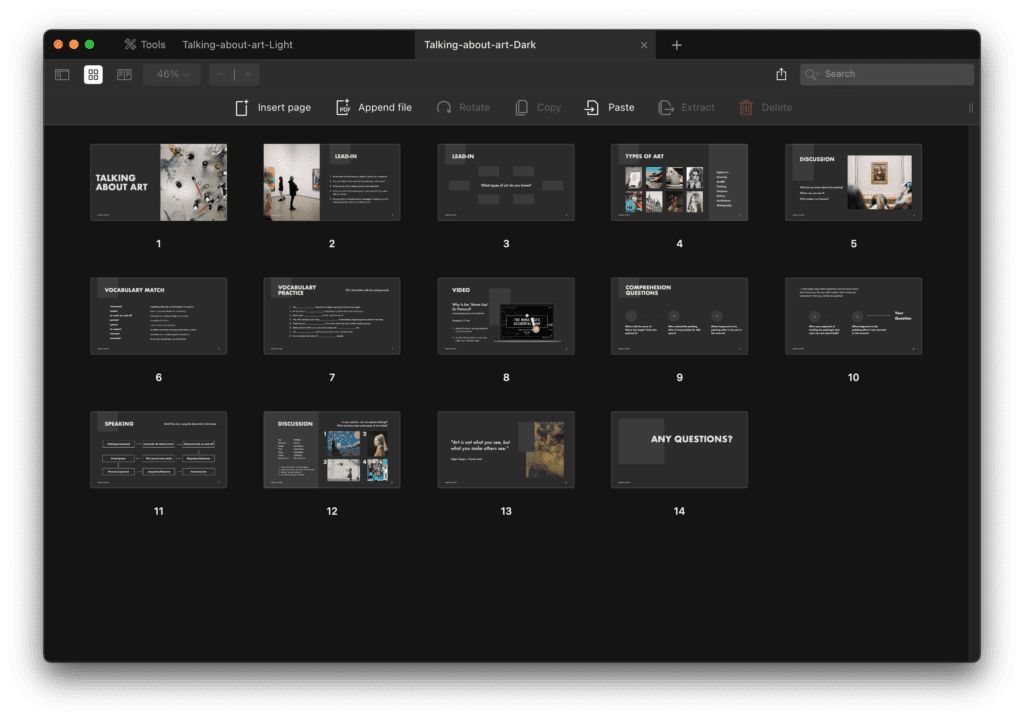
Start with the lead-in questions about gallery visits and famous paintings. Most students will mention the Mona Lisa even before you show it on page 5. The brainstorm on page 3 about art types works as a quick whole-class activity before revealing the photos on page 4. Students match images to art forms, which gives you a chance to drill pronunciation of words like “sculpture” and “architecture.”
The Mona Lisa discussion on page 5 gets at what students already know before the video. Many will be surprised the painting is actually quite small in real life. Pre-teach vocabulary on pages 6-7 before the video since terms like “renowned,” “uproar,” and “carpenter” come up and knowing them helps. The practice activity on page 7 reinforces these words in context.
The video on page 8 is the main event. It tells the theft story in an entertaining way with good visuals. Play it once without stopping, then have students discuss what they understood in pairs. Play it again, pausing after key moments to check comprehension. The questions on pages 9-10 make sure students caught the main points. The quote from the painting itself about not having eyebrows usually gets laughs.
The retelling activity on page 11 is challenging but worth it. Give students time to review the keywords and plan what they’ll say. Weaker students can work in pairs to reconstruct the story together. Stronger students can do it alone. The keywords guide them through the narrative without giving complete sentences, which pushes them to use their own words.
The emotions discussion on page 12 shifts from storytelling to interpretation. Students look at four famous artworks and discuss what feelings each piece brings up. There are no wrong answers, which makes it accessible even for students who claim they “don’t understand art.” Everyone can say whether a painting makes them feel calm, sad, or curious. The Degas quote on page 13 wraps this up and can lead to debate about whether art’s purpose is to show reality or create new meanings.
