
Taking Photos

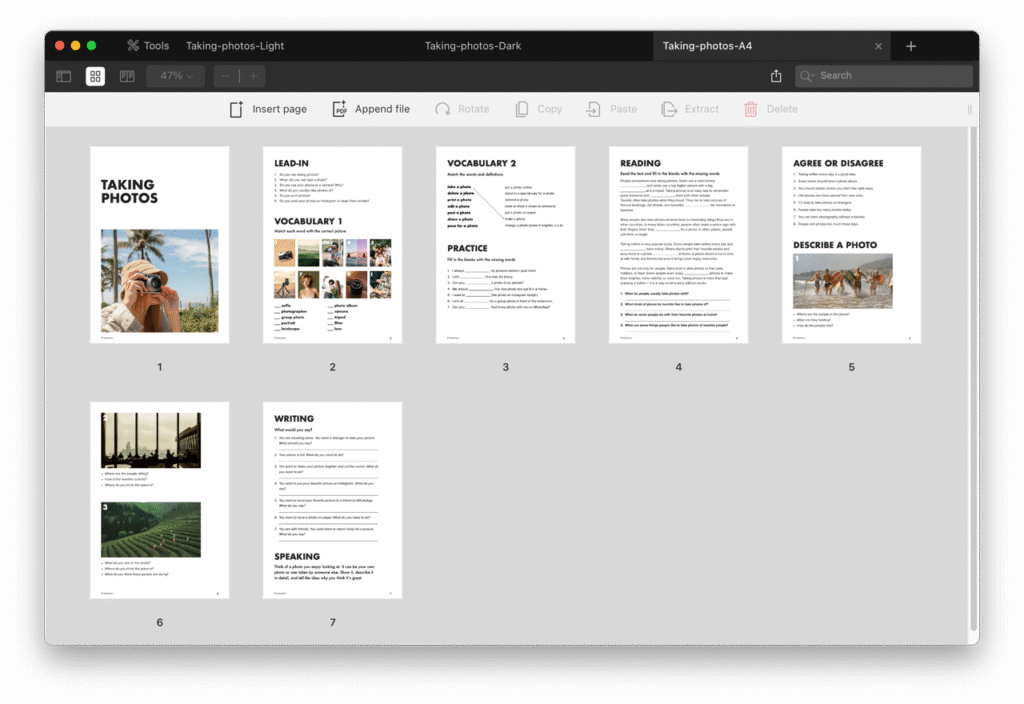
This A2 lesson teaches basic photography vocabulary and phrases for talking about taking photos. Students learn words like “selfie,” “portrait,” and “edit,” then practice verbs like “post,” “delete,” and “share.” The activities include picture descriptions, reading about photo habits around the world, and writing prompts for common photo situations.
Lesson overview
- Learn ten photography words from camera equipment to photo types
- Practice action verbs for taking, editing, and sharing pictures
- Read about different photo-taking habits across cultures and age groups
- Develop speaking skills by describing photos and explaining personal preferences
| Level | Vocabulary | Lesson Time |
| A2 / Pre-Intermediate | 17 words | 60 min |


Vocabulary
- selfie
- photographer
- group photo
- portrait
- landscape
- photo album
- camera
- tripod
- filter
- lens
- take a photo
- delete a photo
- print a photo
- edit a photo
- post a photo
- share a photo
- pose for a photo
Contents
- Lead-in
- Vocabulary
- Practice
- Reading
- Questions
- Agree or disagree
- Describe a photo
- Writing
- Speaking
Start with the lead-in questions about photo habits. Question three about phone versus camera shows you who’s serious about photography and who just snaps quick pictures. Question six about posting publicly versus keeping photos private usually splits the class into two camps. The first vocabulary set shows ten items through pictures like tripod, filter, and lens. After matching, ask which items students own or would like to have.
The second vocabulary matches eight verbs to definitions. “Post” versus “share” can be confusing because they’re similar, so explain that posting is public while sharing can be private. The practice activity fills in blanks using these verbs in realistic sentences. Students might struggle with “pose for” taking a preposition, so check this carefully.
The reading is about 200 words and covers what people photograph, cultural differences like the Asian peace sign, and different ways people store photos. The text has eight blanks and students fill them using vocabulary from earlier sections. This reinforces the words in a connected passage. The four comprehension questions check understanding without being too challenging.
The agree or disagree statements work well in pairs. Number five about photographing strangers usually generates debate because cultural norms vary. Number eight about over-editing connects to Instagram culture and filters. The three photo descriptions give students structured speaking practice. Each has three or four guiding questions about location, feelings, and activities. Encourage students to speculate using “maybe” or “I think” when they’re not certain.
The writing task presents seven situations and students write what they’d say in each one. Situation one about asking a stranger to take your picture practices polite requests. Situation seven about posing friends uses commands or suggestions. Model one or two examples if students seem stuck. The speaking closer has students show a photo they enjoy, describe it in detail, and explain why it’s great. This personalizes the topic and lets them use all the lesson vocabulary naturally.
