Take a Break

This fun, conversation-based B1 lesson is all about taking breaks and relaxing. Students start by chatting about what makes them feel stressed or calm. They’ll learn new words through short, everyday examples and watch a video about a vending machine that gives free tea but locks your phone until your break is over. The class includes vocabulary and video tasks, a Story Chain game, and a Problem–Break Solution challenge. It all wraps up with a creative activity where students design their own “break machine.”
Lesson overview
- Practice talking about stress and relaxation using everyday situations
- Learn 10 practical words related to breaks, rest, and feeling refreshed
- Discuss personal habits around taking breaks and phone use
- Watch and analyze a short video about an unusual vending machine
| Level | Vocabulary | Video Length | Lesson Time |
| B1 / Intermediate | 10 words | 0:52 min | 60 min |


Vocabulary
- Vending machine
- To take a break
- To trick somebody
- To give in
- To sue somebody
- To place
- To charge
- Locked
- Revitalization
- Refreshing
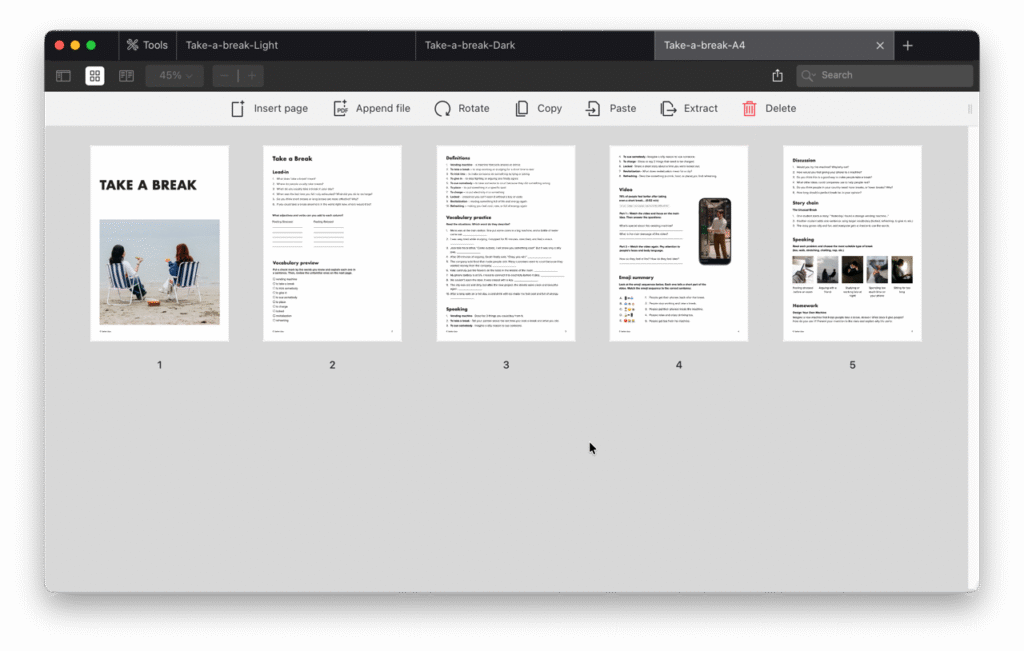
Contents
- Lead-in
- Vocabulary Preview
- Definitions
- Vocabulary Practice
- Speaking
- Video
- Emoji Summary
- Discussion
- Story Chain
- Speaking
- Homework
Start with the lead-in questions about what “take a break” means and where people rest. Students share when they last felt exhausted and what they did about it. This gets them thinking about the topic and shows you what vocabulary they already have. The brainstorming activity works well in pairs. They sort adjectives and verbs into “feeling stressed” and “feeling relaxed” columns.
The vocabulary section teaches 10 words students need for the video and discussions. Go through the preview checklist first so students can self-assess. Then review the definitions together. The practice activity gives context sentences where students identify which word fits. You can do this as a worksheet or project it for whole-class work. Make sure to drill pronunciation on “revitalization” since it’s long and tricky.
The video is only 52 seconds but it’s the heart of the lesson. Play it twice. First viewing focuses on the main idea. What makes this vending machine special? It locks your phone and gives you tea instead. Second viewing pays attention to how people’s faces change. They look annoyed at first, then relaxed. The emoji summary is a nice comprehension check. Students match emoji sequences to sentences about the video.
Wrap up with the discussion questions. Would you try this machine? How would you feel giving up your phone? These questions work great in small groups because they get personal opinions flowing. The story chain activity at the end lets students practice the target vocabulary in a creative way. One person starts, then each student adds a sentence using words like “locked” or “to give in.” If you have time, the homework asks them to design their own break-encouraging machine and present it next class.