
Table Manners
This B2 lesson explores dining etiquette through a British expert’s advice on flawless table manners. Students learn vocabulary like selfless, resting position, and phone-free zone, then watch a video covering five essential tips. Activities include deciding if behaviors are rude, discussing cutlery rules across cultures, and reading about shocking table customs from around the world.
Lesson overview
- Learn dining etiquette vocabulary including flawless, selfless, resting position, and course of a meal
- Watch a British etiquette expert explain five tips for proper dining behavior and cutlery placement
- Discuss whether strict table rules make meals elegant or just less relaxed and fun
- Read six culture shock scenarios from Italy, Japan, France, China, India, and Finland
| Level | Vocabulary | Video Length | Lesson Time |
| B2 / Upper-Intermediate | 8 words | 1:10 min | 60 min |
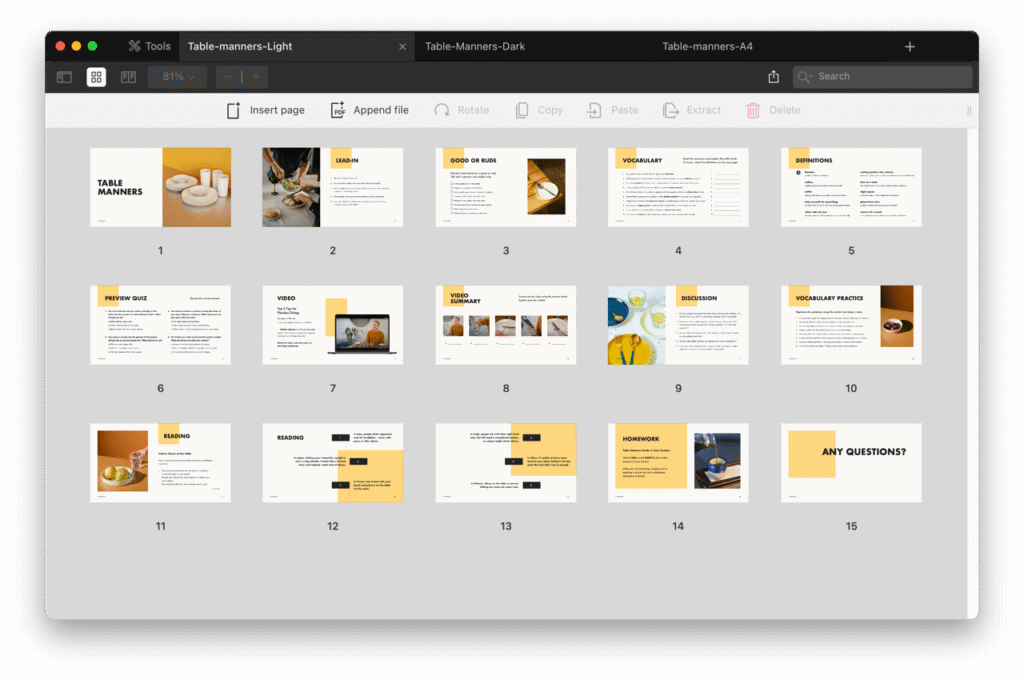
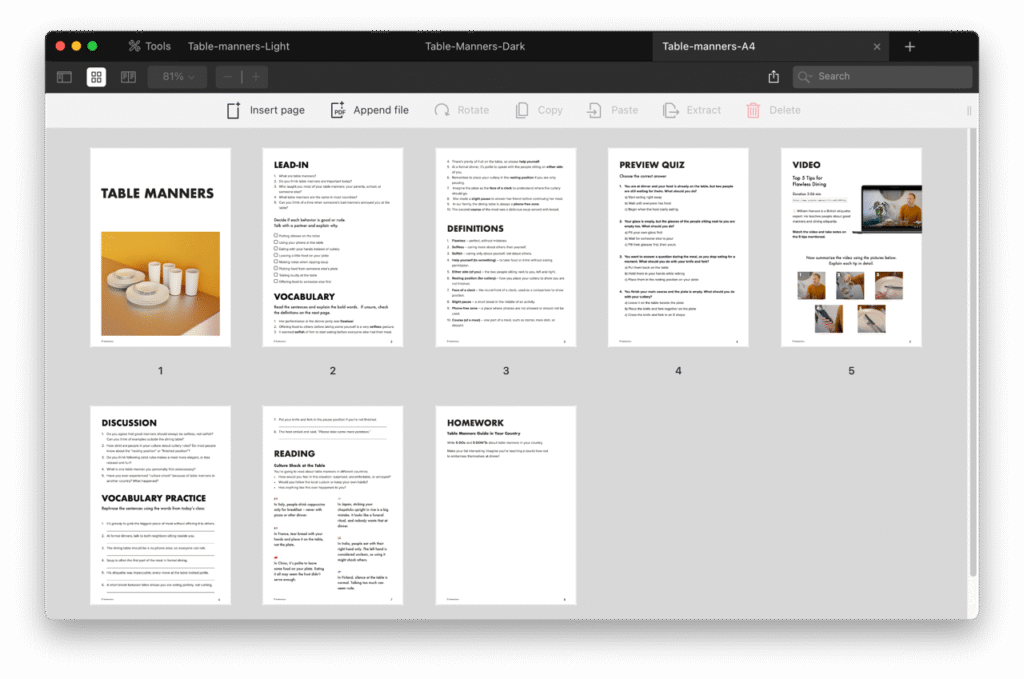
Vocabulary
- Flawless
- Selfless
- Selfish
- Help yourself
- Either side (of you)
- Resting position (for cutlery)
- Face of a clock
- Slight pause
- Phone-free zone
- Course (of a meal)
Contents
- Lead-in
- Good or rude
- Vocabulary
- Definitions
- Preview quiz
- Video
- Video summary
- Discussion
- Vocabulary practice
- Reading
- Homework
Start with the lead-in questions about table manners. Question 5 about when bad manners annoyed you gets students sharing real experiences. Then do the good or rude activity. Students decide if eight behaviors are polite or rude and explain why. Answers vary by culture, which creates discussion. Move to vocabulary. Students read ten sentences and explain bold words, then check definitions. Drill pronunciation on “selfless” and “flawless.”
The preview quiz has four dining scenarios with multiple choice answers. Don’t reveal correct answers yet. Students guess, then watch the video to check. The video is about three minutes showing William Hanson explaining five etiquette tips. Students take notes on each tip. After watching, they use the five pictures to summarize the video in detail. Walk around and listen as students explain tips about waiting for everyone, pouring for others first, cutlery positions, and conversation.
The discussion questions push students beyond the video content. Question 3 about whether strict rules make meals elegant or less fun usually divides the room. Question 5 about culture shock experiences connects to the upcoming reading. The vocabulary practice has students rephrase seven sentences using lesson words. This reinforces meaning through paraphrasing. The reading shows six table customs that surprise foreigners. For each one, students say if they’d feel surprised, uncomfortable, or annoyed, whether they’d follow the custom, and if anything similar happened to them. The Japan chopsticks example and China empty plate custom usually spark the most reaction.
