
Swamped by too much info?

This B2 lesson explores information overload and how constant digital content affects our ability to focus. Students read about the “noise bottleneck” concept and discuss practical strategies for managing information consumption. The lesson includes vocabulary work, reading comprehension, and discussions about FOMO and social media habits.
Lesson overview
- Explore how modern information consumption differs from past centuries
- Learn vocabulary related to media, content consumption, and cognitive limits
- Discuss the psychological effects of information overload and FOMO
- Practice phrasal verbs commonly used when talking about information sharing
| Level | Vocabulary | Lesson Time |
| B2 / Upper-Intermediate | 16 words | 60 min |
Vocabulary
- swamped
- to consume
- gossips
- valuable
- to be updated
- overwhelming
- multitasking
- myth
- content
- bring up
- pass on
- look into
- find out
- come across
- keep up
- FOMO
Contents
- Lead-in
- Discussion
- Vocabulary preview
- Vocabulary
- Vocabulary practice
- Reading
- Questions
- Skimming
- Phrasal verbs
- Discussion
- Speaking
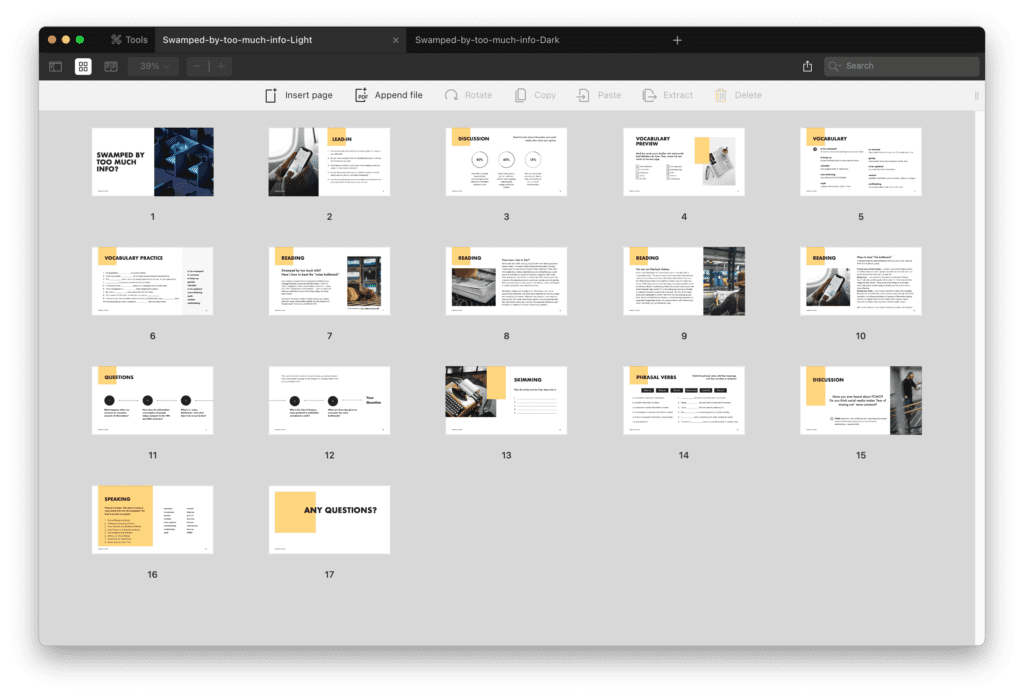
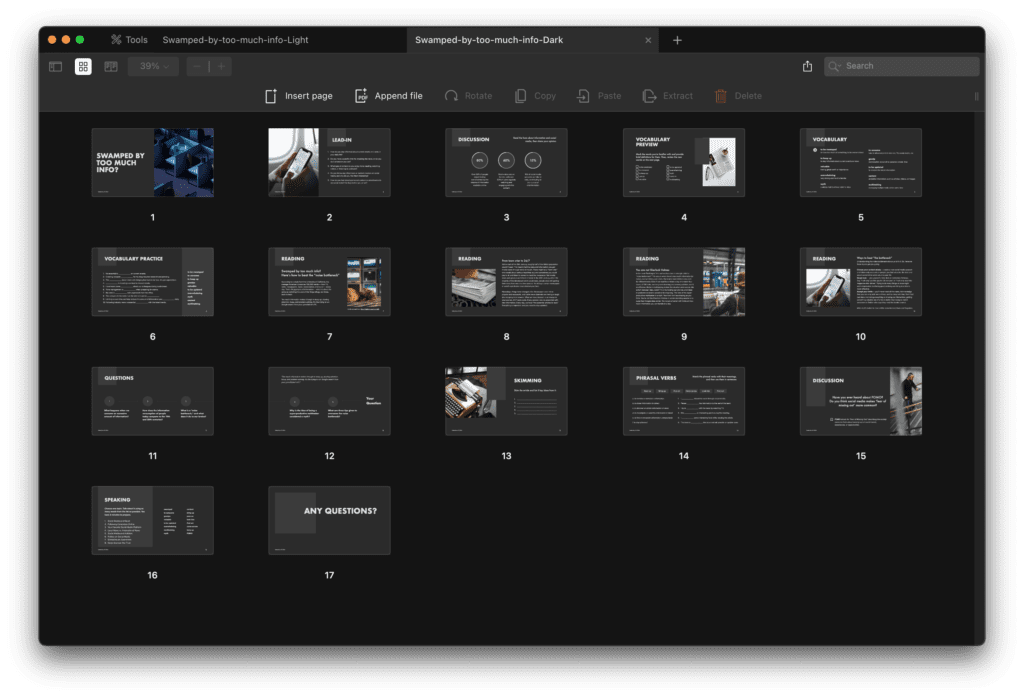
Start with the lead-in questions on page 2 about how students stay informed. This gets them thinking about their own habits before any vocabulary comes up. Most will admit they check their phones constantly, which sets up the lesson’s main problem. The statistics discussion on page 3 works well as a quick prediction activity. Ask students to guess the percentages before showing them.
Pre-teach vocabulary on pages 4-5 before the reading. Watch out for “to be swamped” and “overwhelming” since students sometimes confuse these. The vocabulary practice on page 6 reinforces the terms in context. For the main reading on pages 7-10, consider doing the first section together, then having students read the rest on their own. The Lord of the Rings comparison on page 7 usually gets laughs and makes the statistics stick.
After reading, use the comprehension questions on pages 11-12 to check understanding. The “noise bottleneck” concept is important, so make sure students get it. The skimming activity on page 13 works better if students try it without looking back at the text first. The phrasal verbs on page 14 are worth drilling. Have students make their own example sentences beyond the fill-in exercise.
The FOMO discussion on page 15 usually gets strong reactions since most students recognize the feeling. Let the conversation run rather than rushing through. For the final speaking activity on page 16, give students the full two minutes to prepare. Weaker students might need prompts like “Which words could you use to talk about this topic?” The range of topics means everyone should find something that interests them.
