
Surfing

This B1 lesson teaches surfing vocabulary through listening practice and picture descriptions. Students learn twelve terms like “surfboard,” “wetsuit,” and “wipeout,” then listen to dialogues between a surf coach and a beginner. The activities include role-play listening, comprehension questions, and speaking tasks where students describe surf photos. It works well for classes interested in beach culture and outdoor sports.
Lesson overview
- Learn twelve surfing terms including equipment, actions, and beach vocabulary
- Listen to surf lesson dialogues and practice both student and instructor roles
- Answer comprehension questions about surf safety and beginner techniques
- Describe three surf photos using new vocabulary and discuss what surfers might be thinking or feeling
| Level | Vocabulary | Listening Time | Lesson Time |
| B1 / Intermediate | 12 words | 3-5 min | 60 min |
Vocabulary
- Surfboard
- Wave
- Wetsuit
- Leash
- Wax
- Fin
- Paddle
- Wipeout
- Sunblock
- Whitewater
- Shaka
- Flip-flops
Contents
- Lead-in
- Vocabulary
- Listening
- Questions
- True or false
- Quote
- Practice 1
- Practice 2
- Speaking
- Extra words
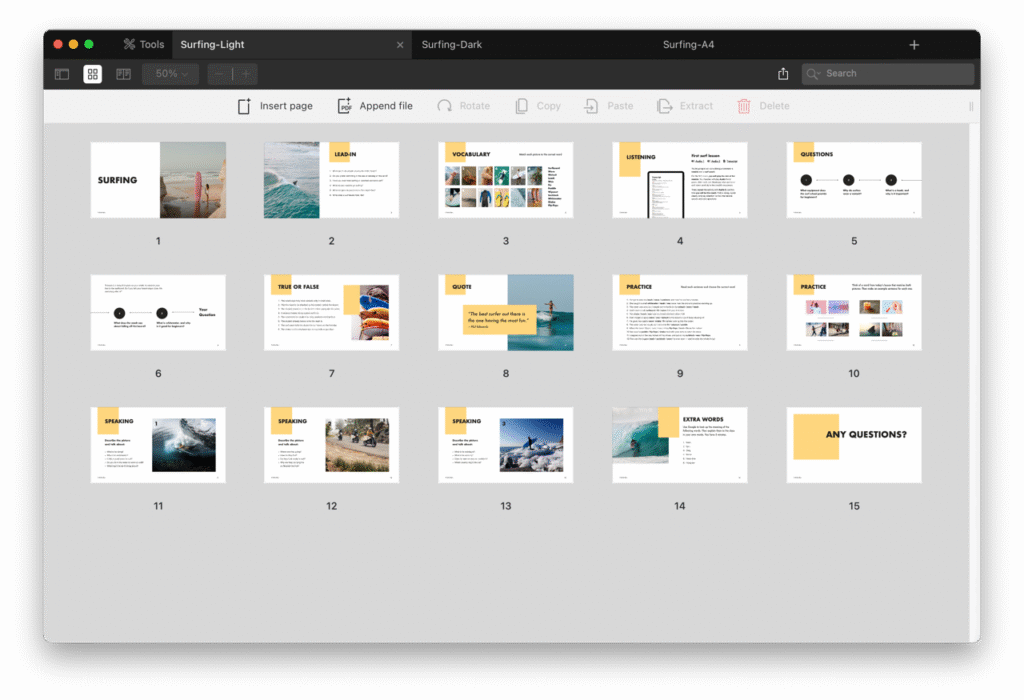
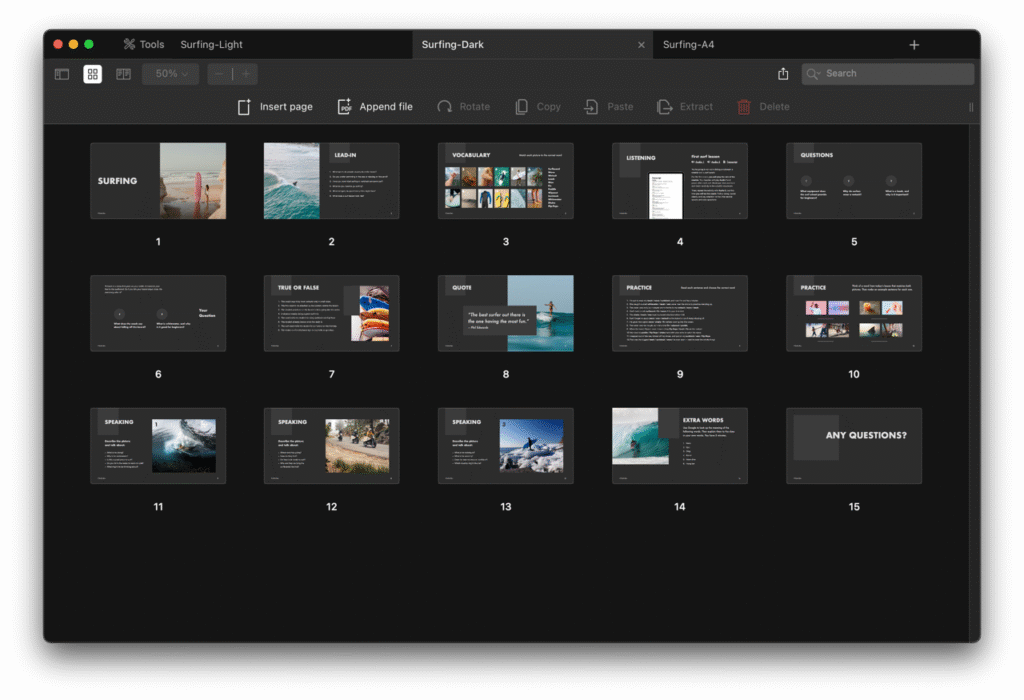
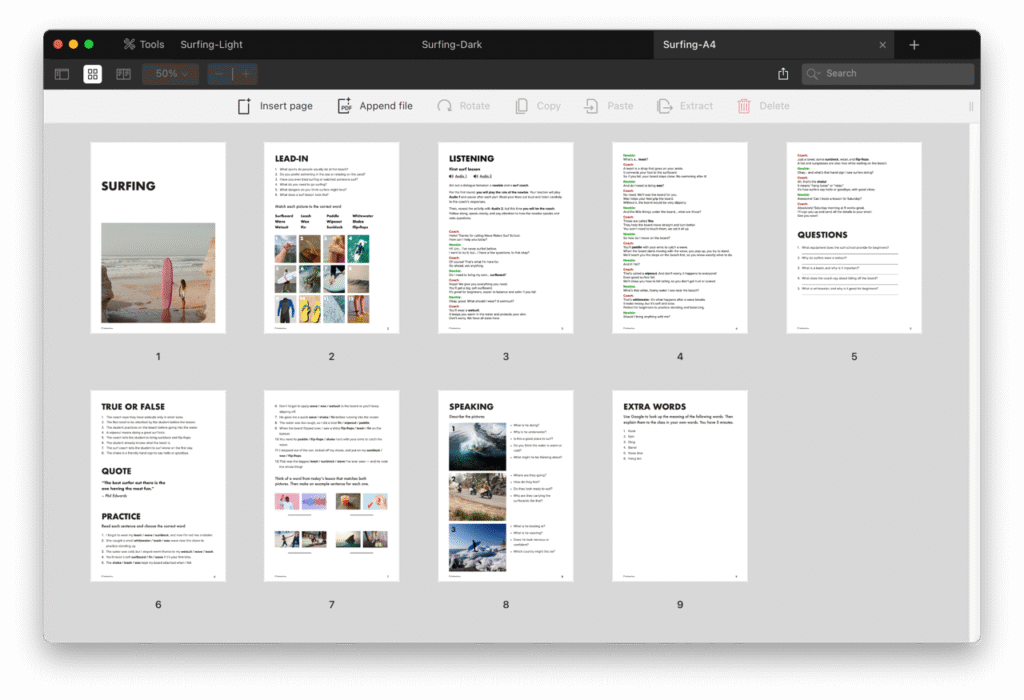
Start with the lead-in questions about beach sports and surfing experiences. Most students have seen surfing on TV or online even if they’ve never tried it, so everyone can participate. Ask students what equipment surfers need and what dangers they might face. This gets them thinking about the topic before you introduce new words.
The vocabulary matching uses twelve pictures. Students match images to words like “leash,” “wax,” and “shaka.” Go through the answers together and demonstrate the shaka hand sign, which usually gets a laugh. Make sure students understand that “wax” goes on the board and “whitewater” describes small broken waves near the shore, since those concepts might be new.
The listening activity has three audio files. Students role-play a conversation between a beginner and a surf coach. For Audio 1, students play the newbie while you or the recording plays the coach. Pause after each coach response so students can read their lines. Then switch roles using Audio 2, where students become the coach. This double practice helps them hear the vocabulary in context and use it themselves. After both role-plays, play Audio 3 if you want additional listening or use it for review.
The comprehension questions check whether students caught key information about equipment, safety, and surf terms. Question 3 asks students to explain what a leash is using a quote from the dialogue, which tests their understanding and speaking at the same time. The true/false activity reinforces main ideas from the listening.
Finish with the practice exercises and speaking tasks. The multiple-choice sentences give students controlled practice with all twelve vocabulary words. The double-picture matching is trickier because students need to find one word that connects two different images, then create sentences for each. The three speaking photos show different surf moments. Students describe what they see and speculate about feelings, location, and what might happen next. This pushes them to use the vocabulary creatively.
