
Superstitions

This B1 intermediate lesson explores superstitions from around the world, examining why people believe certain actions bring good or bad luck. Students learn about the Maneki Neko lucky cat in Japan, wedding traditions in the UK, and New Year rituals in South Africa. Through vocabulary matching, cultural readings with discussion questions, and speaking activities about supernatural beliefs, learners develop language skills while comparing superstitious practices across different cultures and reflecting on their own beliefs.
Lesson overview
- Explore superstitions and their cultural origins through readings from three countries
- Learn vocabulary related to luck, rituals, ceremonies, and supernatural beliefs
- Practice using superstition vocabulary through synonym replacement exercises
- Discuss personal beliefs about fortune-telling, ghosts, and cultural traditions
| Level | Vocabulary | Video Length | Lesson Time |
| B1 / Intermediate | 8 words | 5:10 min (optional) | 50 min |
Vocabulary
- Ritual
- Taboo
- Fortune
- Prosperous
- Ceremony
- Ward off
- Supernatural
- Superstitious
Contents
- Lead-in
- Vocabulary
- Reading
- Vocabulary practice
- Speaking
- Optional video
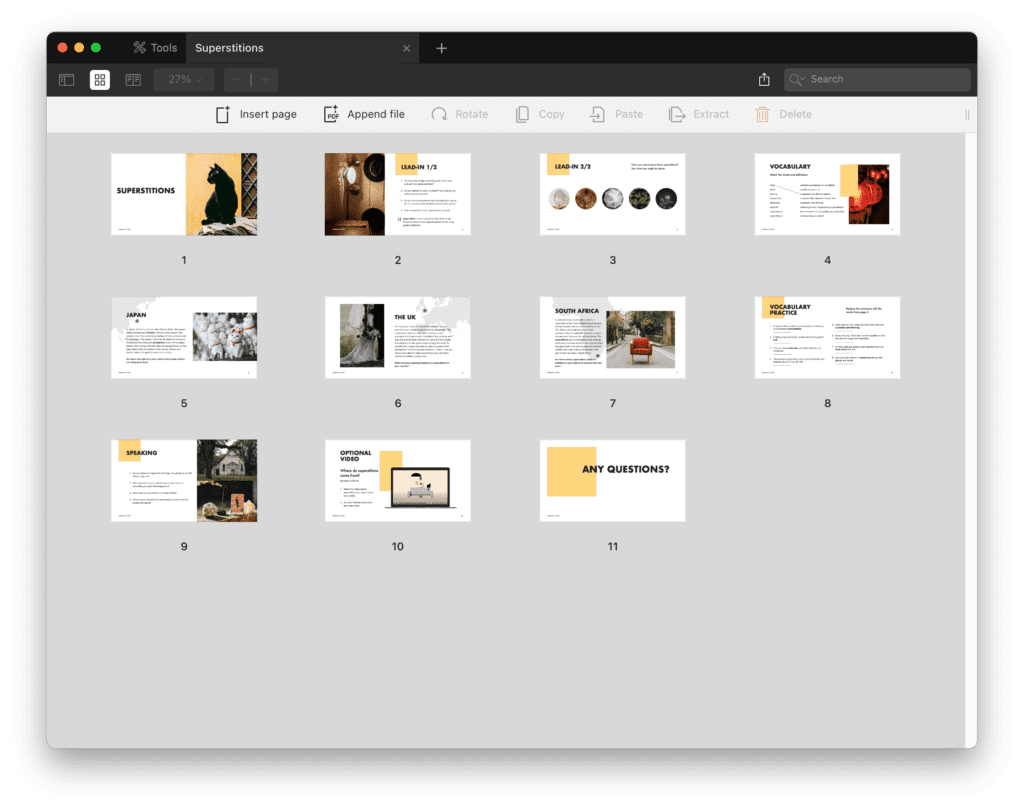
Start with the warm-up questions on page 2. Give students two minutes to think about their own cultural superstitions before they pair up and talk. Question four about how superstitions started gets them thinking critically, which sets up the cultural readings that come next.
Page 3 shows five images of common superstitions. Students work in pairs to figure out what each one represents. Takes about three minutes and taps into what they already know about mirrors, broken glass, four-leaf clovers, and full moons.
Page 4 has eight vocab words related to superstitions. Students match words with definitions, working solo for three minutes before checking with partners. Hit the pronunciation hard, especially supernatural, superstitious, and prosperous.
Pages 5-7 have three cultural readings about superstitions in Japan, the UK, and South Africa. Split the class into three groups and give each group one reading. Five minutes to read and discuss the follow-up question. Then mix the groups so each student shares their reading with others. This jigsaw setup takes about fifteen minutes total and creates real information exchange since everyone has something different to share.
Page 8 has vocab practice through synonym replacement. Students work solo to swap out synonyms with the right words from page 4. About six minutes for this. After checking answers, have them read the sentences aloud to practice pronunciation in context.
The speaking activity on page 9 has four questions about supernatural beliefs and fortune-telling. These work well as pair discussions or small group chats. Give ten minutes here, then do a quick whole-class share of interesting stories.
Page 10 has an optional video about where superstitions come from. If you’ve got time, students watch and take notes on key points, then retell the info to partners. Adds another fifteen minutes to the lesson.
