
Strategies for Successful Negotiation

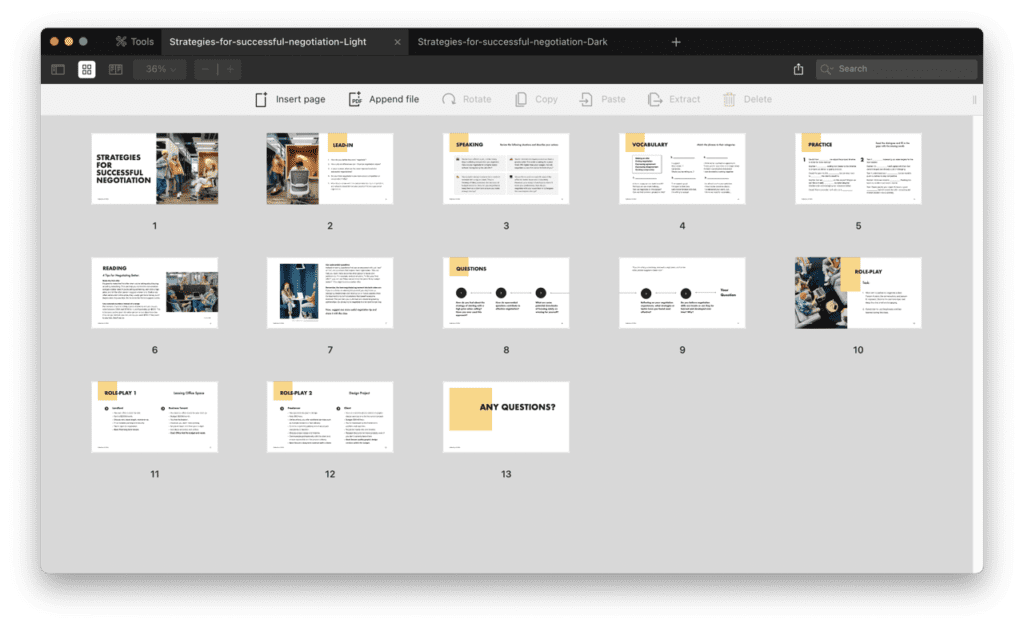
This B2 business English lesson teaches students practical negotiation strategies for professional situations. Students learn key negotiation phrases, study four research-backed negotiation tips from a reading passage, and practice through realistic role-plays like salary discussions and freelance contracts. The lesson covers everything from making offers to seeking compromise in workplace negotiations.
Lesson overview
- Learn essential negotiation phrases for offers, disagreements, and seeking compromise
- Practice applying negotiation vocabulary through real workplace scenarios and dialogues
- Explore four evidence-based negotiation strategies through reading and discussion activities
- Develop practical negotiating skills through two detailed business role-play simulations
| Level | Vocabulary | Lesson Time |
| B2 / Upper-Intermediate | 20 phrases | 60 min |
Vocabulary
- I suggest…
- How about…?
- I propose…
- Would you be willing to…?
- That sounds good.
- I’m open to that idea.
- Let’s move forward with that.
- I’m willing to accept.
- Is there a way we can both benefit?
- Perhaps we can meet halfway…
- Can we negotiate on this aspect?
- Can we find common ground on this?
- I’m afraid I can’t agree with that.
- I have some concerns about…
- I understand your point, but…
- I think we need to reconsider…
- I think we’ve reached an agreement.
- Thank you for your time and cooperation.
- It’s been a productive discussion.
- I look forward to working together.
Contents
- Lead-in
- Speaking
- Vocabulary
- Vocabulary practice
- Reading
- Questions
- Role-play 1
- Role-play 2
Open with the lead-in questions on page 2. Question 5 asks for a personal experience, so expect students to share stories about buying cars or asking for raises. Some will have negotiated nothing more serious than restaurant seating.
Page 3 has four negotiation scenarios. Put students in pairs to discuss what they would do. The scenarios range from salary negotiation to office seating arrangements. After pair work, compare strategies as a class. Move to the vocabulary matching on page 4 where students sort negotiation phrases into five categories: making offers, seeking compromise, expressing agreement, expressing disagreement, and ending negotiations.
Page 5 has two dialogue completion exercises. Students fill in gaps using phrases they just learned. Go through answers together and work on pronunciation of longer phrases like “I’m afraid I can’t agree with that.” The reading on pages 6-7 covers four negotiation tips: make the first offer, use concrete numbers, ask open-ended questions, and aim for win-win outcomes. Students then discuss the reflection questions on pages 8-9 and add their own negotiation tip.
Finish with the role-plays on pages 11-12. Assign pairs to either the office leasing or graphic design scenario. Give students 5 minutes to read their role cards and plan. Then let them negotiate for 7-8 minutes. Walk around and note good phrases and mistakes for feedback after. The freelance scenario usually gets more heated than the office space one.
