
Stereotypes Around the Globe

This B2 lesson tackles national stereotypes through two short, funny videos about how Americans see Britain and how Europeans see America. Students learn vocabulary like “ritzy neighborhood,” “jim jams,” and “garbage disposal,” then discuss which stereotypes hold up and which are completely off. It’s one of those lessons where the laughs keep coming, but the conversation underneath gets surprisingly deep.
Lesson overview
- Match common stereotypes to eleven nationalities and discuss whether they ring true
Watch two videos showing exaggerated daily routines in Britain and America
Learn eighteen vocabulary words split across British and American cultural contexts
Debate whether stereotypes help or harm cross-cultural understanding
| Level | Vocabulary | Video Duration | Lesson Time |
| B2 / Upper-Intermediate | 18 words | 0:58 min & 1:12 min | 60-90 min |
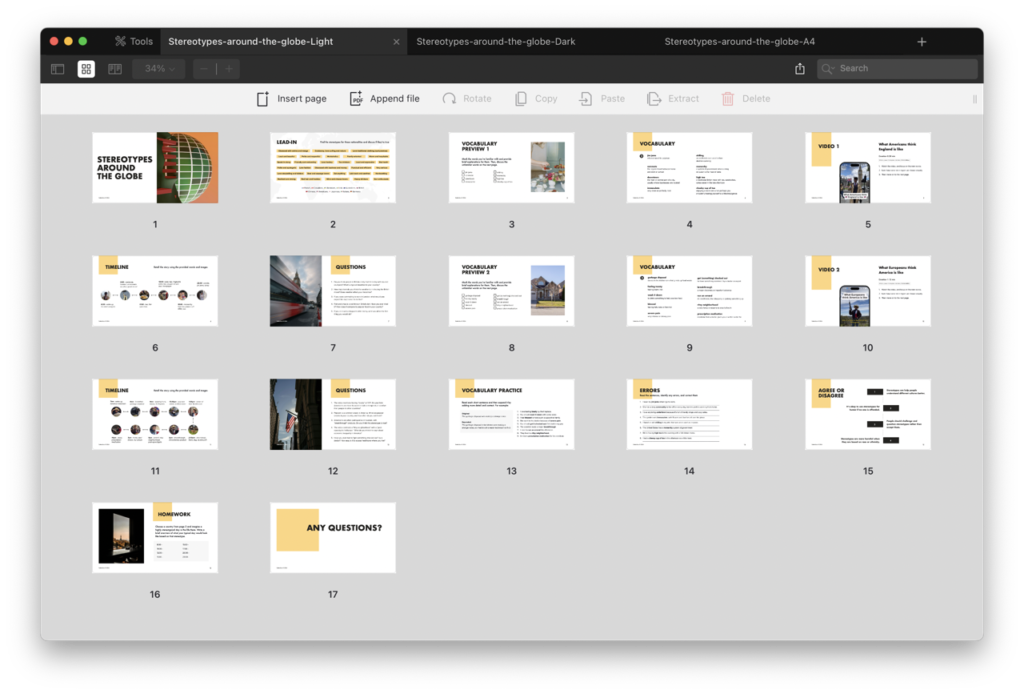
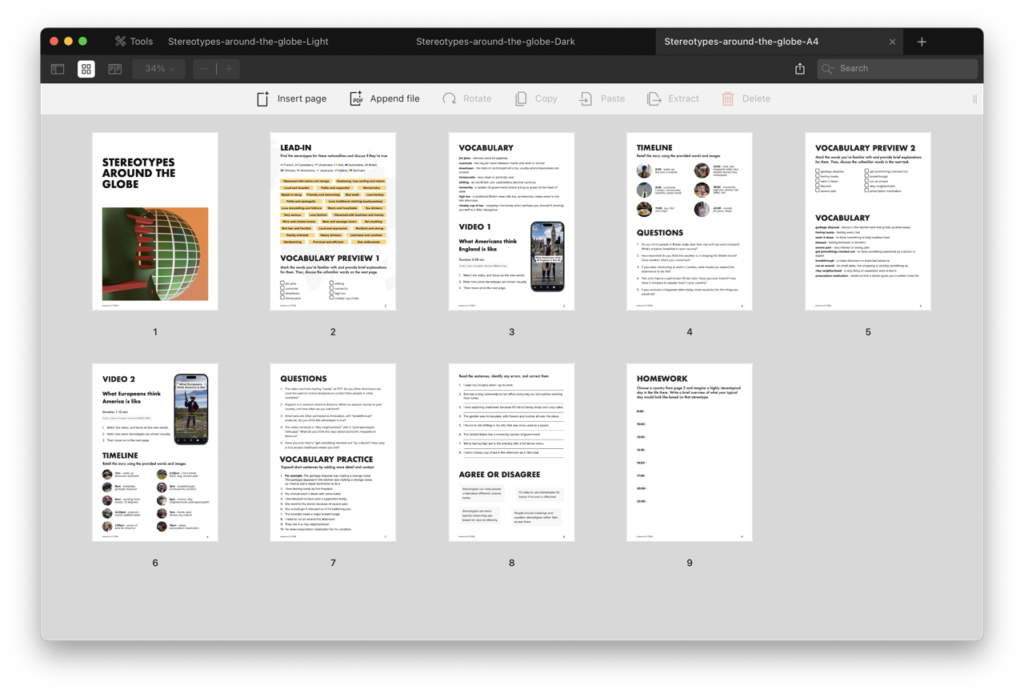
Vocabulary
- Jim jams
- Commute
- Downtown
- Immaculate
- Shilling
- Monarchy
- High tea
- Garbage disposal
- Feeling toasty
- Wash it down
- Blessed
- Severe pain
- Get (something) checked out
- breakthrough
- Run an errand
- Ritsy neighborhood
- Prescription medication
Contents
- Lead-in
- Vocabulary preview 1
- Vocabulary
- Video 1
- Timeline
- Questions
- Vocabulary preview 2
- Vocabulary
- Video 2
- Timeline
- Questions
- Vocabulary practice
- Errors
- Agree or disagree
- Homework
The lead-in activity sets the tone perfectly. Students read a big list of stereotypes and match them to nationalities like French, Japanese, German, and American. Some matches are obvious, others will start arguments. That’s the point. Let the discussion run because it exposes what students already believe, which makes the rest of the lesson more meaningful. After a few minutes of matching and debating, move into the first vocabulary set. Eight words like “jim jams,” “commute,” “immaculate,” and “monarchy” all connect to the British video.
Play the first video about what Americans think England is like. It’s under a minute, so watch it twice. Then use the timeline slide to have students retell the story using the pictures and words as prompts. They walk through a stereotypical British day from tea and crumpets at 8:30 to sleeping by candlelight at 10:00. The retelling task is great speaking practice because students have to form full sentences from visual and vocabulary cues. Follow up with the five comprehension questions. The Hogwarts letter question always gets a good response.
Cover the second vocabulary set of ten words before the American video. These are meatier: “garbage disposal,” “prescription medication,” “breakthrough,” and “ritzy neighborhood” all need clear examples. Play the second video about what Europeans think America is like. Same approach: watch twice, retell the timeline, then discuss. The questions here push students to think about bigger topics like healthcare access and economic inequality, which gives the lesson more weight than a simple vocabulary class.
Finish with the vocabulary practice, error correction, and agree or disagree statements. The sentence expansion exercise asks students to take short sentences and add detail, which builds writing skills alongside vocabulary. The error correction task is sneaky because students need to spot wrong words that sound similar to the correct ones, like “community” instead of “commute” and “cheesy” instead of “cheeky.” The four debate statements about stereotypes wrap everything up nicely. For homework, students pick a country from the lead-in and write a stereotypical daily schedule, which usually produces some entertaining results next class.
