
Staying at the Hotel
This B2 lesson teaches hotel vocabulary and travel experiences through a video tour of the Muji Hotel in Tokyo. Students learn words like “aroma diffuser,” “drawers,” and “stationery” while discussing what makes a good hotel stay. The lesson covers amenities, minimalist design, and how to write a hotel review.
Lesson overview
- Learn 8 hotel and amenity words through video comprehension
- Watch a 3-minute tour of the Muji Hotel in Ginza, Tokyo
- Discuss hotel preferences, design choices, and travel priorities
- Write a short hotel review using lesson vocabulary
This lesson was originally released in November 2023 and quickly became one of our most popular and well-loved lessons. In September 2025, we refreshed and updated it to align more closely with our style and vision, while keeping the original video intact.
| Level | Vocabulary | Video Length | Lesson Time |
| B1 / Intermediate | 10 words | 3:24 min | 60 min |
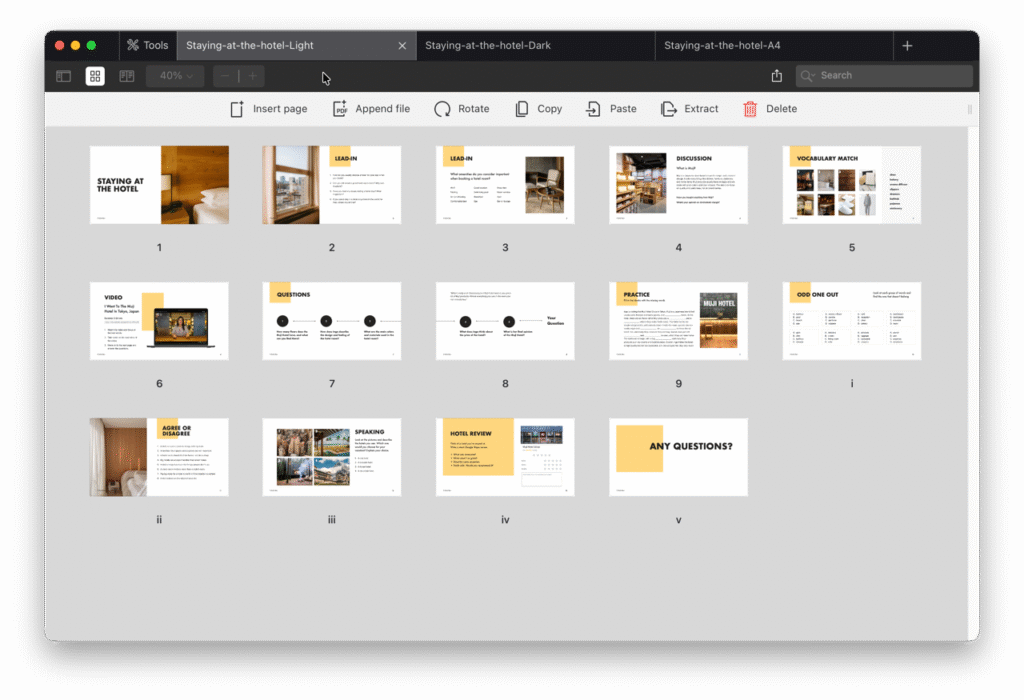
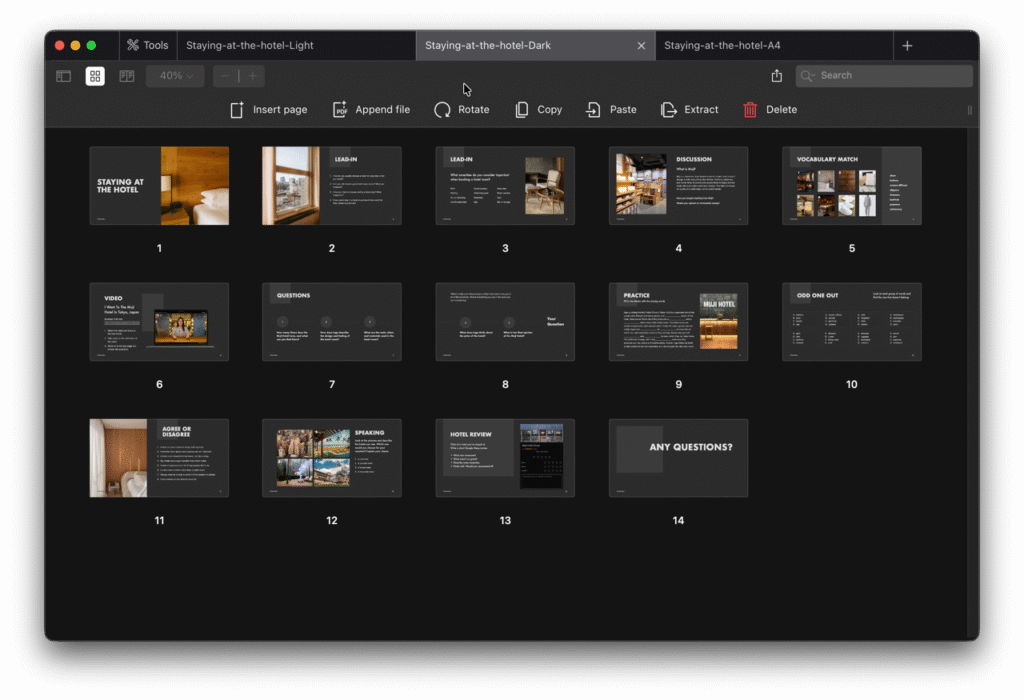
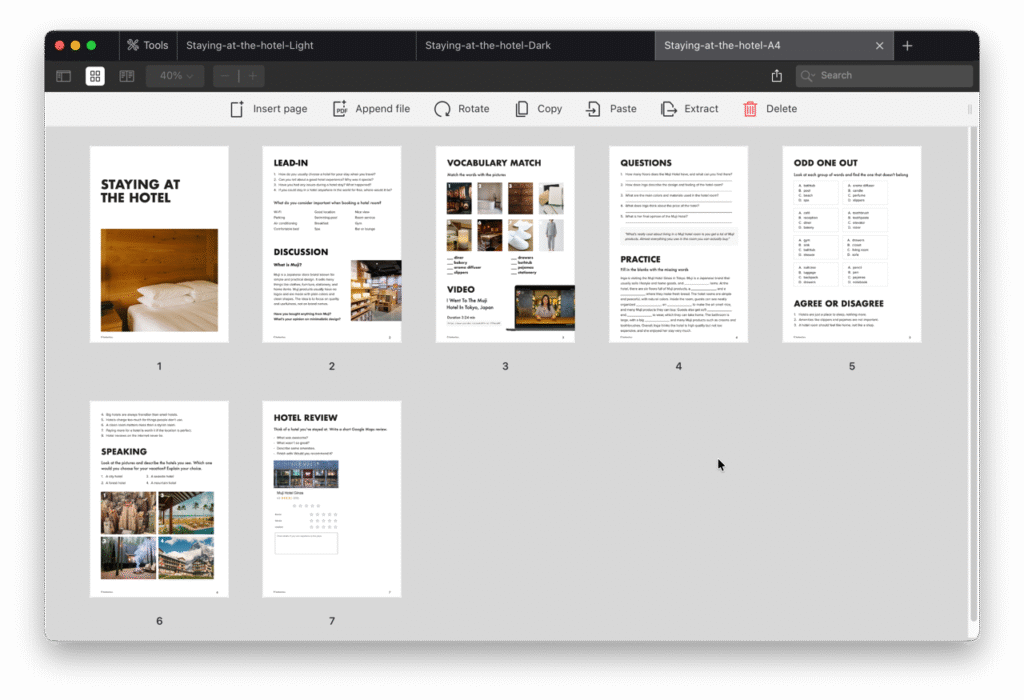
Vocabulary
- diner
- bakery
- aroma diffuser
- slippers
- drawers
- bathtub
- pajamas
- stationery
Contents
- Lead-in
- Discussion
- Vocabulary match
- Video
- Questions
- Practice
- Odd one out
- Agree or disagree
- Speaking
- Hotel Review
Start by asking students how they choose hotels when they travel. What was their best hotel experience? What went wrong at a bad one? The amenities checklist gets them thinking about what matters most. Do they care about Wi-Fi and parking, or are they looking for a spa and nice view? This shows you what vocabulary they already know and what they value in accommodations.
Before the video, introduce Muji as a brand. It’s a Japanese company known for simple, practical design with no logos. Ask if anyone has shopped there or what they think of minimalist style. Then teach the vocabulary through the matching exercise. Students connect images to words like “bathtub,” “slippers,” and “diner.” Make sure to drill “aroma diffuser” since it’s a longer phrase and might be unfamiliar.
Play the video twice. It’s about 3 minutes long and shows a woman named Inga touring the Muji Hotel. First viewing, students take notes on the main idea. Second viewing, they answer specific questions. How many floors does the hotel have? What colors and materials are used in the room? What does Inga think about the price? After watching, students fill in the blanks in a summary paragraph about the hotel. Check answers as a class and clarify any confusion about products or room features.
The “Odd One Out” activity reinforces vocabulary. Students find which word doesn’t fit in each group. For example, in “café, reception, diner, bakery,” the word “reception” doesn’t belong because it’s not a place to eat. Move to the “Agree or Disagree” statements. Students decide if they agree that hotels are just a place to sleep or if amenities matter. This works well in pairs where they can debate different viewpoints. The picture comparison has four hotel types: city, seaside, forest, and mountain. Students describe each one and say which they’d choose for vacation.
Finish with the hotel review writing task. Students think of a real hotel they’ve stayed at and write a short Google Maps review. What was great? What wasn’t? What amenities did it have? Would they recommend it? This puts the vocabulary into practical use and mimics real-world writing.
