
Sports, Equipment & Idioms

This A2 lesson teaches students sports vocabulary, equipment names, and common sports idioms used in everyday English. Students practice identifying 15 different sports, matching equipment to activities, and learning four popular idioms like “no sweat” and “take a rain check.” The lesson includes guessing games, speaking activities, and a fun 20 questions game to practice new vocabulary.
Lesson overview
- Learn names of 15 common sports and identify team versus individual activities
- Practice matching sports equipment vocabulary to the correct sport
- Master four everyday sports idioms and use them in context
- Develop speaking skills through guessing games and athlete descriptions
| Level | Vocabulary | Lesson Time |
| A2 / Pre-Intermediate | 24 words | 60 min |
Vocabulary
- football
- racing
- baseball
- cricket
- hockey
- skiing
- snowboarding
- volleyball
- running
- swimming
- surfing
- working out
- golf
- table tennis
- tennis
- ice skates
- bat and ball
- whistle
- stick and puck
- flag
- ball and net
- racket
- dumbbell
- ball and basket
- no sweat
- take a rain check
- take sides
- get a head start
Contents
- Lead-in
- 15 sports
- Guessing
- Speaking
- Sports equipment
- Discussion: picture 1
Discussion: pictures 2, 3
Discussion: pictures 4, 5, 6 - Tongue twister
- Idioms
- Practice
- Game
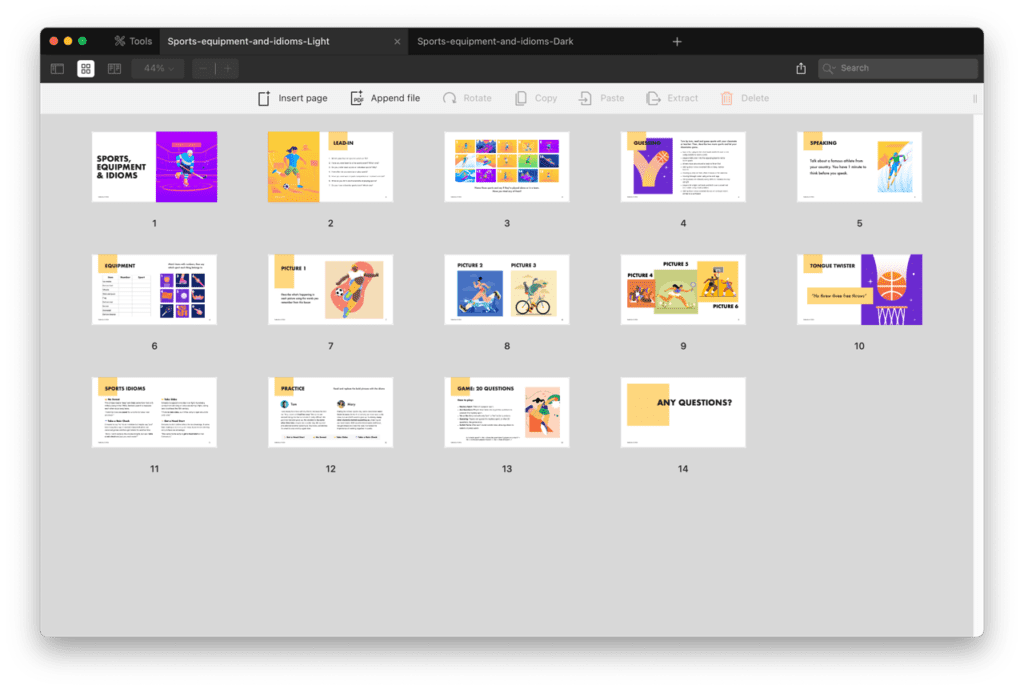
Start with the lead-in questions on page 2. These seven questions get students talking about their sports experiences and preferences. Some students won’t have much sports background, so the questions range from easy (“favorite sport to watch”) to harder (“have you won a medal”).
Move to page 3 where students identify the 15 sports from pictures. Go through each one and have students say if it’s team or individual. Football, volleyball, and baseball are team sports while running, swimming, and golf are individual. Table tennis trips students up because it can be both. Ask who’s tried these sports.
Page 4 is the guessing activity. Read the sport descriptions and let students guess. After you finish the list, students create two descriptions for classmates to guess. The equipment matching on page 6 comes next. Students connect items like ice skates, whistle, and racket to their numbers, then say which sport uses each one.
Pages 7-9 have picture descriptions where students apply what they learned. Then teach the four sports idioms on page 11. Read each one, explain where it came from, and show the example sentence. The practice on page 12 has students replace bold phrases with the correct idioms in Tom and Mary’s stories. Finish with the 20 questions game on page 13. One student thinks of a sport while others ask yes/no questions to guess it. Students get really into this.
