
Sports Betting Apps
This C1 lesson examines the psychology behind sports betting apps and how they exploit user behavior. Students learn vocabulary like “vicious cycle,” “dark flow,” and “near-miss,” then watch a video about design tricks that keep people gambling. The activities include ethical debates about influencer promotions, sentence combining practice, and analyzing real prediction markets on Polymarket.
Lesson overview
- Learn advanced vocabulary related to gambling psychology, addiction patterns, and profit strategies
- Watch a video explaining how betting apps use dopamine, uncertainty, and near-misses
- Debate ethical questions about gambling advertising, regulation, and corporate responsibility
- Practice combining simple sentences into complex structures using target vocabulary
| Level | Vocabulary | Video Length | Lesson Time |
| C1 / Advanced | 12 words | 5:20 min | 60 min |
Vocabulary
- spectator
- wager
- deterrent
- enticing
- vicious cycle
- mesmerizing
- dark flow
- in the zone
- capitalize on
- near-miss
- exploit
- rack in
Contents
- Lead-in 1
- Lead-in 2
- Vocabulary preview
- Definitions
- Video
- Key points
- Quote
- Questions
- Practice
- Speaking
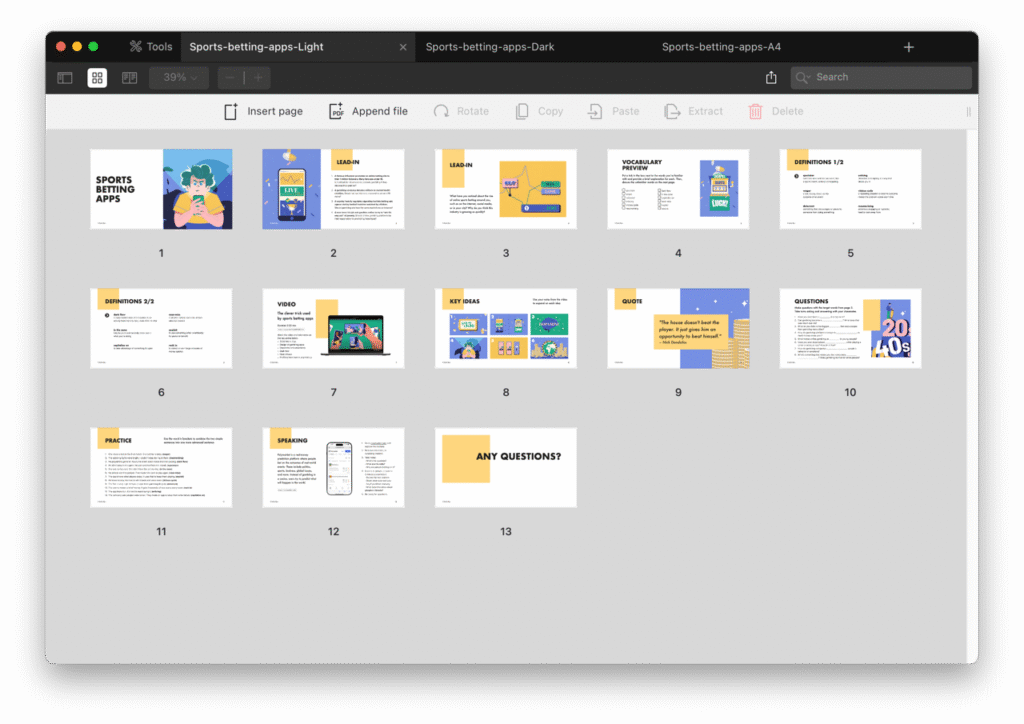
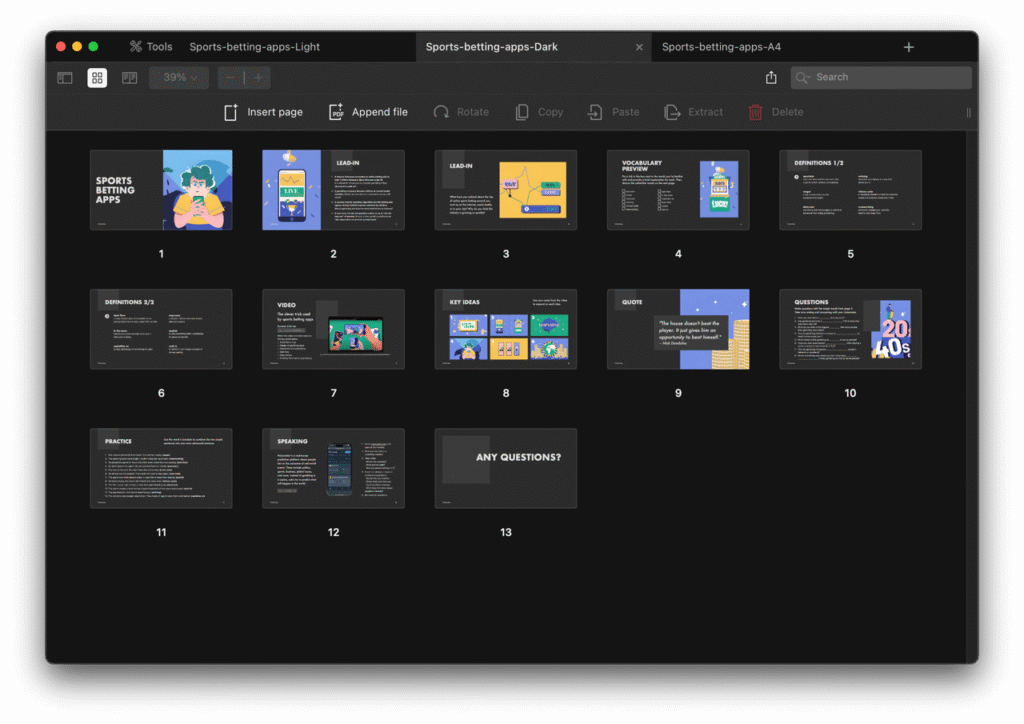
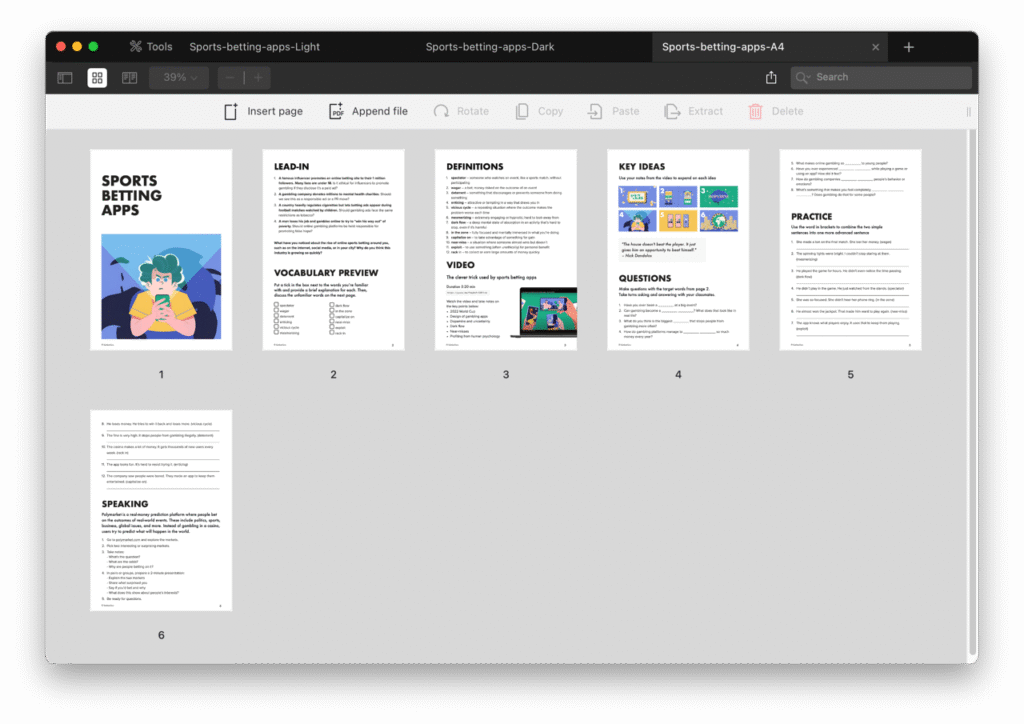
Start with the four ethical scenarios about influencer promotions, charity donations, advertising restrictions, and platform responsibility. These don’t have clear right answers, which makes for rich debate. Scenario three comparing gambling to tobacco advertising usually gets strong reactions because people see the inconsistency. The second lead-in asks students what they’ve noticed about betting apps in their environment and why the industry is growing. This activates prior knowledge before the vocabulary.
The vocabulary preview covers gambling-specific terms and psychological concepts. “Spectator” and “wager” are straightforward, while “dark flow” and “near-miss” describe the manipulation tactics explained in the video. “Capitalize on” and “exploit” both mean taking advantage, but “exploit” carries negative judgment. “Rack in” is informal and describes rapid profit accumulation.
The video is about five minutes and covers the 2022 World Cup betting surge, app design choices, dopamine triggers, and how near-misses keep people playing. Students take notes on six key points while watching. The key ideas activity has them expand on each point using their notes. This checks comprehension and pushes them to explain concepts in their own words rather than just copying what they heard.
The quote from Nick Dandolos says the house doesn’t beat players, it just gives them the opportunity to beat themselves. This connects to the video’s argument about psychological manipulation. Students discuss what this means and whether they agree.
The questions activity has students form questions using the target vocabulary, then ask and answer with classmates. Question two about vicious cycles appearing in real life gets students applying the concept beyond just gambling. Question six about experiencing dark flow while gaming personalizes the abstract concept.
The sentence combining practice gives twelve pairs of simple sentences and students merge them using the bracketed vocabulary word. Sentence three combines “He played for hours” and “He didn’t notice time passing” using “dark flow,” which might result in “He entered a state of dark flow, playing for hours without noticing time passing.” This practices both vocabulary and complex sentence structures.
The Polymarket speaking task sends students to a real prediction market website where people bet on politics, sports, and global events. Students explore the site, pick two interesting markets, and prepare a two-minute presentation explaining what surprised them and what the betting patterns reveal about human behavior. This applies lesson concepts to current real-world examples. Having students present in pairs or groups makes this less intimidating than solo presentations.
