
Social Media Isn’t Social Anymore
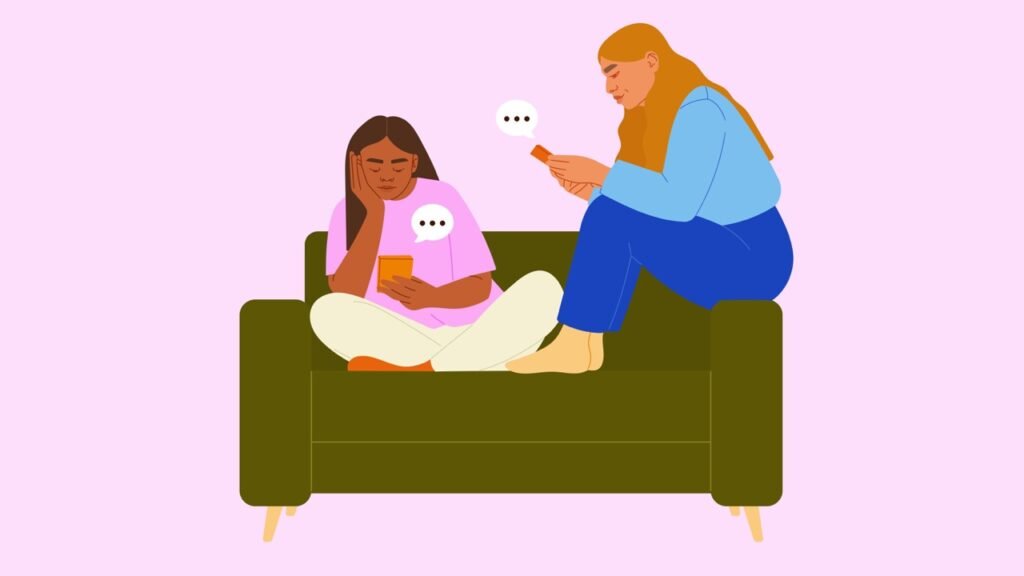
This C1 lesson examines why social media has shifted from personal connection to passive consumption. Students read a conversation with journalist Kyle Chayka about the decline of friend posts, the rise of AI content, and why people have moved to private spaces. Activities include vocabulary practice, future scenario discussions, and debates about platform design and user behavior.
Lesson overview
- Learn advanced vocabulary for discussing digital culture
- Read an interview exploring why regular users stopped posting and how feeds became dominated by ads and influencers
- Discuss two future scenarios: an ideal social media landscape versus a worst-case dystopian outcome
- Analyze whether current trends push us toward healthier offline connection or deeper passive consumption
| Level | Vocabulary | Reading Time | Lesson Time |
| C1 / Advanced | 10 words | 1269 words / 6 min | 60-80 min |
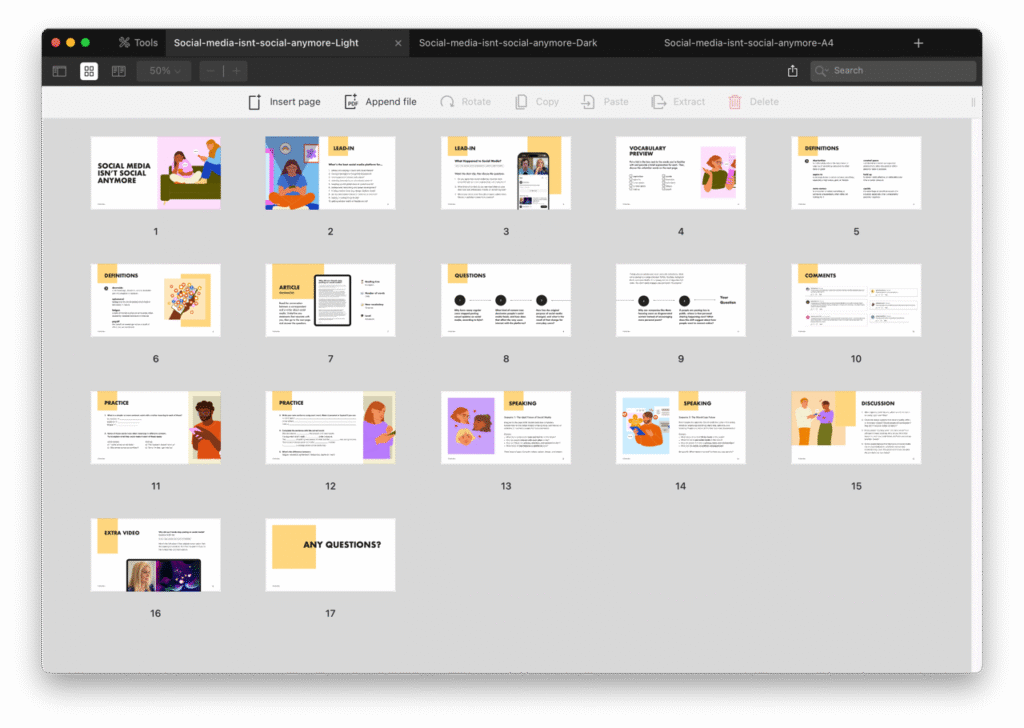
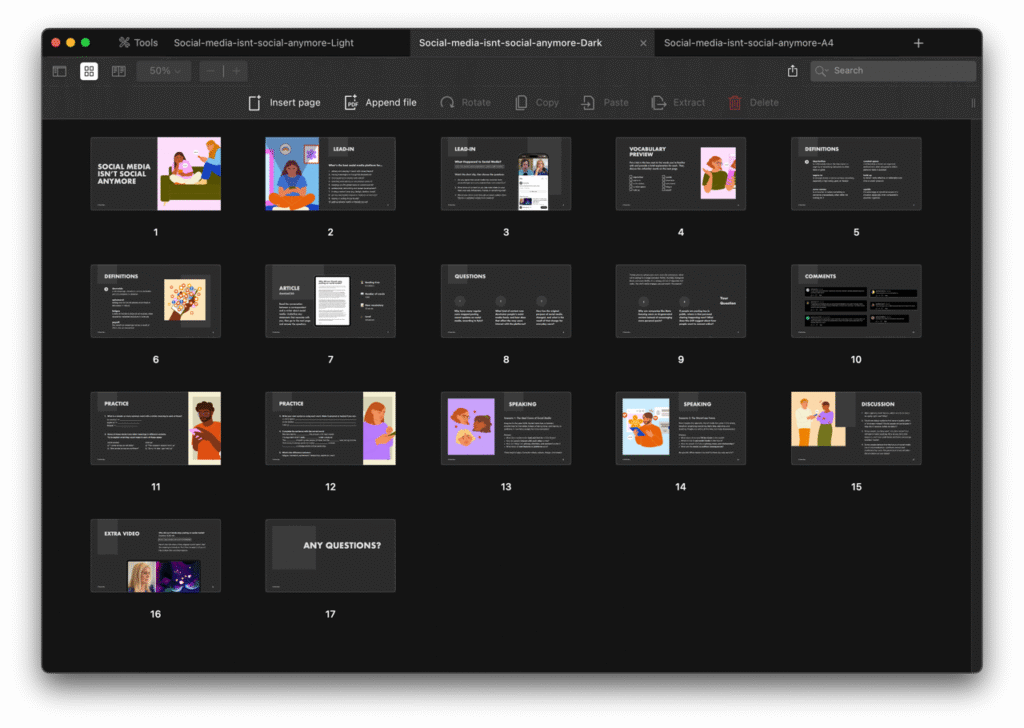
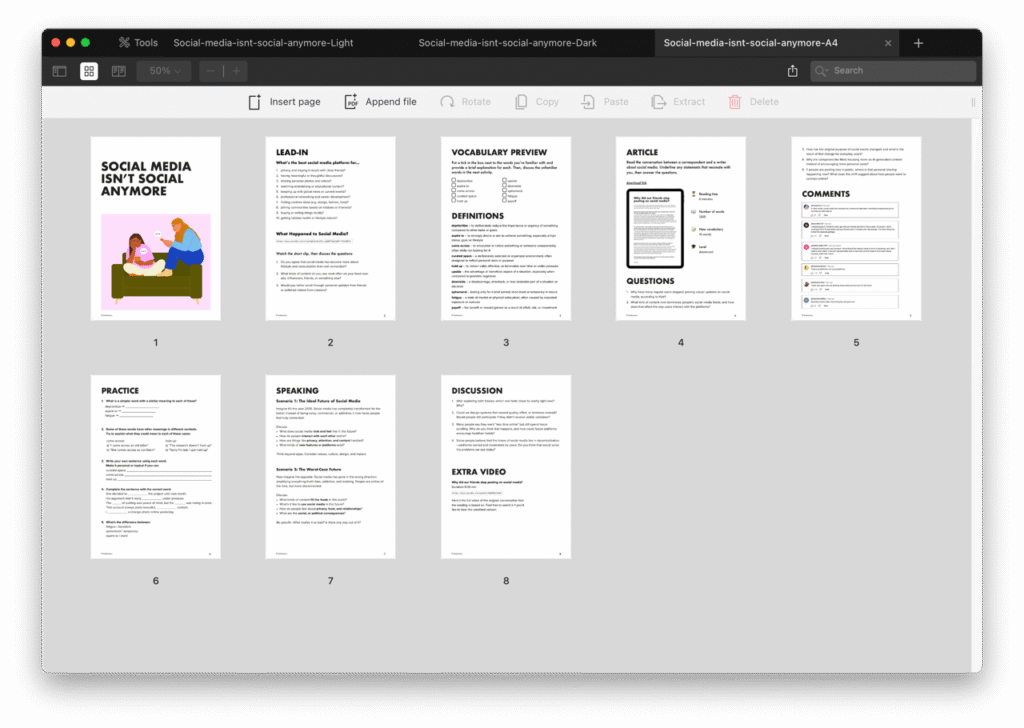
Vocabulary
- deprioritize
- aspire to
- come across
- curated space
- hold up
- upside
- downside
- ephemeral
- fatigue
- payoff
Contents
- Lead-in
- Vocabulary preview
- Definitions
- Article
- Comprehension
- Comments
- Practice
- Speaking
- Discussion
- Optional video
Start with the platform matching activity. Students decide which platform works best for each purpose. Answers will vary based on personal experience and region, which creates good discussion. Then play the short video clip about what happened to social media. The three follow-up questions push students to reflect on their own feeds and preferences. Most will notice they see more creators than friends, which sets up the reading perfectly.
Move to vocabulary preview. Students tick words they know and explain them. Then review definitions on the next page. Words like “deprioritize” and “curated space” are useful beyond this topic. The reading is long at 1265 words but structured as a conversation, which makes it easier to follow. Students underline statements that resonate with them while reading. After reading, they answer five comprehension questions that require analysis, not just fact recall. Question 5 about where personal sharing happens now often sparks good insights about group chats and private messaging.
The comments section shows real reactions to the topic. Students can add their own comment or respond to one shown. Practice section 1 asks for simpler synonyms, which tests depth of understanding. Section 2 explores multiple meanings of “come across” and “hold up” in different contexts. Section 3 has students write personal sentences using target vocabulary. Section 4 is gap-fill review, and section 5 asks them to distinguish between similar words like fatigue versus boredom.
The speaking scenarios work best in small groups. Scenario 1 imagines an ideal 2035 where social media transformed for the better. Scenario 2 imagines the worst-case future. Give groups five minutes per scenario to discuss, then share ideas with the class. The discussion questions after both scenarios push students to evaluate which future feels closer to reality and whether design changes could fix current problems. Question 4 about decentralization often divides the room between optimists and skeptics.
End by mentioning the full nine-minute video is available if students want to watch the complete unedited conversation. This extends learning beyond class for interested students.
