
Smartphone Addiction
This B2 upper-intermediate lesson examines smartphone addiction and how apps are deliberately designed to keep users engaged. Students explore the psychology behind addictive features like infinite scrolling, pull-to-refresh mechanics, and color manipulation. Through video analysis featuring tech expert Tristan Harris, vocabulary exercises, and debate activities, learners develop language skills while critically examining their own phone habits and the broader implications of technology dependence in modern society.
Lesson overview
- Analyze how smartphone apps use psychological tricks to create addictive behaviors
- Learn vocabulary distinguishing addiction, addicted, and addictive in technology contexts
- Discuss statistics about phone usage patterns and their impact on daily life
- Debate personal responsibility versus corporate accountability in smartphone addiction
| Level | Vocabulary | Video Length | Lesson Time |
| B2 / Upper-Intermediate | 10 words | 5:41 min | 60 min |
Vocabulary
- Be engaged
- Slot machine
- Gambling
- Distraction
- Be hooked
- Content
- Conscious
- Simulate
- Infinite scrolling
- Refresh
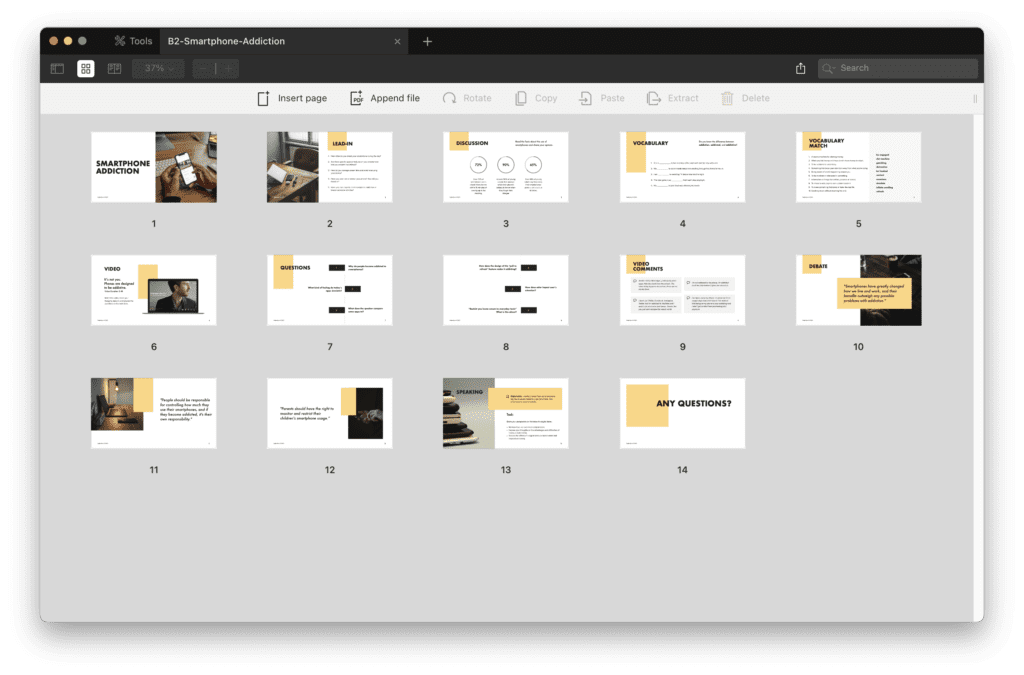
Contents
- Lead-in
- Discussion
- Vocabulary
- Vocabulary match
- Video
- Questions
- Video comments
- Debate
- Speaking
Start with the warm-up discussion on page 2. Give students two minutes to think about their own phone habits before sharing with a partner. This personal reflection makes the lesson hit home right away. The stats activity on page 3 works great as a whole-class discussion. Ask if the percentages surprise them and whether they see these patterns in themselves.
Page 4 introduces the grammar difference between addiction, addicted, and addictive. Students complete the sentences solo, then check with a partner. This takes about four minutes. Make sure they get that addiction is the noun, addicted describes the person, and addictive describes the thing causing it. The vocab matching on page 5 should take five minutes. Terms like slot machine and infinite scrolling are key for understanding the video.
The main video runs 5:48 minutes and is on page 6. Play it once all the way through so students get the overall message. Then play it again, pausing after each main point to check they’re following. The questions on pages 7-8 go from basic recall to deeper analysis. Pay special attention to the pull-to-refresh explanation and the greyscale recommendation since these usually get strong reactions.
Page 9 has real video comments. Students read them and talk about which perspectives match their own experiences. This leads into the debate section on pages 10-12. Assign debate positions randomly to push students out of their comfort zones. Give groups five minutes to prep arguments before running mini-debates.
The digital detox speaking task on page 13 works as individual presentations or pair discussions. Students should talk for two minutes each, hitting all three bullet points. This pulls together the vocabulary and gets them being honest about their own technology use.
