
Small Talk
This B1 lesson helps students get comfortable with small talk in English. They learn which questions are appropriate for casual conversations, practice asking follow-up questions, and watch a short video about a simple trick for keeping conversations going. It’s the kind of lesson that pays off immediately because students can use these skills the next time they meet someone new.
Lesson overview
- Learn 8 vocabulary words related to conversations, like “follow-up question” and “emotional intelligence”
- Watch a video about asking three follow-up questions and practice the technique
- Transform yes or no questions into open-ended questions that keep conversations moving
- Have a five-minute small talk conversation with a partner covering multiple everyday topics
| Level | Vocabulary | Video Duration | Lesson Time |
| B1 / Intermediate | 8 words | 1:53 min | 60 min |
Vocabulary
- Get stuck
- Cue
- Attentive
- Peak emotion
- Open-ended question
- Follow-up question
- Be in tune
- Emotional intelligence
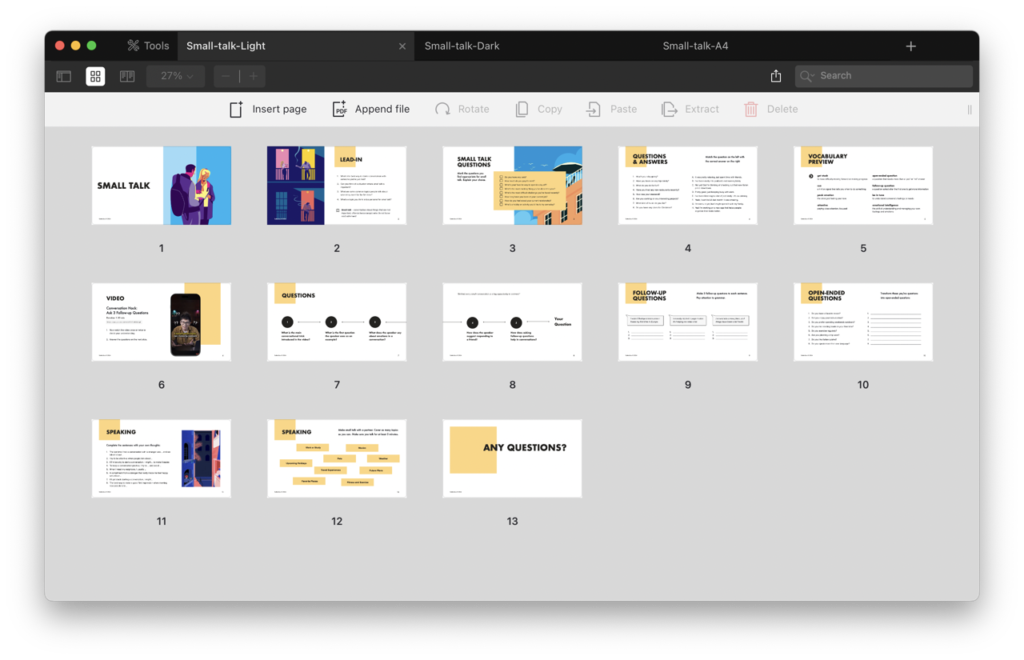
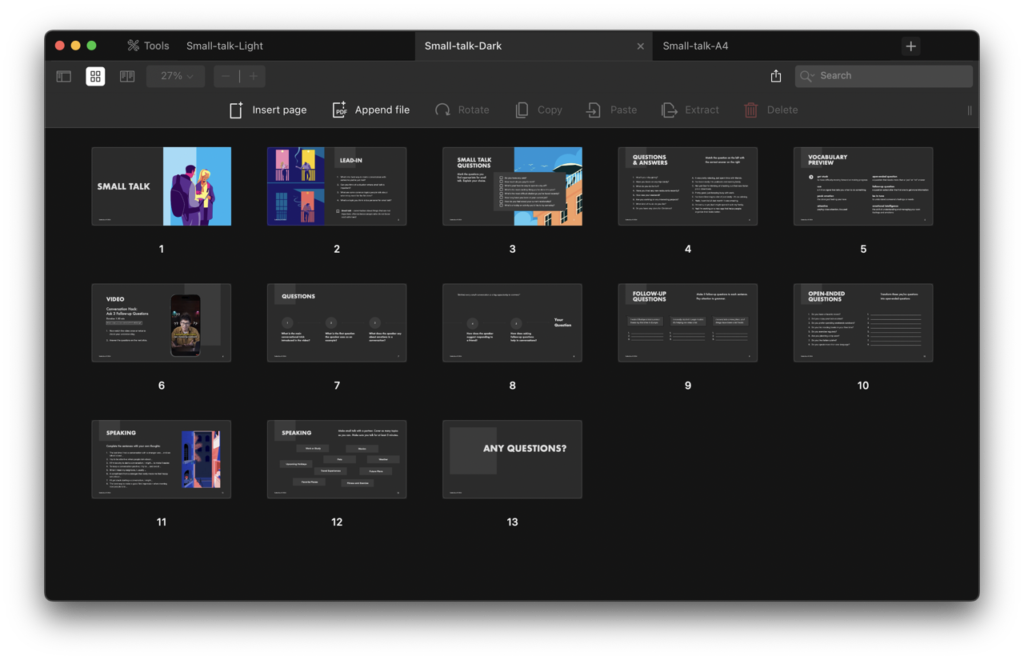
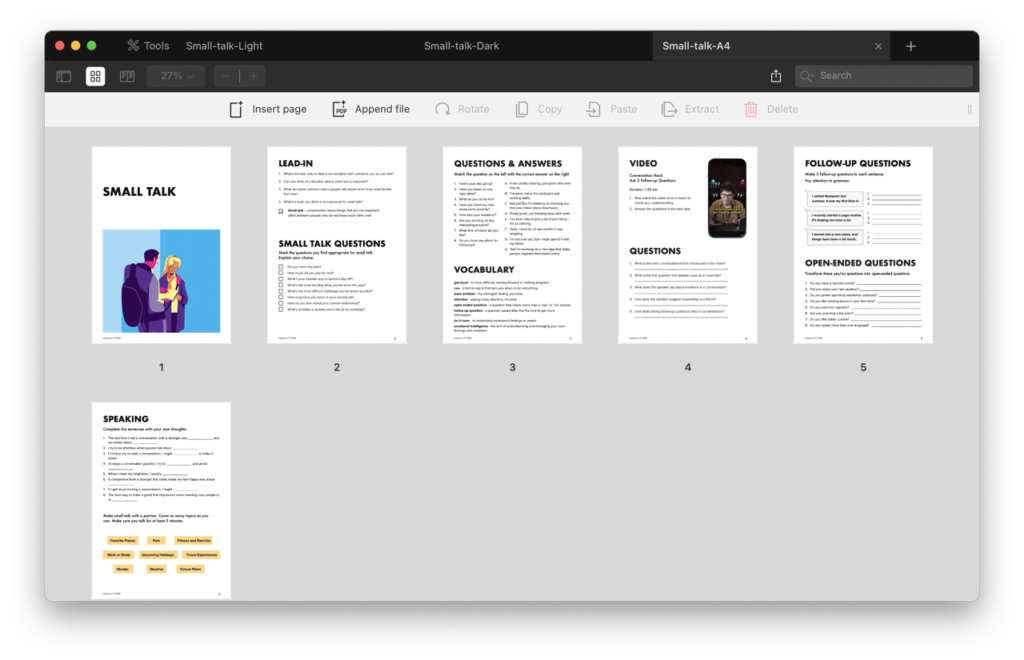
Contents
- Lead-in
- Small talk questions
- Vocabulary preview
- Video
- Questions
- Open-ended questions
- Speaking
- Questions and answers
- Speaking
Start with the lead-in questions about how to begin a conversation and what topics work for small talk. After a quick discussion, show the list of questions on slide three and have students mark which ones are appropriate for small talk. Questions like “How much do you pay for rent?” and “How do you feel about your current relationship?” should get flagged as too personal, but it’s worth discussing why. This trains students to think about social boundaries in English, not just grammar.
Move to the question and answer matching activity. Students connect eight small talk questions with their correct responses. This is straightforward but gives students useful models for how answers actually sound in casual conversation. Then cover the eight vocabulary words. Most B1 students will know “attentive” and “cue,” but terms like “open-ended question,” “follow-up question,” and “emotional intelligence” might be new. Keep explanations short and give one clear example for each.
Play the video about asking three follow-up questions. It’s only ninety seconds long, so you can watch it twice without losing momentum. After watching, go through the five comprehension questions. Then move directly into the follow-up question practice. Students read three short statements and write three follow-up questions for each one. Check grammar here because B1 students often struggle with question formation, especially when switching between present perfect and past simple. The open-ended question transformation exercise comes next. Students take eight yes or no questions and rewrite them so they need longer answers. For example, “Do you like reading?” becomes “What kind of books do you enjoy reading?”
The sentence completion speaking activity gets students sharing personal thoughts about conversations, shyness, and first impressions. These sentence starters are open enough to produce real answers but structured enough that B1 students won’t freeze up. End with the free speaking task where pairs make small talk for at least five minutes, covering as many topics from the list as they can. Topics include work, travel, pets, weather, and future plans. Set a timer and let them go. Walk around and note any good follow-up questions you hear so you can highlight them at the end.
