Slow Living
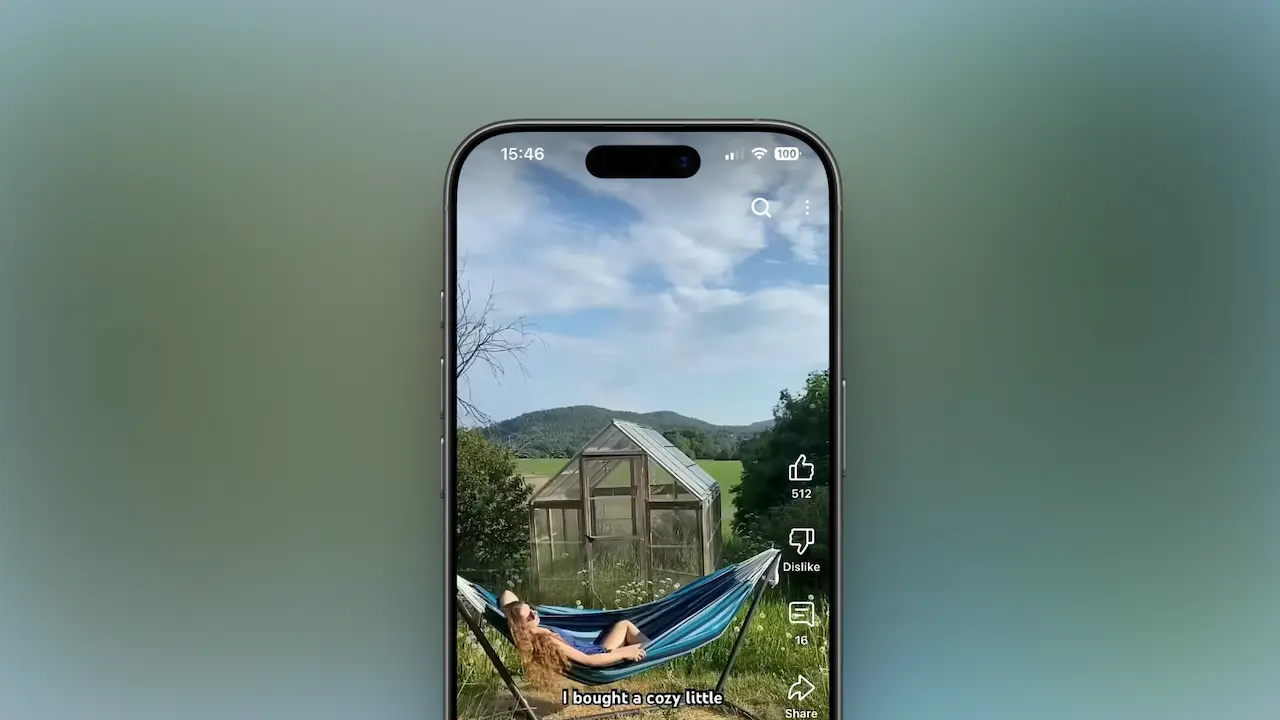
This B1 lesson introduces slow living through a video about life in the Swedish countryside. Students learn vocabulary like countryside, forest bathing, cozy, and everyday hustles, then watch someone explain why she left the city. Activities include journaling about stress and calm, discussing whether slow living works for everyone, and role-playing advice between a stressed friend and a mindful one.
Lesson overview
- Learn slow living vocabulary
- Watch a video where Sophie describes leaving city life for nature in northern Sweden
- Discuss whether moving away from cities works for everyone or just some people
- Create a role-play where one friend shares slow living tips with a stressed friend
| Level | Vocabulary | Video Length | Lesson Time |
| B1 / Intermediate | 8 words | 1:10 min | 60 min |
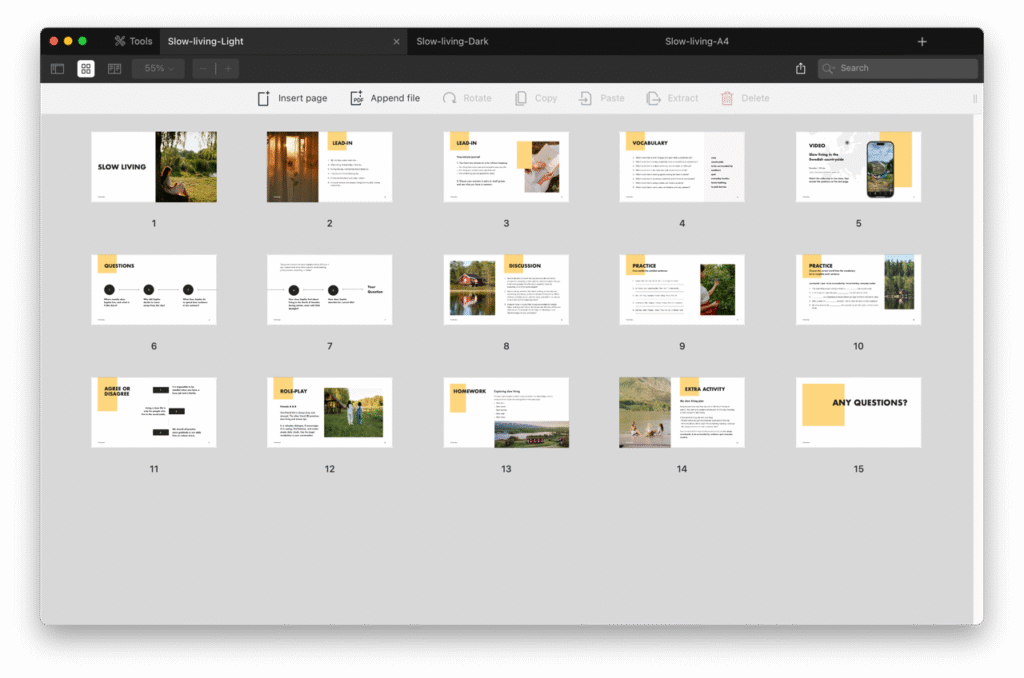
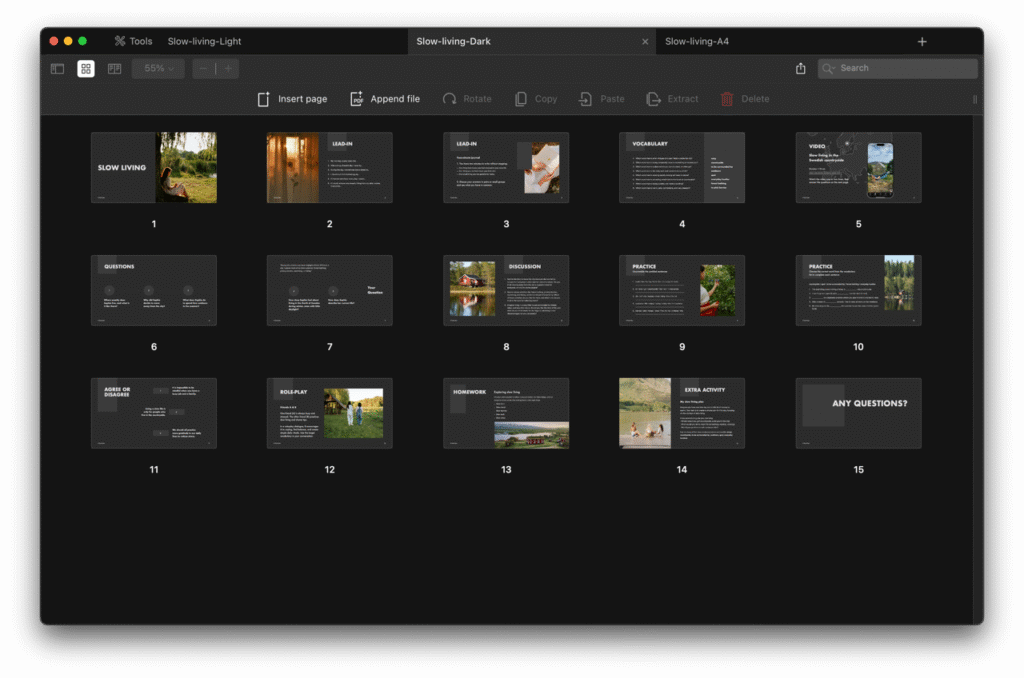
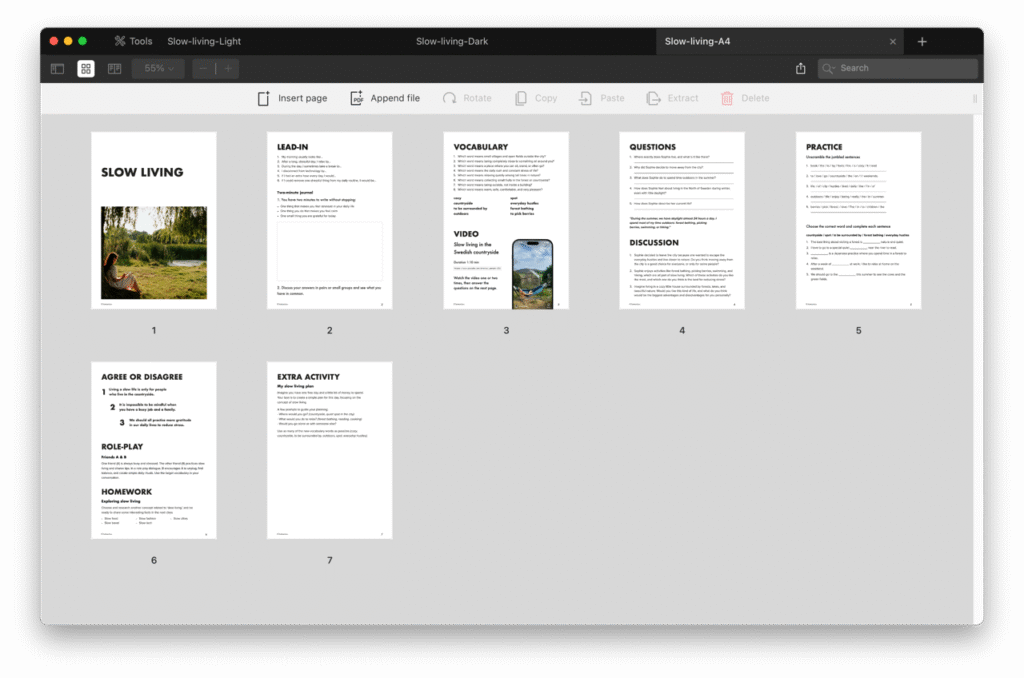
Vocabulary
- Cozy
- Countryside
- To be surrounded by
- Outdoors
- Spot
- Everyday hustles
- Forest bathing
- To pick berries
Contents
- Lead-in 1
- Lead-in 2
- Vocabulary
- Video
- Comprehension Questions
- Post-Video Discussion
- Practice Tasks
- Role-Play
- Homework
- Extra Activity
Start with the sentence completion warm-up. Students finish six sentences about their routines and stress relief. Then do the two-minute journal. Students write non-stop about one stressful thing, one calming thing, and one thing they’re grateful for. After two minutes, they share in pairs and find common patterns. Move to vocabulary. Students match eight words to definitions by answering questions like “Which word means small villages and open fields?” Check answers and drill pronunciation on “surrounded by” and “hustles.”
Play the video showing Sophie talking about slow living in northern Sweden. It’s just over a minute. Students watch once or twice, then answer five comprehension questions. Question 2 asks why she left the city, which introduces the concept of escaping everyday hustles. Question 3 about her summer activities lists forest bathing, picking berries, swimming, and hiking. These become discussion topics later. The three discussion questions push students to evaluate slow living critically. Question 1 asks if moving away from cities works for everyone. Question 3 about advantages and disadvantages gets students thinking beyond the romanticized version shown in the video.
The first practice exercise has five scrambled sentences. Students unscramble them to make correct statements using lesson vocabulary. Do the first one together as an example. The second practice has five gap-fill sentences using the word bank. Students choose the correct word for each blank. The agree or disagree section has three statements about mindfulness, slow living location requirements, and gratitude. These often create debate, especially statement 2 about whether slow living only works in the countryside. The role-play has one stressed friend and one who practices slow living. Give students three minutes to prepare, then five minutes to perform. Encourage use of target vocabulary.