
Singapore’s Housing Success
This B2-level lesson examines Singapore’s remarkable housing transformation through video, audio, and discussion activities. Upper-intermediate students explore public housing policy, urban planning vocabulary, and social issues surrounding homeownership. The lesson combines authentic materials with speaking tasks that encourage critical thinking about housing solutions worldwide.
Lesson overview
- Learn specialized housing and urban planning vocabulary
- Explore Singapore’s public housing model through video analysis
- Practice listening skills with authentic speaker recordings
- Discuss urban development strategies and housing policy issues
| Level | Vocabulary | Video Length | Lesson Time |
| B2 / Upper-Intermediate | 16 words | 3:59 min | 60-90 min |
Vocabulary
- Public housing
- Household
- Homeownership
- Accommodate
- Rental unit
- Slum
- High-rise
- Squatter
- Settlement
- Shortage
- Renting out
- Property
- Condominium
- City-state
- Volatile
- Enclave
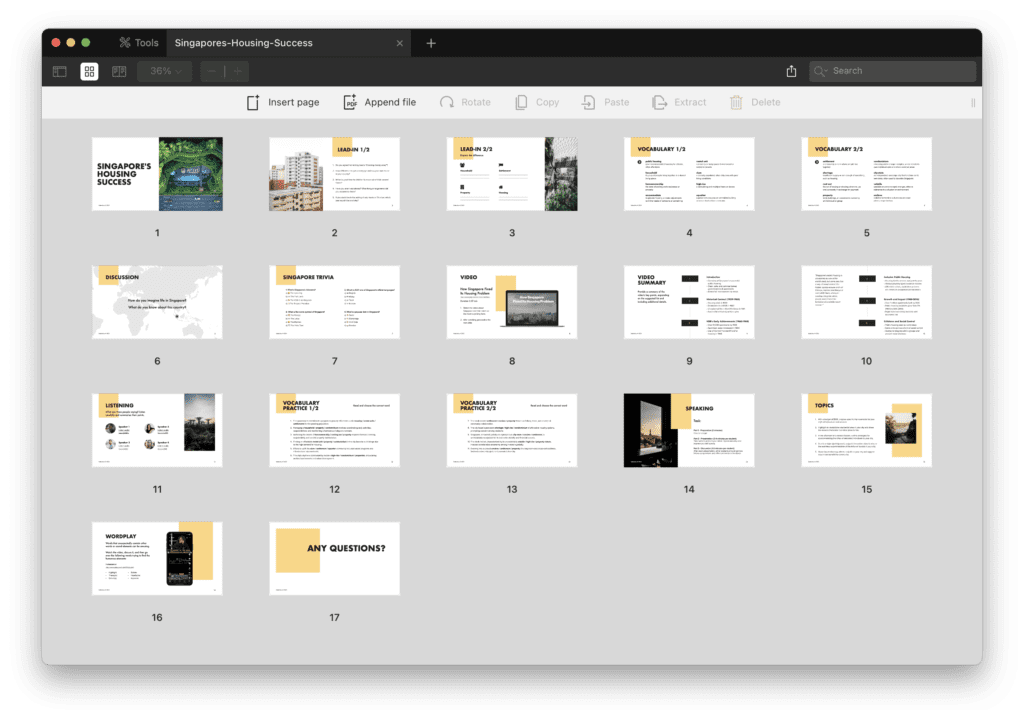
Contents
- Lead-in 1
- Lead-in 2
- Vocabulary
- Discussion
- Singapore trivia
- Video
- Video Summary
- Listening
- Vocabulary practice
- Speaking
Start with the lead-in questions on page 2 to tap into what students know about housing and homeownership. This 10-minute discussion lets them share personal experiences with mortgages, renting, and living arrangements. The vocab distinction activity on page 3 clears up related terms like household, settlement, property, and housing before you get into the technical stuff.
Pages 4-5 have the essential vocab for the lesson. Have students work in pairs to match terms with definitions, then go over answers together. The Singapore trivia quiz on page 7 gives cultural context and builds interest before the main video. Play the 4-minute video from page 8 and have students take notes on anything surprising. They should focus on key dates, statistics, and policies.
The video summary activity on pages 9-10 has students expand on the outline provided, adding details from their notes. This checks if they understood it and sets them up for deeper discussion. For the listening section on page 11, play each audio clip twice. Students summarize what each speaker says about housing, which builds their ability to handle different accents and speaking styles.
Use pages 12-13 for vocab reinforcement through gap-fill exercises. Students pick the right words in context, which locks in their understanding of the technical terms. The speaking task on pages 14-15 works great as the lesson finale. Give students 2 minutes to pick a topic and prep ideas, then have them present for 3-4 minutes while others listen and get questions ready. This builds extended speaking skills and critical thinking about urban planning challenges.
The optional wordplay activity on page 16 is a lighter way to end while still reinforcing vocab. Students find hidden words within compound terms, making the language more memorable.
