
Side Hustle Ideas for Students

This B1 lesson teaches students about side hustles through three short audio stories about selling online, pet sitting, and managing social media. Students learn practical vocabulary like “thrift shop,” “package,” and “take care of” while discussing different ways to earn money. The activities include listening comprehension, discussions about skills and pay, and a speaking task about choosing your own side hustle.
Lesson overview
- Learn 10 words related to jobs, money, and online work
- Listen to three students describe their side hustles and earnings
- Discuss which jobs are fun, easy, or difficult and what skills they require
- Practice error correction and plan your own side hustle idea
| Level | Vocabulary | Audio Length | Lesson Time |
| B1 / Intermediate | 10 words | 0:37, 0:41, 0:36 min | 60 min |
Vocabulary
- social media
- post
- owner
- customer
- mess
- package
- thrift shop
- take care of
- adore
- cute
Contents
- Lead-in
- Vocabulary Preview
- Definitions
- Vocabulary Practice
- Listening 1
- Listening 2
- Listening 3
- Discussion
- Speaking
- Would you rather?
- Mistakes
- Homework
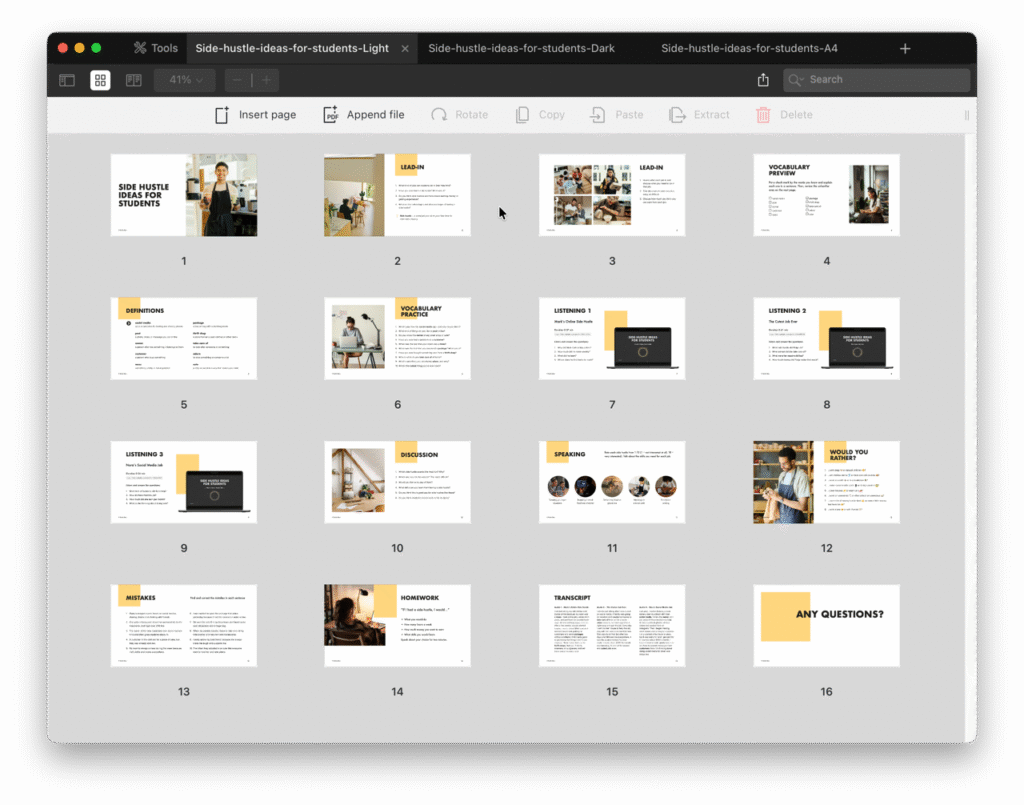
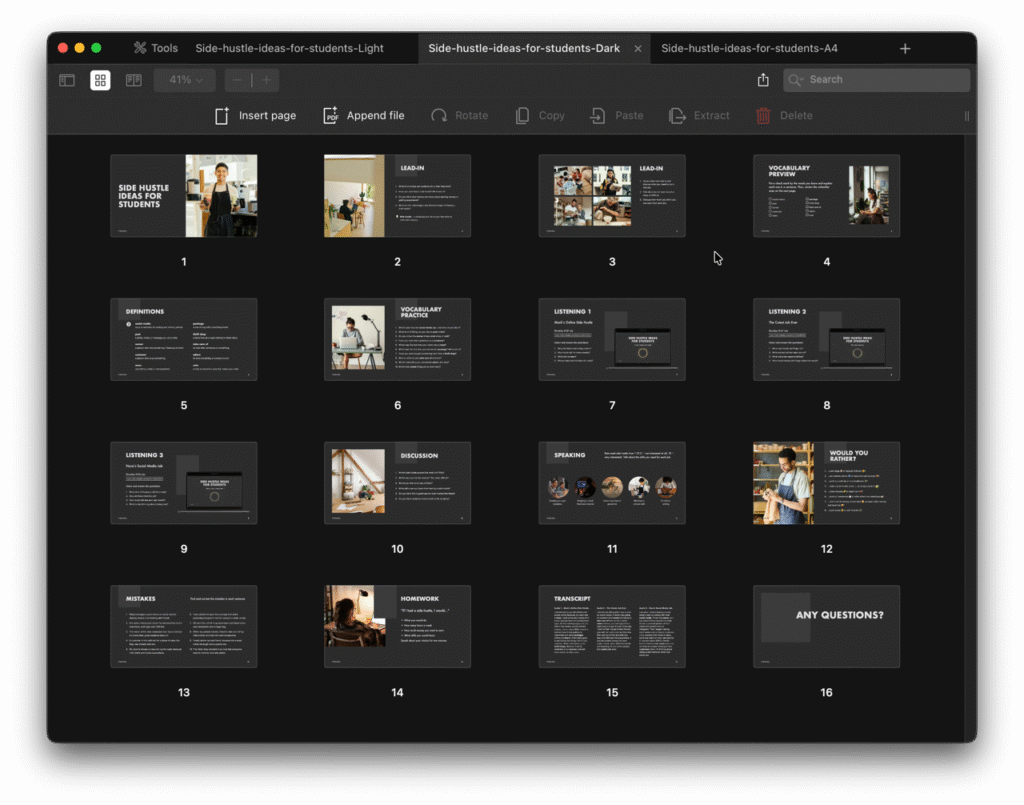
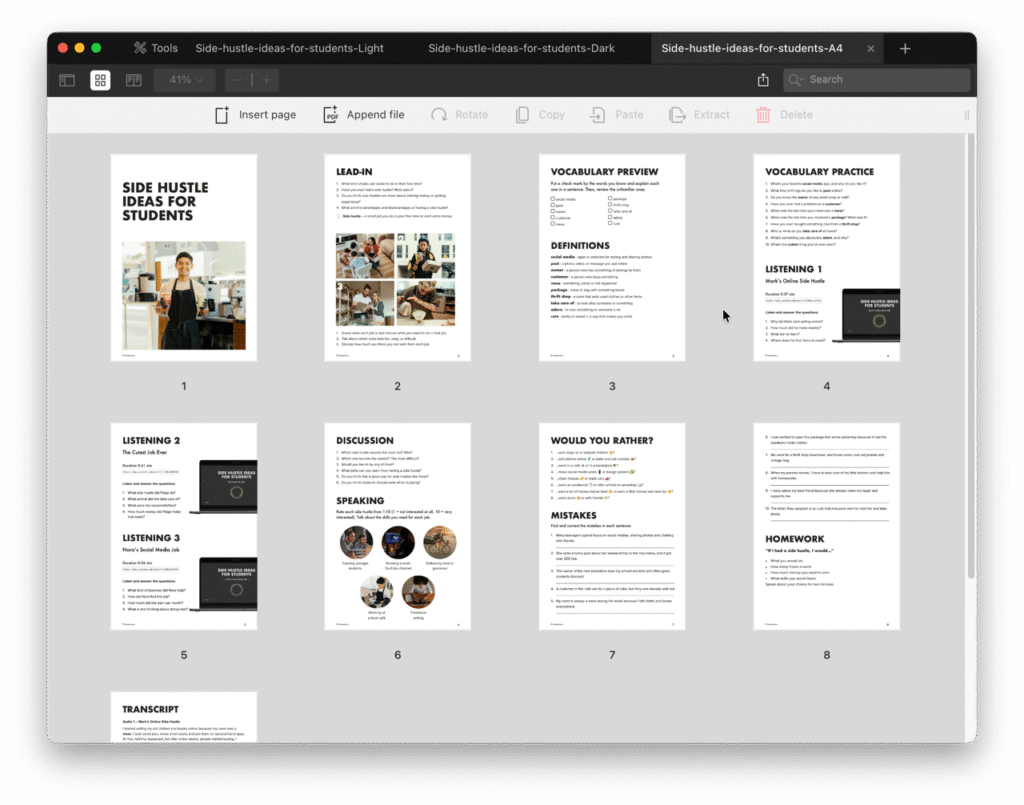
Start by asking what jobs students can do in their free time. Have they ever had a side hustle? Do they think side hustles are more about money or experience? Introduce the term “side hustle” as a small job you do in your free time to earn extra cash. Show the four job images and have students guess what each one is. They discuss which look fun, easy, or difficult and estimate earnings.
Pre-teach vocabulary before the listening activities. Go through the checklist where students mark which words they know. Then review definitions for “social media,” “post,” “owner,” “customer,” “mess,” “package,” “thrift shop,” “take care of,” “adore,” and “cute.” The vocabulary practice has 10 personal questions using these words. Students answer questions like “What’s your favorite social media app?” and “When was the last time you received a package?”
Now play the three audio clips. Each one is about 35-40 seconds long. Audio 1 is Mark talking about selling old clothes and books online. He made $150 a week and now resells thrift shop finds. Audio 2 is Paige describing pet sitting for a cat and earning $210 that week. Audio 3 is Nora explaining how she helps a bakery with social media posts and makes $300 a month. After each audio, students answer comprehension questions about what the person did, how much they earned, and what they learned.
The discussion section asks which side hustle sounds most fun and which looks easiest or hardest. Would students try any of them? What skills can you learn from a side hustle? This works well in small groups where students share different opinions. Move to the speaking activity where they rate side hustles from 1 to 10 and talk about required skills. Options include tutoring, running a YouTube channel, delivering food, working at a café, and freelance writing.
The “Would You Rather” section gives eight choices like “walk dogs or babysit children?” and “work alone or with friends?” Students pick one and explain why. The mistakes exercise has 10 sentences with grammar errors. Students find and correct mistakes like “social medias” instead of “social media” or “she write” instead of “she writes.” Check answers together and explain why each correction is needed. For homework, students prepare a two-minute talk about “If I had a side hustle, I would…” They describe what they’d do, how many hours, how much they’d earn, and what skills they’d learn.
