
Should You Tip?
This B1 lesson tackles the cultural practice of tipping through video, discussion, and real-world scenarios. Intermediate students explore tipping customs across different countries while building service industry vocabulary and practicing expressing opinions. The lesson uses authentic media to examine when, where, and how much people tip in various situations.
Lesson overview
- Explore tipping customs and expectations in different cultures worldwide
- Learn practical vocabulary related to service workers and gratuities
- Develop opinion-sharing skills through customer service discussions
- Practice responding to common service situations appropriately
| Level | Vocabulary | Video Length | Lesson Time |
| B1 / Intermediate | 8 words | 2:20 min | 60 min |
Vocabulary
- berate
- gratuity
- guilt
- no-brainer
- takeout
- exception
- deserve
- obligated
Contents
- Lead-in
- Discussion
- Reading
- Vocabulary match
- Vocabulary practice
- Video
- Questions
- Comments
- Discussion
- Speaking
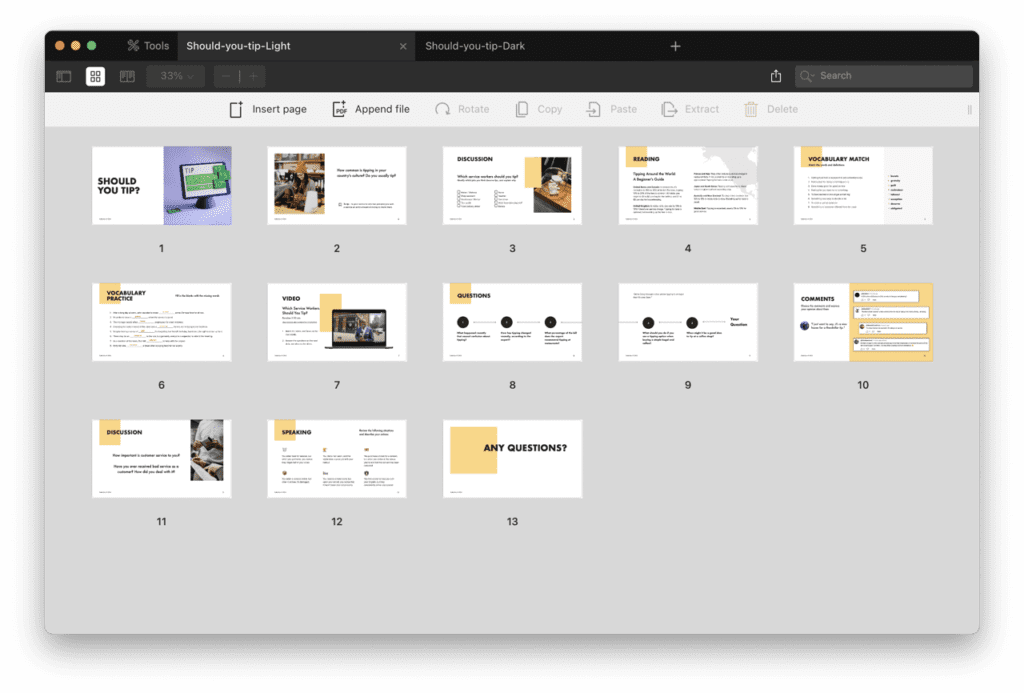
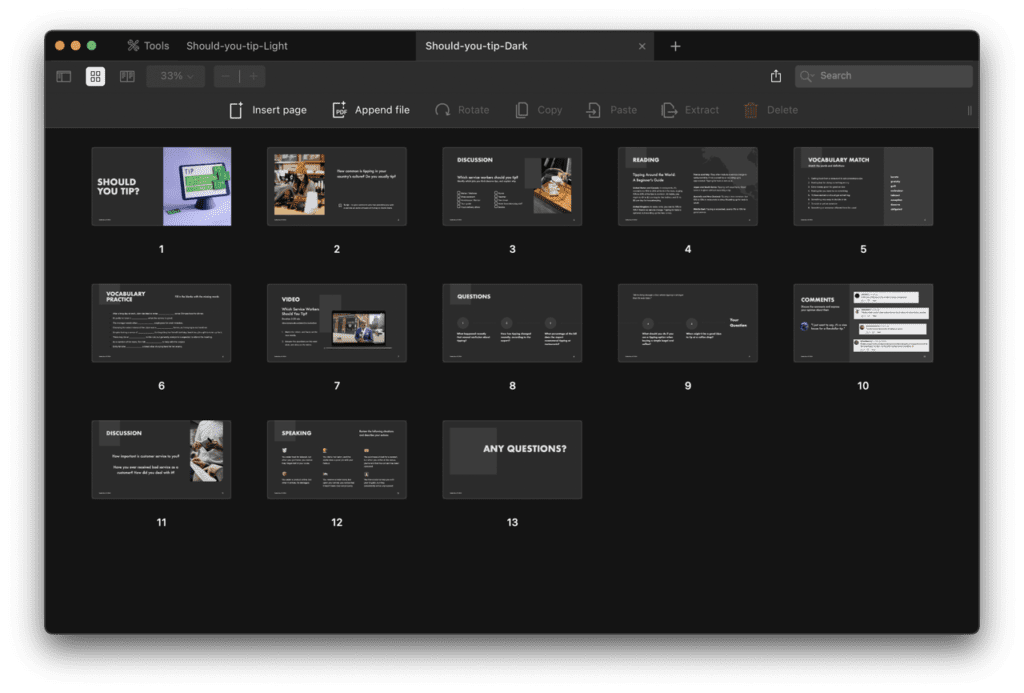
Start with the opening question on page 2 about tipping culture in students’ countries. Students share whether tipping is common where they live and what situations call for tips. If you have an international class, expect diverse answers. The contrast makes for better discussion.
Page 3 has students identify which service workers deserve tips. This checklist works well as pair discussion before whole-class sharing. Students often have strong opinions about teachers and nurses being on the list. Let them debate. The reading on page 4 covers tipping norms in six world regions, which you can use to confirm or challenge what students said about their own countries.
Pre-teach the vocabulary on page 5 through matching before showing the video. The eight words (berate, gratuity, guilt, no-brainer, takeout, exception, deserve, obligated) appear in both the video and the practice exercise on page 6. After matching definitions, have students complete the gap-fill sentences to check understanding.
The video on page 7 runs just over two minutes. It’s a news segment about tipping confusion in modern America, with an expert discussing percentage guidelines and when tipping is appropriate. Play it twice. First viewing answers the comprehension questions on pages 8-9. Second viewing lets students catch missed details and notice how the vocabulary is used naturally.
Page 10 shows real YouTube comments reacting to the video. These reflect genuine frustration, humor, and different takes on tipping. Students discuss which comments they agree with and why. This moves from comprehension toward critical thinking about the economics and social dynamics behind tipping culture.
Page 11 shifts to customer service more broadly. Students share experiences with bad service and how they handled it. This sets up the role-play on page 12 where they respond to six service failures: wrong takeout order, bad haircut, canceled concert, damaged delivery, dirty hotel room, unprepared tutor. Good practice for complaint language and problem-solving.
