
Shopping

This A2 pre-intermediate lesson covers essential shopping vocabulary and common retail situations that students encounter in everyday life. Students learn key terms like checkout, fitting room, and price tag while practicing conversations about shopping habits and preferences. The lesson includes reading passages about different shopping scenarios, a fun quiz to assess shopping tendencies, and idioms related to spending money.
Lesson overview
- Learn fundamental shopping vocabulary for stores and purchases
- Practice using adverbs of frequency to describe shopping habits
- Explore idioms and expressions related to money and spending
- Develop reading skills through relatable shopping scenarios
| Level | Vocabulary | Lesson Time |
| A2 / Pre-Intermediate | 11 words | 60 min |
Vocabulary
- shopping cart
- price tag
- receipt
- checkout
- fitting room
- shop assistant
- cashier
- on sale
- window shopping
- return
- shopaholic
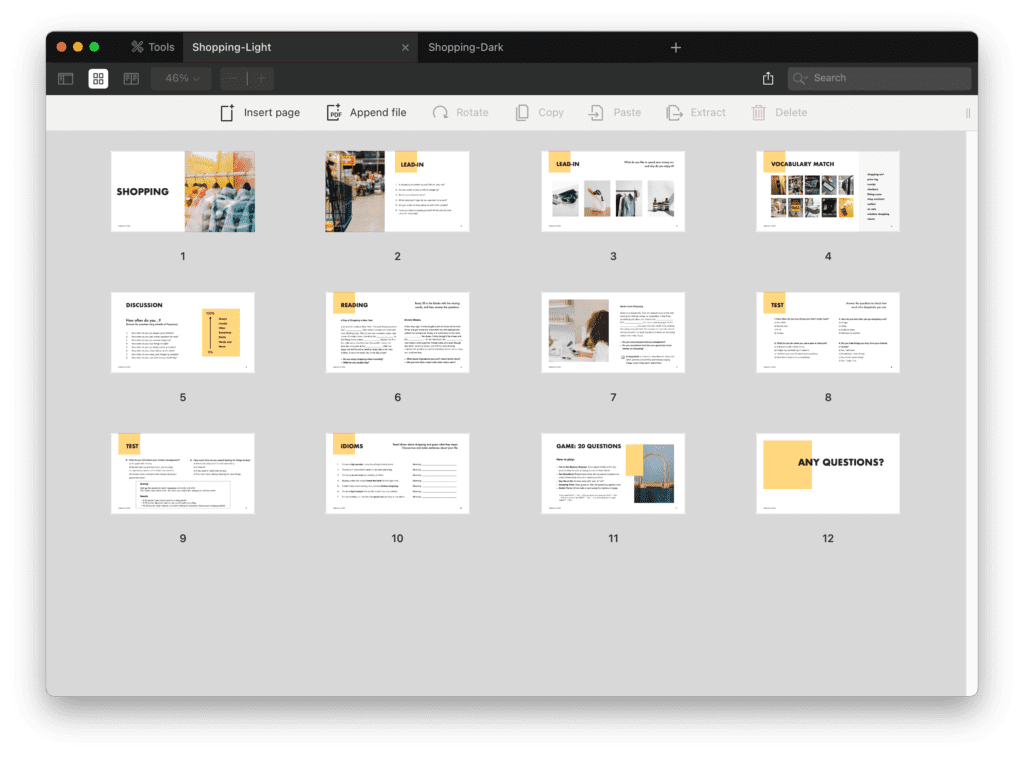
Contents
- Lead-in 1
- Lead-in 2
- Vocabulary match
- Discussion
- Reading
- Test
- Idioms
- Game
Start with the lead-in questions on pages 2-3 about shopping preferences. The visual activity on page 3 with different product categories (electronics, groceries, clothing, cosmetics) works for discussing what people spend money on. Students usually have opinions about online versus in-store shopping, so conversation tends to flow.
The vocabulary matching on page 4 introduces ten shopping terms with pictures. Have students work in pairs to match words with images, then check together. Watch for pronunciation on words like “receipt” and “cashier.” The discussion on page 5 uses this vocabulary with adverbs of frequency—model it first by talking about your own shopping habits.
Pages 6-7 have three short readings: Emma’s return experience, Lisa’s shopping trip in New York, and Sarah the shopaholic. These can be split among groups or done individually with gap-fill exercises. Each has follow-up questions like “Do you know anyone who is a shopaholic?”
The shopaholic quiz on pages 8-9 is usually a hit. Students complete it alone, then compare results in pairs or small groups. Good lead-in to talking about spending habits. The scoring keeps it light.
The idioms section on page 10 covers seven expressions about money and shopping. Have students guess meanings first, then make their own sentences using two of them. The 20 Questions game on page 11 works best in groups of three or four—good speaking practice and reviews the vocabulary in a low-pressure way.
