Scary Story in Messages

This A2 Halloween lesson teaches spooky vocabulary through a text message story between two friends. Students learn words like “footsteps,” “curtain,” and “alone” while reading a mysterious chat conversation. The activities include sound guessing, a crossword puzzle, reading aloud in pairs, and writing their own scary text message endings.
Lesson overview
- Learn 10 words related to darkness, sounds, and being alone
- Read a spooky text message conversation between Anna and Mia
- Practice pronunciation through paired reading and sound recognition
- Write your own scary or funny text message story
| Level | Vocabulary | Lesson Time |
| A2 / Pre-Intermediate | 10 words | 60 min |
Vocabulary
- Window
- Curtain
- Footsteps
- Alone
- Serious
- Move
- Light
- Turn on
- Dark
- Get out
Contents
- Lead-in
- Guessing game
- Vocabulary
- Definitions
- Crossword
- Reading
- Comprehension
- Discussion
- Your ending
- Speaking
- Questions
- Practice
- Pictures
- Homework
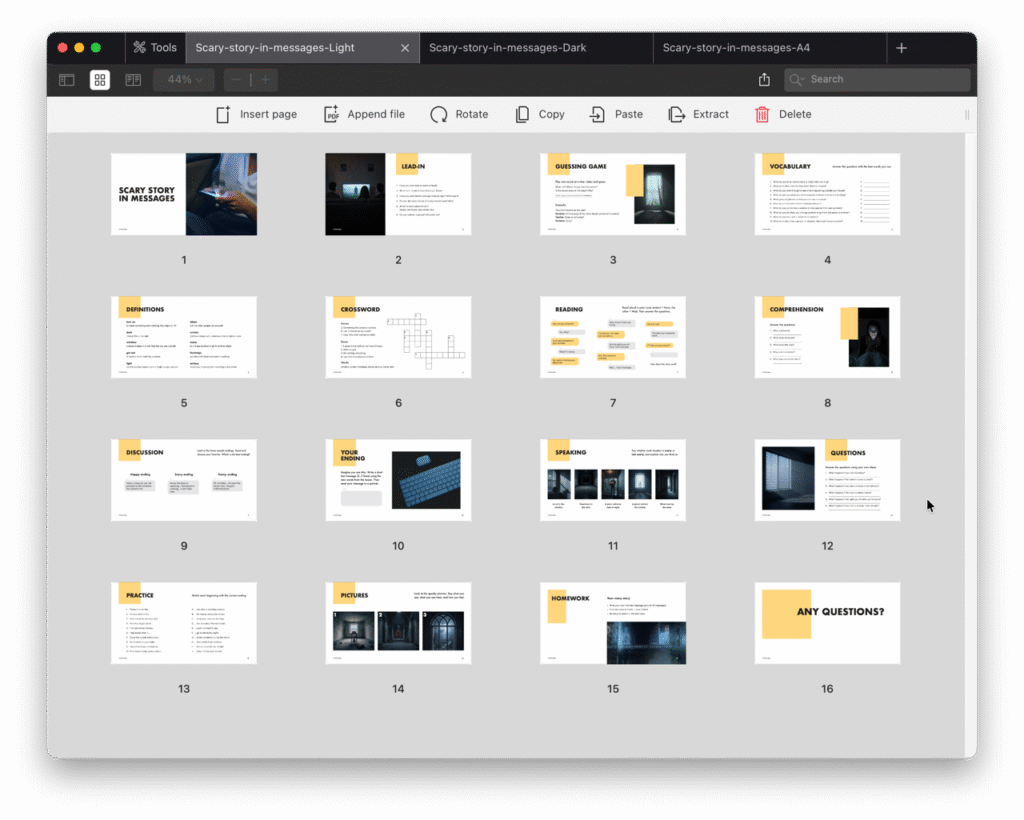
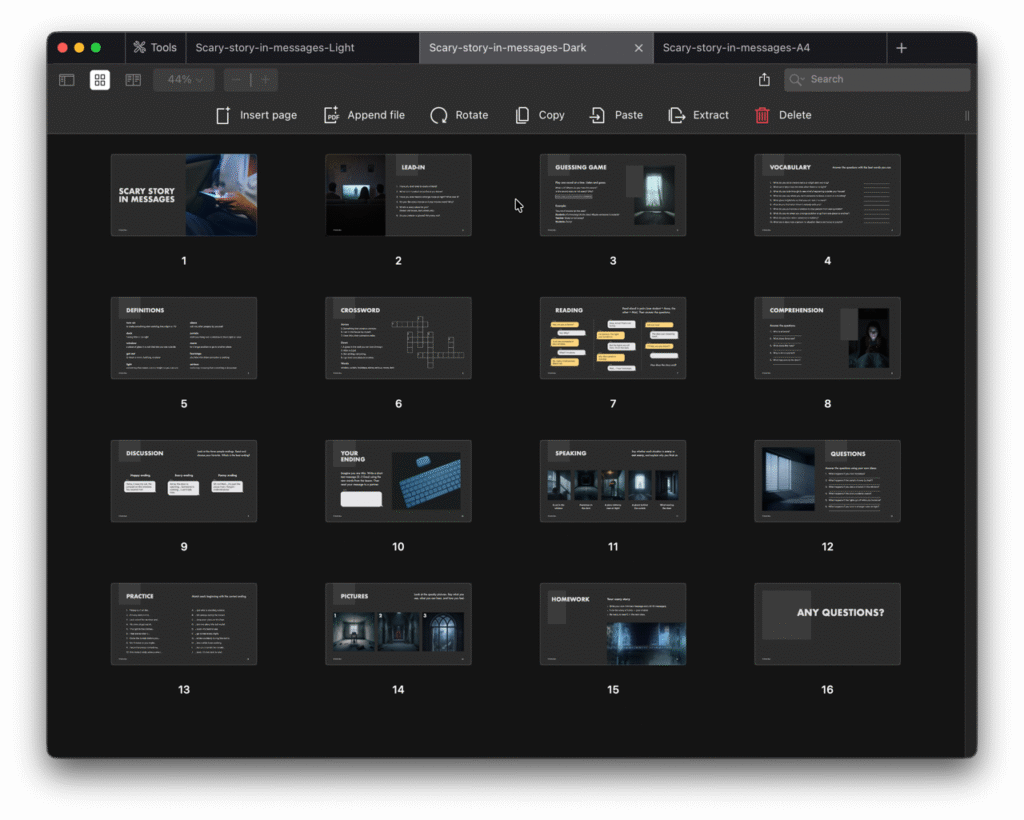
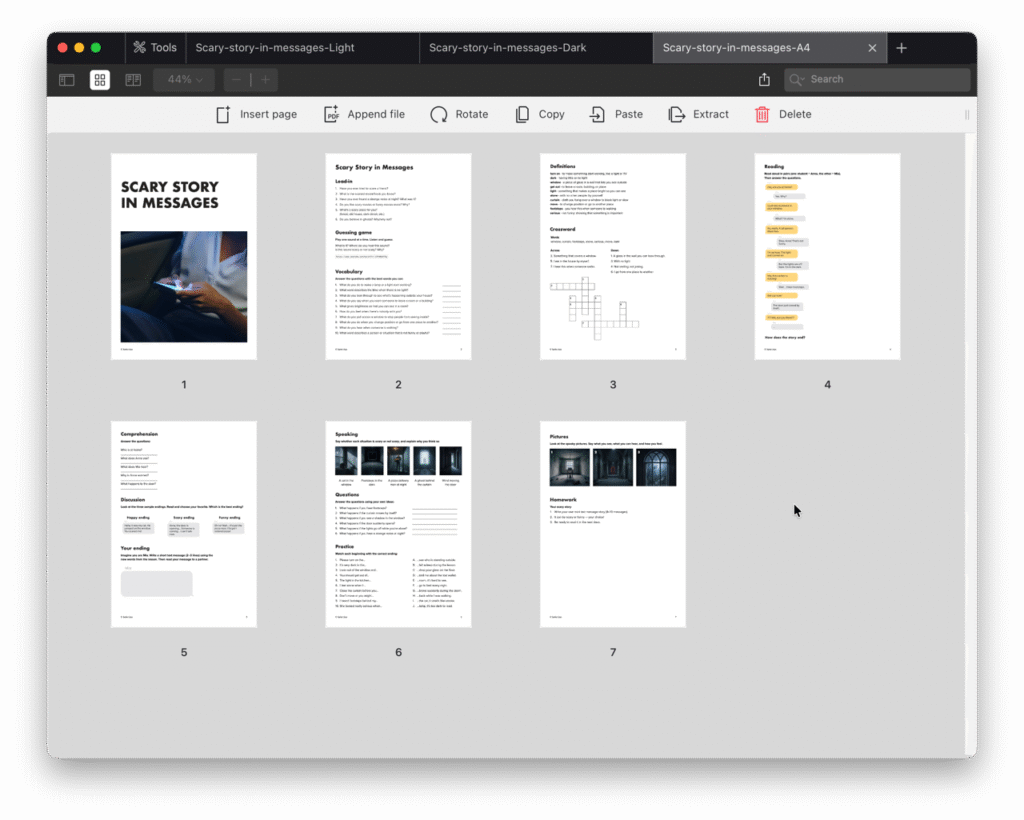
Start with the lead-in questions about scaring friends and favorite scary movies. Have students ever heard strange noises at night? Do they believe in ghosts? This gets them in the Halloween mood. The sound guessing game plays mystery sounds one at a time. Students listen and guess what it is, where you hear it, and if it’s scary. For example, knocking on a door might be scary if you’re alone at night.
Pre-teach vocabulary through questions. What do you do to make a lamp work? Turn it on. What word describes when there’s no light? Dark. Students answer with the best words they can think of, then check definitions for “turn on,” “dark,” “window,” “get out,” “light,” “alone,” “curtain,” “move,” “footsteps,” and “serious.” The crossword reinforces these words using clues like “something that covers a window” for curtain.
Now move to the reading. Students work in pairs with one playing Anna and the other Mia. They read the text message conversation aloud. Anna is home alone and sees something move outside her window. Mia tries to help but Anna gets more scared as she hears footsteps and the door opens. The story stops before the ending, leaving it mysterious. After reading, students answer comprehension questions. Who is at home? What does Anna see? Why is she worried?
Show three sample endings: happy, scary, and funny. Students read each one and vote for their favorite. Which is the best ending and why? Then they write their own ending as if they were Mia responding to Anna’s last message. They use 2-3 lines and include lesson vocabulary. Students read their endings to a partner.
The speaking activity shows five situations like “a cat in the window” or “footsteps in the dark.” Students say if each is scary or not scary and explain why. The question practice has students complete “What happens if…” sentences using their imagination. What happens if the curtain moves by itself? What happens if the lights go off while you’re alone?
The matching exercise connects sentence beginnings to endings using lesson vocabulary. For example, “Please turn on the…” matches with “…lamp, it’s too dark to read.” Check answers together. Finish with the picture description activity showing three spooky images. Students say what they see, what they can hear, and how they feel. For homework, they write their own mini text message story with 8-10 messages that can be scary or funny.