
Scandinavian Fashion
This lesson takes B2 upper-intermediate students into the world of Scandinavian fashion, exploring the minimalist aesthetic that has made Denmark, Sweden, and Norway style icons. Students examine the principles behind Nordic design choices while building vocabulary for discussing personal style and cultural influences. Through video analysis and debate activities, learners develop critical thinking about sustainability, gender-neutral design, and the role fashion plays in expressing identity.
Lesson overview
- Explore key principles of Scandinavian fashion including sustainability and timeless design
- Practice describing outfits and personal style using descriptive adjectives
- Develop vocabulary related to fashion trends, wardrobe choices, and cultural influences
- Discuss how cultural background and lifestyle choices shape fashion preferences
| Level | Vocabulary | Video Length | Lesson Time |
| B2 / Upper-Intermediate | 12 words | 2:59 min | 60 min |
Vocabulary
- Simplicity
- Sustainability
- Layering
- Functionality
- Timeless Design
- Gender-neutral design
- Fashion trend
- Street style
- Capsule wardrobe
- Statement piece
- Effortlessly chic
- Vintage clothes
Contents
- Lead-in
- Discussion
- Speaking
- Vocabulary
- Reading
- Video
- True or False
- Agree or disagree
- Writing
- Useful phrases
- Discussion
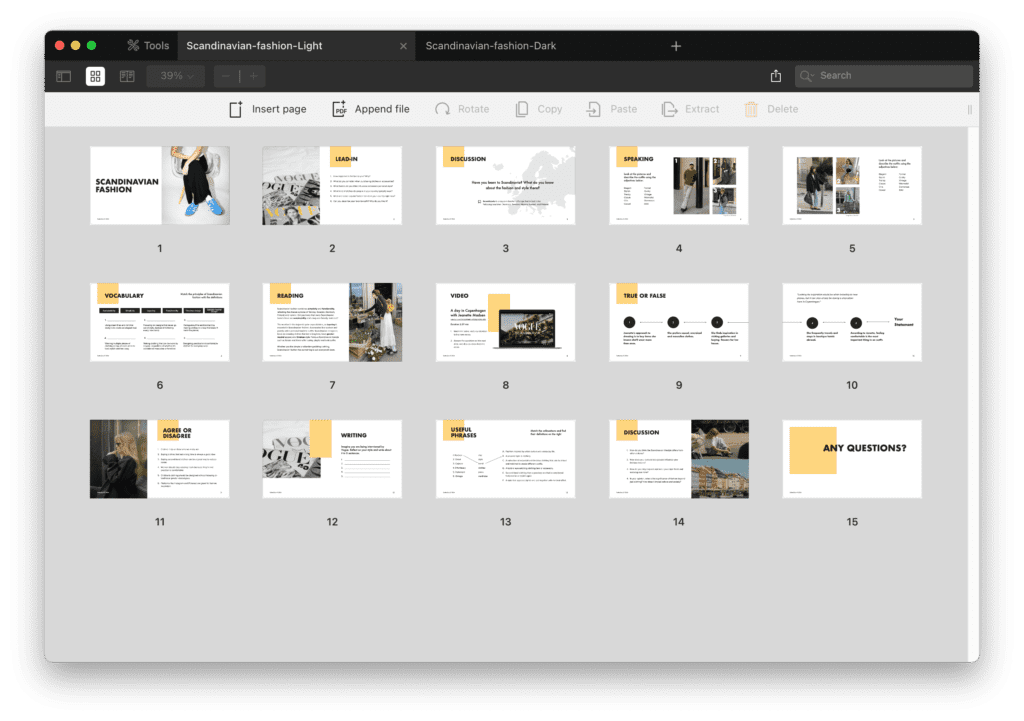
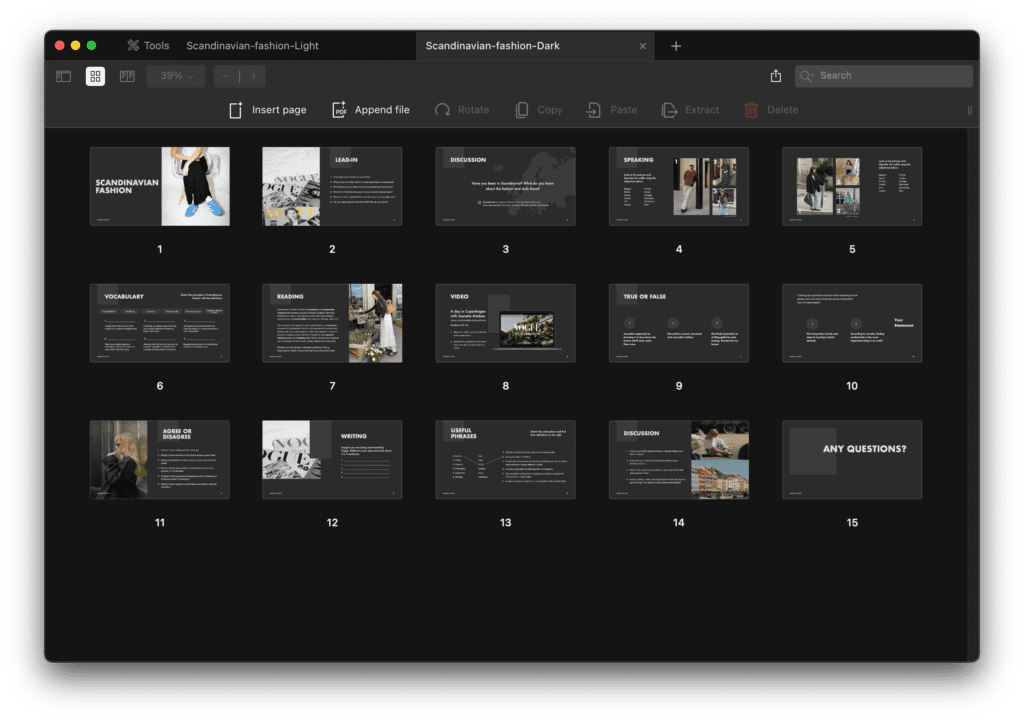
Start with the opening discussion questions about Scandinavia on page 3. Give students two minutes to share what they know about Nordic countries and their reputation for design.
Move to the speaking activity on pages 4-5 where students describe outfits using fashion adjectives. Pair them up and have them practice using words like “minimalist,” “chic,” and “casual” before looking at the images. This gets them comfortable with the descriptive language they’ll use throughout the lesson.
The vocabulary matching on page 6 introduces concepts like sustainability and gender-neutral design. After students match terms with definitions, discuss which principles appeal to them and why.
Before playing the Vogue video on page 8, preview the true/false statements on pages 9-10. Students should watch once for the general idea, then again to complete the comprehension check. The video features a Danish fashion influencer discussing her approach to style in Copenhagen.
The agree/disagree activity on page 11 works well as a structured debate. Divide the class and assign positions so students have to defend viewpoints they might not personally hold. Gets them thinking about different angles on fashion choices.
Wrap up with the writing task on page 12 where students reflect on their own style in five sentences. Share responses in small groups and encourage questions. The final discussion on page 14 goes deeper into how culture shapes fashion and personal expression.
