
Saying Goodbye to Cheap Streaming
This C1 lesson examines the evolution of streaming services through economic analysis and industry trends. Students explore why subscription prices are rising, how companies manage profitability challenges, and what consumer behaviors like “serial churning” reveal about the changing entertainment landscape.
Lesson overview
- Practice advanced vocabulary for business models and consumer behavior patterns
- Learn about streaming industry economics including pricing strategies and profitability
- Develop critical analysis of subscription-based business models and market trends
- Discuss ethical and practical considerations around content access and pricing
| Level | Vocabulary | Video Length | Lesson Time |
| C1 / Advanced | 10 words | 6:40 min | 60-80 min |
Vocabulary
- tier
- fork up
- surge
- dent
- trendsetter
- lucrative
- serial “churners”
- middle ground
- indefinitely
- hop around
Contents
- Lead-in
- Vocabulary preview
- Vocabulary
- Video
- Comprehension questions
- Comments
- Vocabulary practice
- Synonyms
- Discussion
- Voice over
- Further reading
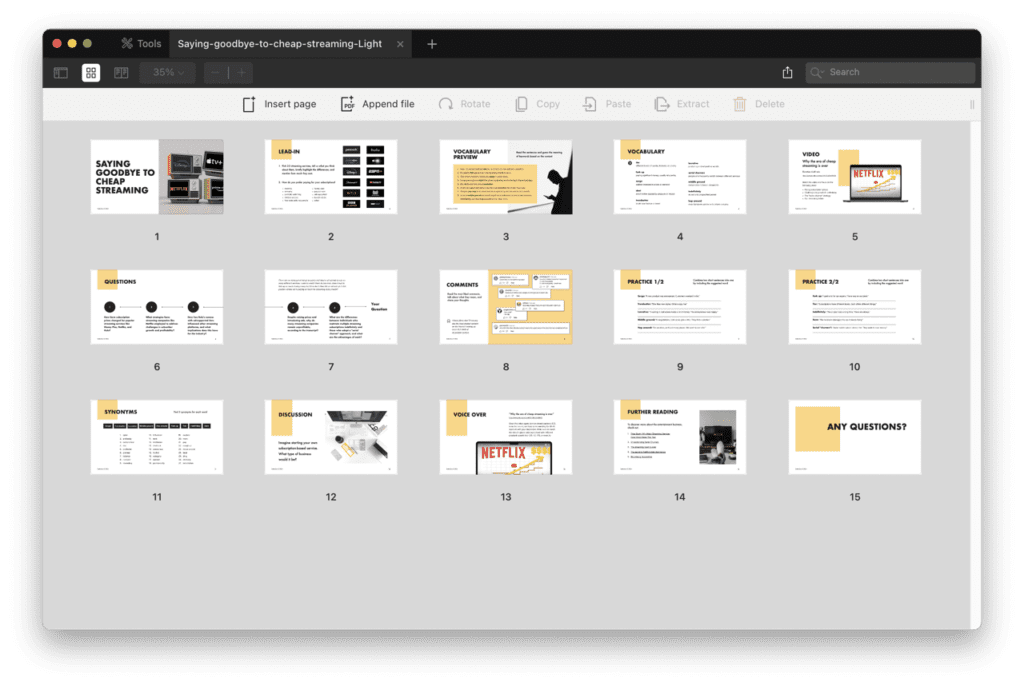
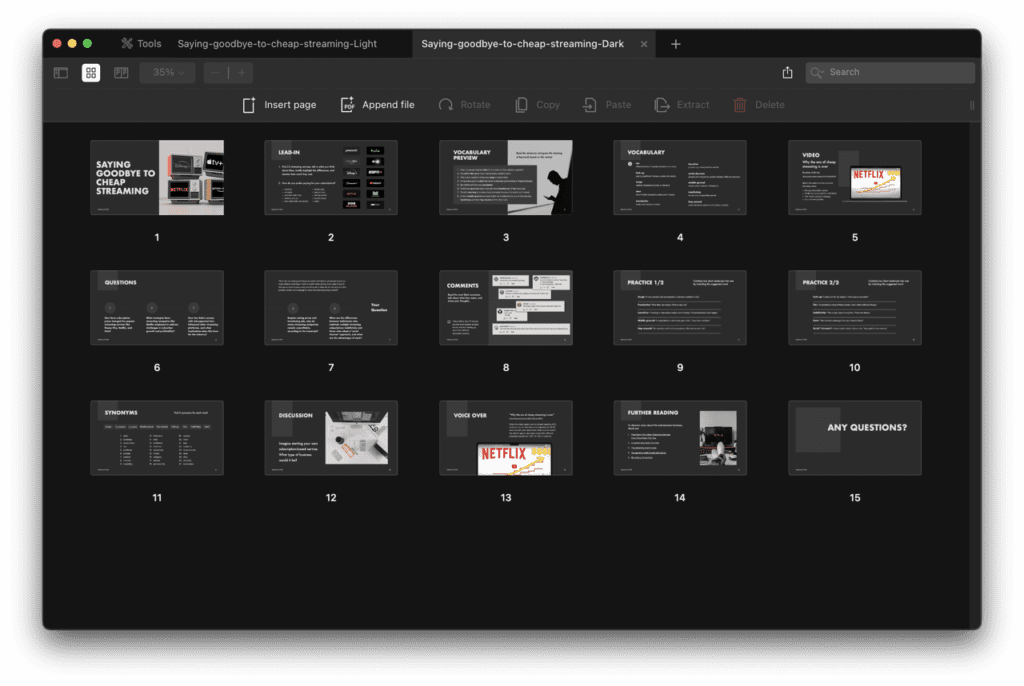
Begin with the lead-in on page 2 where students compare streaming services they know. Students mention pricing, content libraries, and unique features of 2-3 platforms. The second question about payment preferences introduces vocabulary that recurs throughout the lesson like “ad-supported,” “bundle deals,” and “periodic switching.”
Page 3 presents vocabulary through sentences from the video. Have students guess meanings before checking definitions on page 4. Key terms like “tier,” “surge,” “trendsetter,” and “serial churners” are essential for understanding the video. Drill pronunciation and ask students to create original examples.
The video on page 5 runs about 6:40. Preview the focus points so students know what to listen for. Play it once without stopping. The comprehension questions on pages 6-7 require synthesis rather than simple recall. For example, question 3 asks how Hulu’s success with ads influenced the broader industry.
Page 8 analyzes YouTube comments about the video. Students interpret what each comment means and evaluate whether they agree. The piracy statistic in the note box adds context. Let students debate the ethics of piracy versus business practices that might drive it.
Pages 9-10 offer sentence combining practice using target vocabulary. Students can work individually then compare in pairs. Multiple correct answers exist, so focus on whether vocabulary is used accurately.
Page 11 has synonym matching. Finding three synonyms for each word helps students understand nuance. Some like “cough up” are more informal than “fork up,” while “lucrative” is more formal than “profitable.”
Page 12 asks students to design their own subscription business. They consider pricing tiers, growth strategies, and balancing profitability with customer retention. Encourage vocabulary like “ad-supported tier” and “serial churners.”
Page 13 presents a voice-over challenge where students narrate the video with captions on but sound off. Start at normal speed, then try 1.25x or 1.5x as students gain confidence.
Finish by discussing the further reading on page 14 or assign one article as homework.
