
S.A.D. or Just Sad?

This C1 lesson explores the difference between Seasonal Affective Disorder and ordinary winter sadness. Students read a 900-word article, learn vocabulary like “photoreceptor,” “annually recurrent,” and “social withdrawal,” and discuss why some people are hit harder by dark months than others. It’s a topic that resonates with most advanced learners, especially those living in places where winter drags on.
Lesson overview
- Learn ten vocabulary words about seasonal depression, light exposure, and mental health
- Read an article comparing SAD with the winter blues and answer questions in a hot seat activity
- Rewrite everyday sentences using target vocabulary and build collocations from the lesson
- Discuss how culture, geography, social media, and workplaces shape our experience of winter
| Level | Vocabulary | Reading Time | Lesson Time |
| C1 / Advanced | 10 words | 900 words / 5 min | 60-80 min |
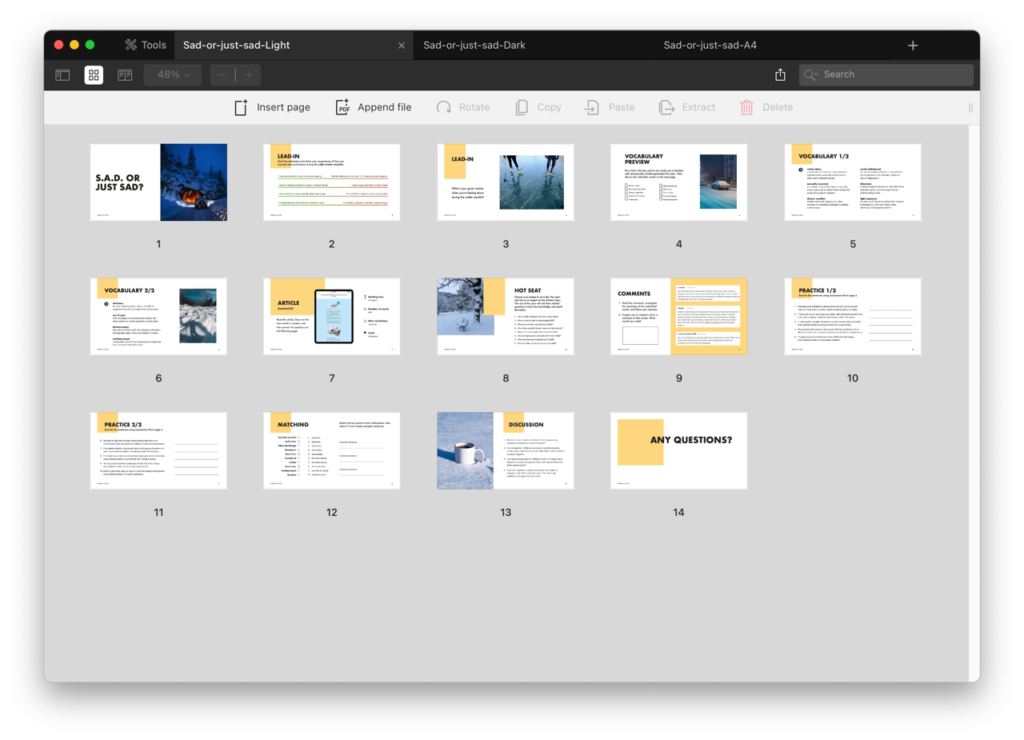
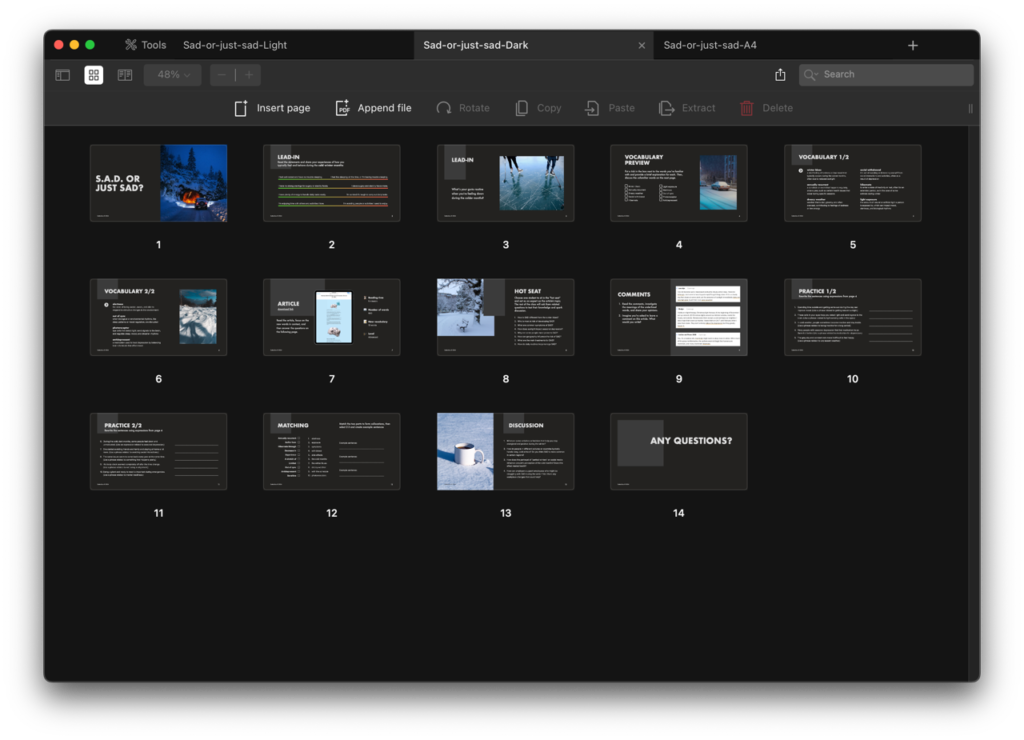
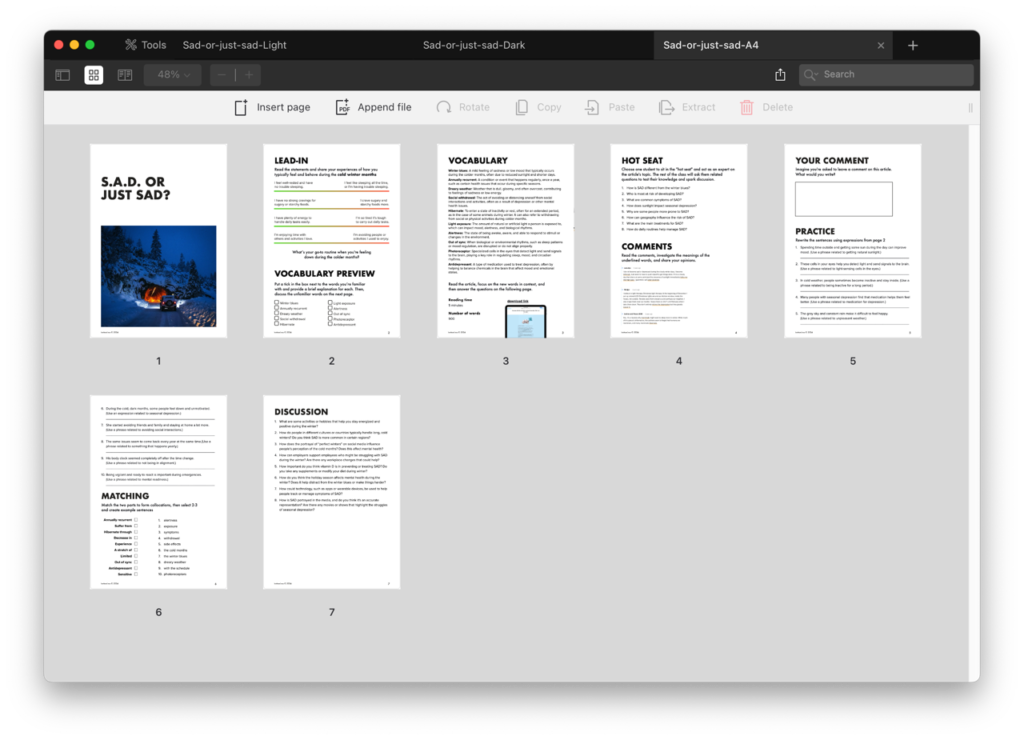
Vocabulary
- Winter blues
- Annually recurrent
- Dreary weather
- Social withdrawal
- Hibernate
- Light exposure
- Alertness
- Out of sync
- Photoreceptor
- Antidepressant
Contents
- Lead-in 1
- Lead-in 2
- Vocabulary preview
- Vocabulary
- Article
- Hot seat Q&A
- Comments
- Your comment
- Practice
- Matching
- Discussion
The lead-in uses a simple self-assessment. Students read four pairs of contrasting statements about winter habits: sleep, cravings, energy, and socializing. They share which side they relate to more. This immediately gets personal without being invasive. Follow up with the question about what students do when they’re feeling down in colder months. Some will mention exercise, others will say they binge TV shows or sleep more. This sets up the vocabulary naturally because many of the target words describe exactly what students are already talking about.
Cover the ten vocabulary words across two slides. The first six are more accessible: “winter blues,” “annually recurrent,” “dreary weather,” “social withdrawal,” “hibernate,” and “light exposure.” The second four get more technical: “alertness,” “out of sync,” “photoreceptor,” and “antidepressant.” For “photoreceptor,” explain it as the cells in your eyes that detect light and tell your brain whether it’s day or night. For “out of sync,” use something like “When the clocks change and your sleep schedule feels wrong, your body is out of sync.” Make sure students can pronounce “annually recurrent” and “antidepressant” confidently before moving into the article.
Give students about five minutes to read. At 900 words, it’s a comfortable length for C1. The hot seat activity replaces a standard question-and-answer format. One student sits in front of the class and acts as an expert on the article while everyone else fires questions at them. The eight prepared questions cover the basics, but encourage students to ask their own too. Rotate the hot seat if time allows so more than one student gets to play expert. After the hot seat, the comments section asks students to read real-style reader comments, investigate underlined words, and share opinions. Then they write their own comment as if they’d just read the article online.
The sentence rewriting exercises take up two slides. Students rewrite ten everyday sentences using the target vocabulary. For example, “The gray sky and constant rain make it difficult to feel happy” becomes a sentence using “dreary weather.” This is the hardest activity in the lesson because students need to restructure sentences while keeping the meaning intact. After rewriting, the collocation matching exercise connects word pairs like “annually recurrent” + “the winter blues” and “out of sync” + “with the schedule.” Students match all ten pairs, then write example sentences with two or three of them. End with the discussion questions. The one about social media portraying “perfect winters” and the one about what employers can do for workers with SAD usually generate the best conversation at this level.
