
Ridiculous Conspiracy Theories

This advanced C1 lesson explores ridiculous conspiracy theories through engaging discussion and critical thinking activities. Students examine bizarre beliefs from flat earth theory to time-traveling Bigfoot while developing their ability to analyze misinformation and practice advanced vocabulary. The lesson combines humor with serious conversation about why conspiracy theories captivate people and how to have productive discussions about controversial ideas.
Lesson overview
- Practice using advanced vocabulary related to conspiracy theories and critical thinking
- Develop argumentation skills through role-play debates on controversial topics
- Explore cognitive biases that influence how people process information
- Discuss the psychology behind conspiracy theory beliefs and social media’s role
| Level | Vocabulary | Reading Time | Lesson Time |
| C1 / Advanced | 12 words | 3 min / 600 words | 60 min |
Vocabulary
- Sanity
- Debunk
- Captivate
- Proponent
- Bizarre
- Fabricated
- Enduring
- Mislead
- Fossil fuel
- Solitude
- Hoax
- Far-fetched
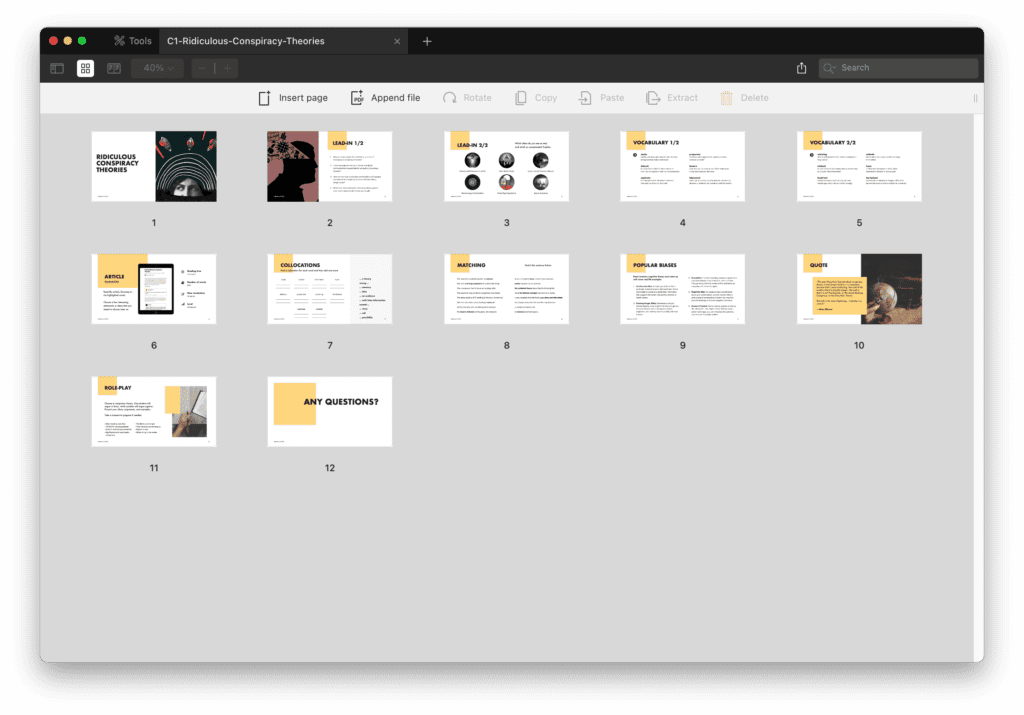
Contents
- Lead-in 1
- Lead-in 2
- Vocabulary 1
- Vocabulary 2
- Article reading
- Collocations
- Matching
- Popular biases
- Quote
- Role-play
Kick things off with a warm-up discussion using the lead-in questions about why people find comfort in conspiracy theories. This gets students thinking critically right from the start. Have them work in pairs to figure out which of the six concepts on slide three are real and which are conspiracies. This taps into what they already know and brings up the whole conspiracy theories topic naturally.
Jump into the vocab by presenting the twelve new words with definitions. Focus on collocations by having them do the matching exercise where they pair words like “debunk a theory” or “captivate an audience.” This builds their ability to use advanced vocab in ways that actually sound natural. The sentence-matching activity reinforces understanding through context.
The article reading is the heart of the lesson. Students read the 600-word text about hilarious conspiracy theories in three minutes. Tell them to highlight anything interesting they want to talk about later. After reading, get a conversation going about the most ridiculous theories mentioned. Guide them to use the new vocab naturally as they share their reactions.
Introduce cognitive biases to push the critical thinking deeper. Present the five common biases with examples, then challenge them to come up with their own real-life scenarios. This connects abstract concepts to stuff they’ve actually experienced. The Alan Moore quote is perfect for sparking discussion about why chaos feels scarier than conspiracy.
Wrap up with the role-play where students debate conspiracy theories like the fake moon landing or COVID-19 being engineered. One student argues for the conspiracy while another argues against it. This practices persuasive language and argumentation skills in a fun, low-stakes way. Finish by asking students to reflect on what makes conspiracy theories appealing and how to talk to believers without being a jerk about it.
