
Rhetorical Questions

This B1 lesson teaches students what rhetorical questions are and how to use them in conversation. Students learn the difference between real questions and rhetorical ones, then practice recognizing them in dialogues. The activities include matching exercises, role-plays, and rewriting statements as rhetorical questions to show emotion or make a point.
Lesson overview
- Learn what makes a question rhetorical and when people use them
- Practice identifying rhetorical questions in realistic dialogues about daily situations
- Match rhetorical questions to their emotional meaning or purpose
- Develop speaking skills by using rhetorical questions in role-play scenarios
| Level | Vocabulary | Lesson Time |
| B1 / Intermediate | 20+ rhetorical questions | 60-80 min |

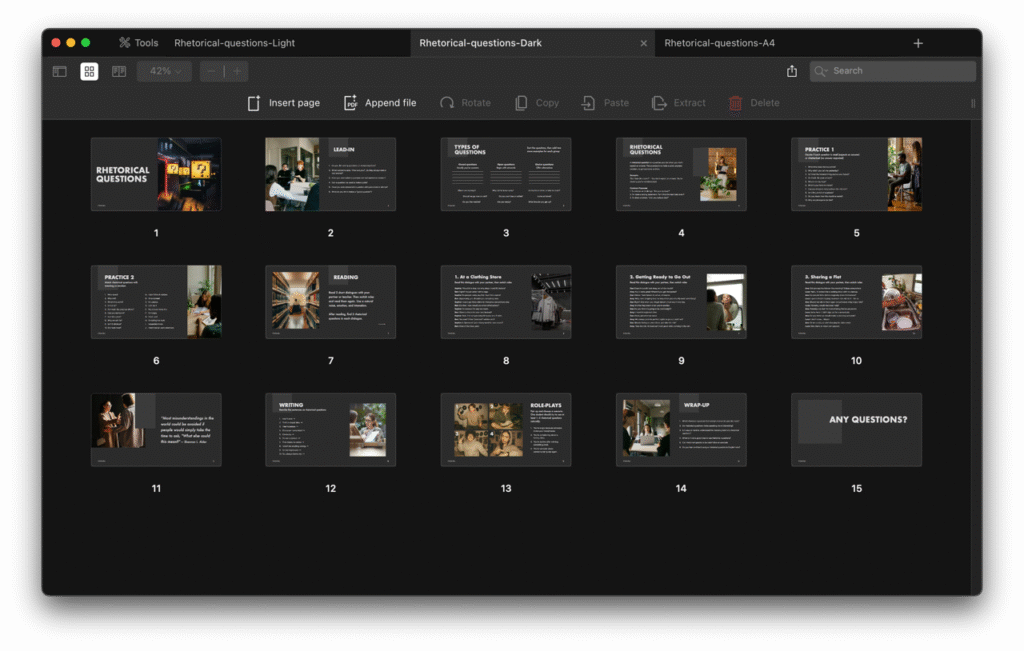
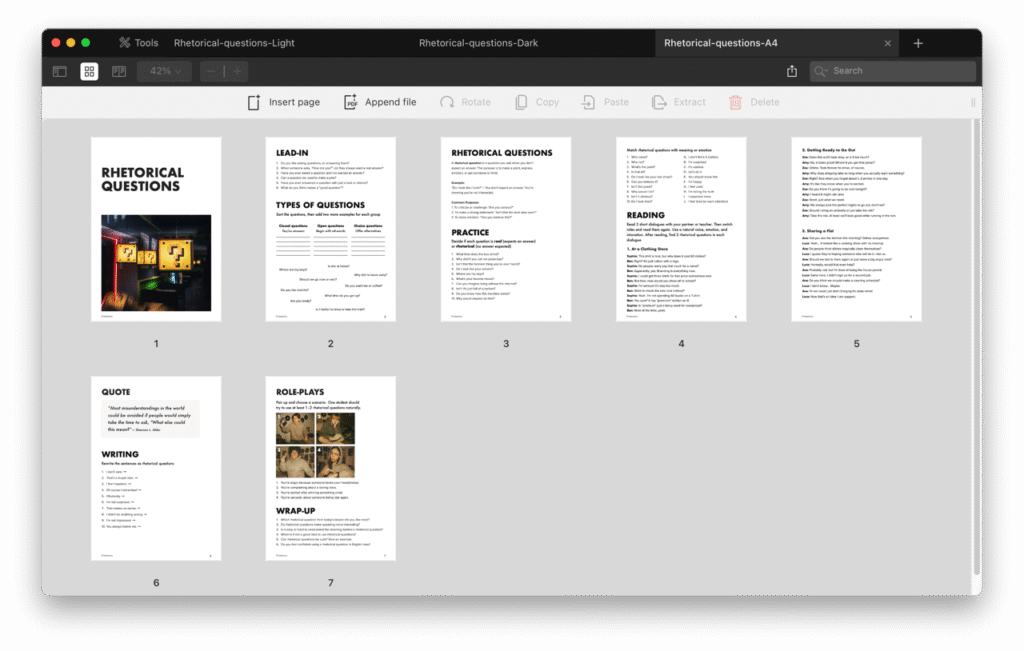
Vocabulary
- Who cares?
- Why not?
- What’s the point?
- Is that all?
- Do I look like your taxi driver?
- Can you believe it?
- Isn’t this great?
- Why would I lie?
- Isn’t it obvious?
- Do I look tired?
- Isn’t that the funniest thing you’ve ever heard?
- Do I look like your servant?
- Can you imagine living without the internet?
- Isn’t life just full of surprises?
- Why would anyone do that?
Contents
- Lead-in
- Types of questions (sorting)
- Rhetorical questions
- Practice 1
- Practice 2
- Reading
Dialogue 1: At a Clothing Store
Dialogue 2: Getting Ready to Go Out
Dialogue 3: Sharing a Flat - Quote
- Writing
- Role-plays
- Wrap-up
Start with the lead-in questions about asking versus answering questions. Question two about “How are you?” sets up the idea that not all questions need real answers. The types of questions activity reviews closed, open, and choice questions before introducing rhetorical ones. Students sort examples and add two more of their own for each category. This shows you whether they understand basic question structures.
Go through the rhetorical questions explanation and examples. The three common purposes help students see that rhetorical questions express criticism, make statements, or show emotion. Practice one has ten questions and students decide if each expects an answer or not. Some are obvious, but others like “Can you imagine living without the internet?” could go either way depending on context. Practice two matches rhetorical questions like “Who cares?” and “Why not?” to meanings. This helps students understand the emotional intention behind the words.
The three dialogues give students reading practice with natural conversations. They read each dialogue twice, switching roles with their partner. After reading, they find two rhetorical questions in each one. The clothing store dialogue uses “Do people really pay that much for a name?” and “Is premium just a fancy word for overpriced?” to show frustration about pricing. The getting ready dialogue includes “Why does shipping take so long when you actually want something?” which students will relate to. The flatmate dialogue uses sarcasm with “Do people think dishes magically clean themselves?”
The writing task has students rewrite statements as rhetorical questions. “I don’t care” becomes “Who cares?” or “Do I look like I care?” This gives them practice forming the questions themselves. The role-plays put everything together. Students pick a scenario and use at least one or two rhetorical questions naturally in their conversation. The wrap-up questions let students reflect on whether rhetorical questions are useful, easy to understand, and appropriate in different situations.
