
Revenge Bedtime Procrastination
This B2 lesson looks at why so many of us stay up too late on purpose, even when we know we will pay for it the next morning. Students learn vocabulary like “chronotype,” “self-control,” and “intention-behavior gap” through video tasks, real online comments, and a chronotype quiz. It is a topic that gets everyone talking because almost every student has done it.
Lesson overview
- Learn ten vocabulary words related to sleep habits, procrastination, and routines
- Watch a video explaining why revenge bedtime procrastination happens and how to stop it
- Analyze real online comments about late-night habits and work-life balance
- Take a chronotype quiz and discuss personal sleep patterns with classmates
| Level | Vocabulary | Video Length | Lesson Time |
| B2 / Upper-Intermediate | 10 words | 3:25 min | 60 min |
Vocabulary
- revenge
- pandemic
- me time
- valid reason
- commitment
- intention-behavior gap
- self-control
- chronotype
- night owl
- early bird
Contents
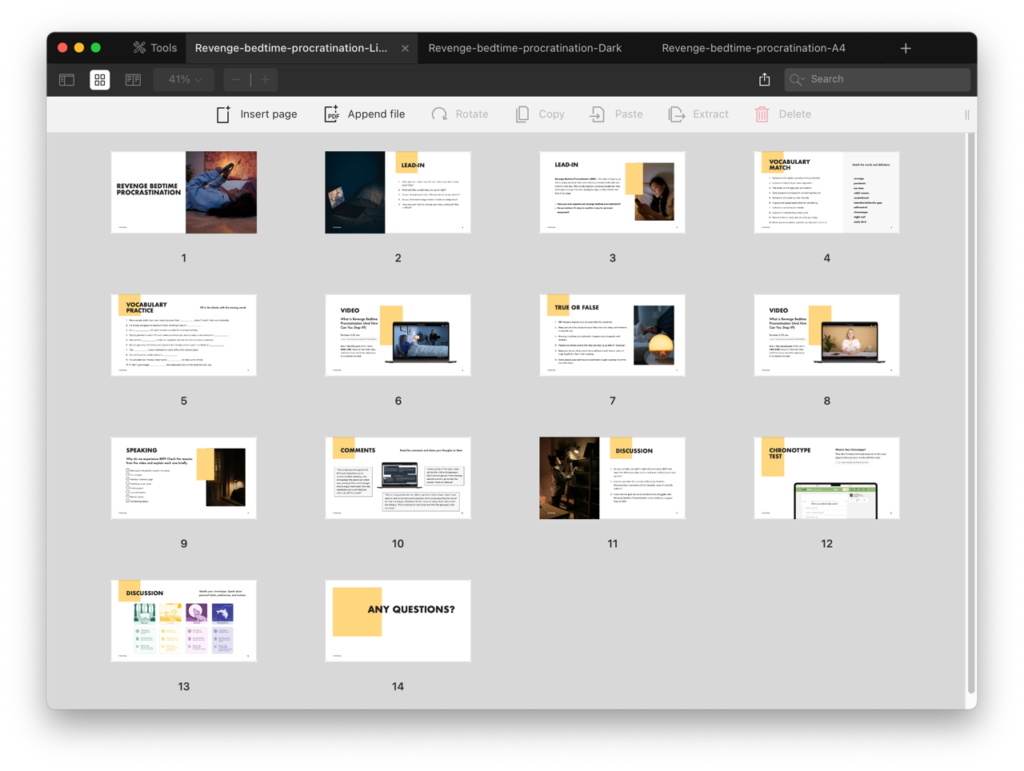
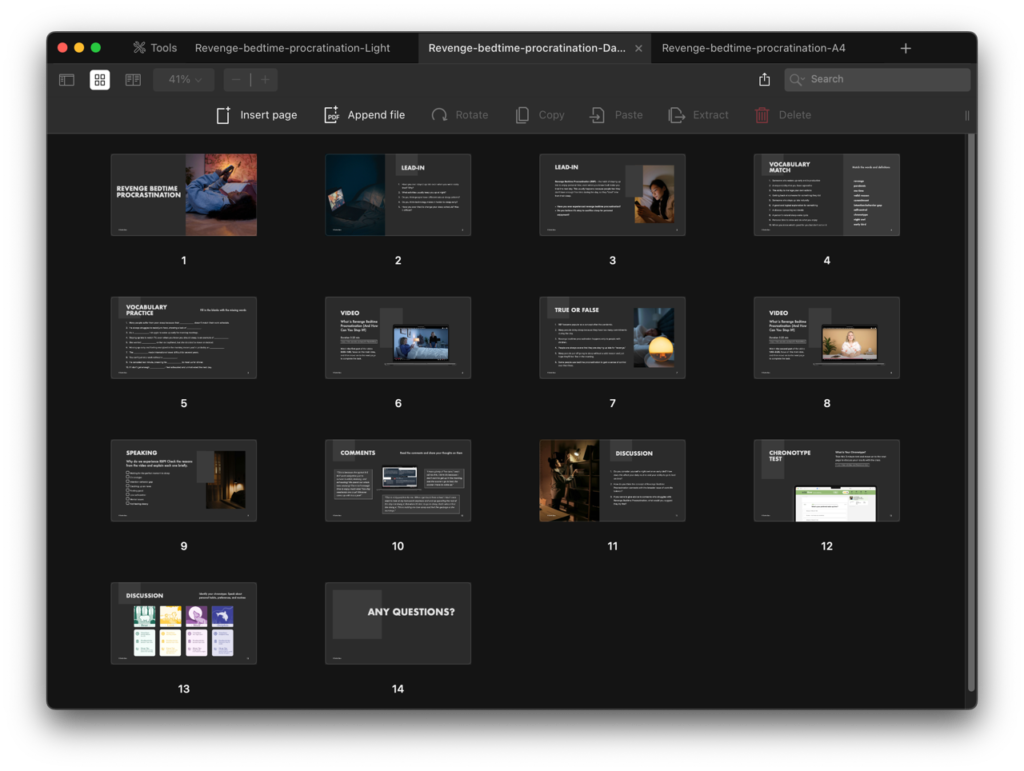
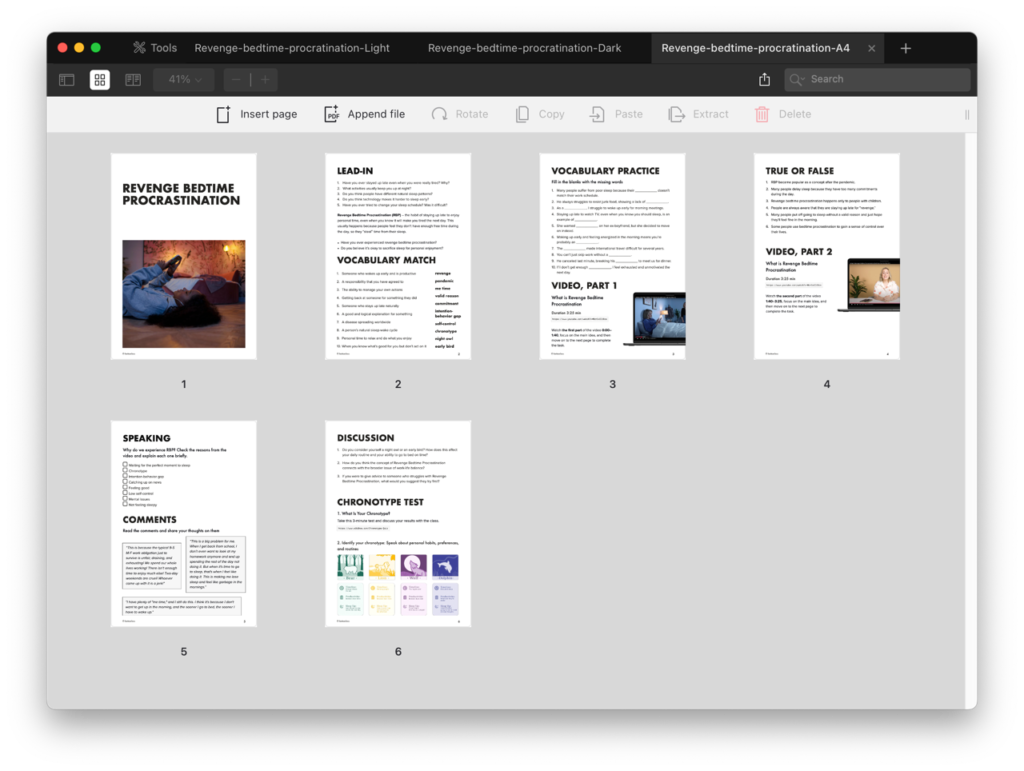
- Lead-in
- Vocabulary match
- Vocabulary Practice
- Video
- True or false
- Video
- Speaking
- Comments
- Discussion
- Chronotype test
- Discussion
Start with the lead-in questions about staying up late. Nearly every student will have a story here, so pairs can chat for two or three minutes before you bring the group together. Then introduce the concept of revenge bedtime procrastination. Read the definition on the slide together and ask if anyone recognizes the habit in themselves. Most B2 students will, and a few usually laugh when they realize there is a name for it. This sets up the vocabulary nicely because students already want words to describe what they do.
The vocabulary matching covers ten terms. Some are straightforward, like “pandemic” and “revenge,” but others need more attention. “Intention-behavior gap” is worth spending an extra minute on because it explains something students feel but rarely have language for. Ask them to give a personal example after matching the definition. The gap-fill practice that follows locks in the words before the video. Check answers quickly and move on.
Split the video into two parts as the slides suggest. Play the first half and have students do the true or false task. A couple of statements are tricky, like whether RBP only affects parents, so let pairs discuss before confirming answers. Then play the second half and move to the speaking task where students identify reasons for RBP from the video. This structure keeps attention high because students have a clear task for each viewing rather than watching the whole thing passively.
The real YouTube comments slide is where discussion takes off. Students read three comments from people describing their own RBP struggles and react. These comments hit close to home for most learners, especially the one about homework and the one about the 9-to-5 grind. Let the conversation flow here and connect it to the broader discussion questions about work-life balance and daily routines. Finish with the chronotype quiz. Students take it on their phones, find out their type, and then discuss results with the class. It is a relaxed ending that ties together everything from the lesson and gives students one more chance to use the target vocabulary naturally.
