Relationship Signals
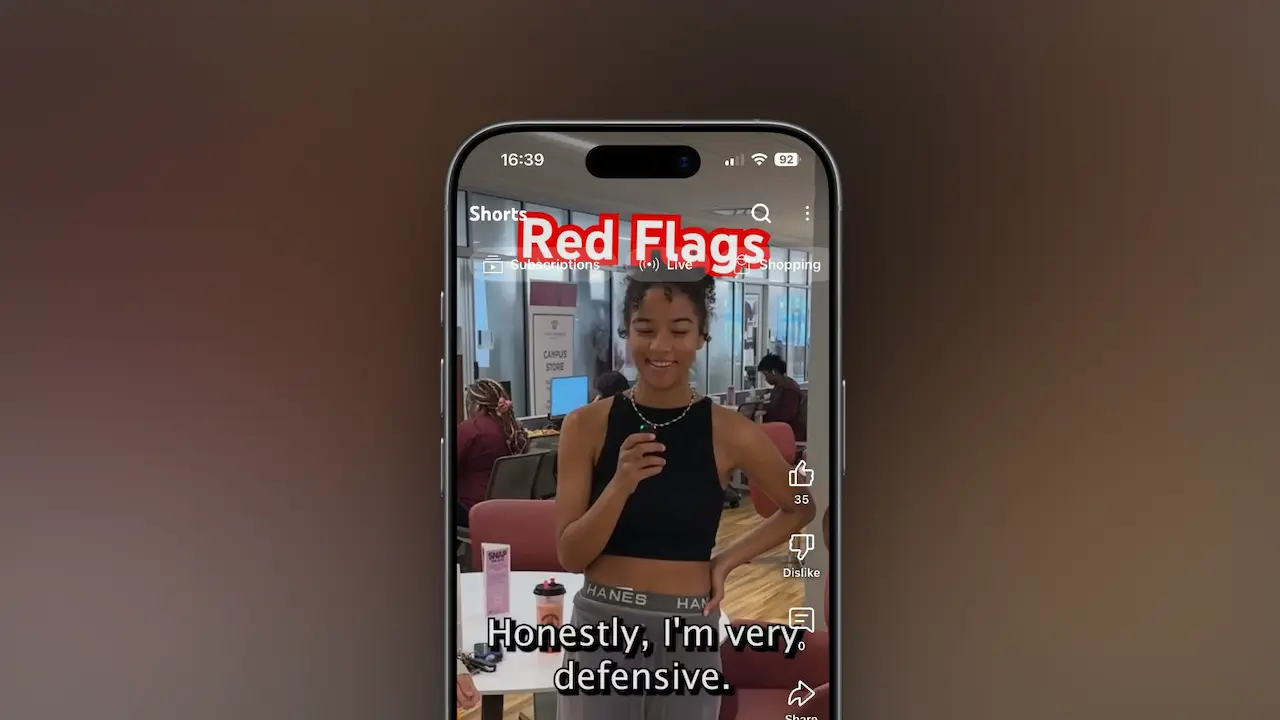
This B1 lesson teaches students how to identify green flags and red flags in relationships and friendships. Students learn vocabulary like stubborn, defensive, clingy, and generous, then watch a short video where people share their own flags. Activities include analyzing situations, discussing personal red and green flags, and debating whether certain behaviors are warning signs.
Lesson overview
- Learn relationship vocabulary including stubborn, defensive, clingy, temper, and open-minded with definitions
- Watch a video where people describe their red and green flags
- Read situations and describe behaviors using target vocabulary like procrastination or understanding
- Discuss whether behaviors like checking locations or remembering details are flags
| Level | Vocabulary | Video Length | Lesson Time |
| B1 / Intermediate | 10 words | 0:59 min | 60 min |
Vocabulary
- Defensive
- Clingy
- Stubborn
- Procrastination
- Direct
- Temper
- Delusional
- Understanding
- Generous
- Open-minded
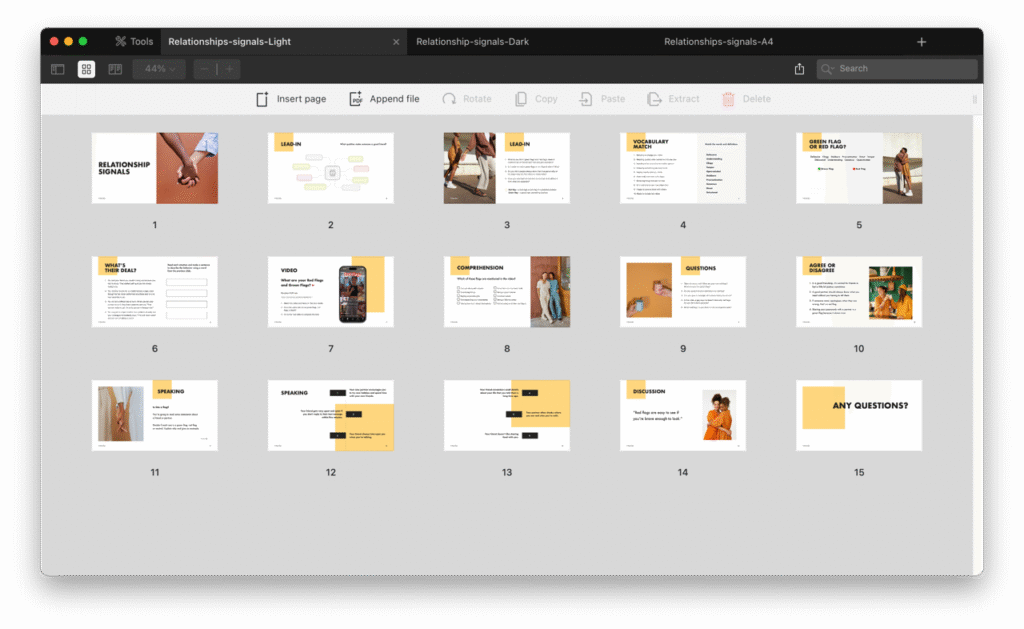
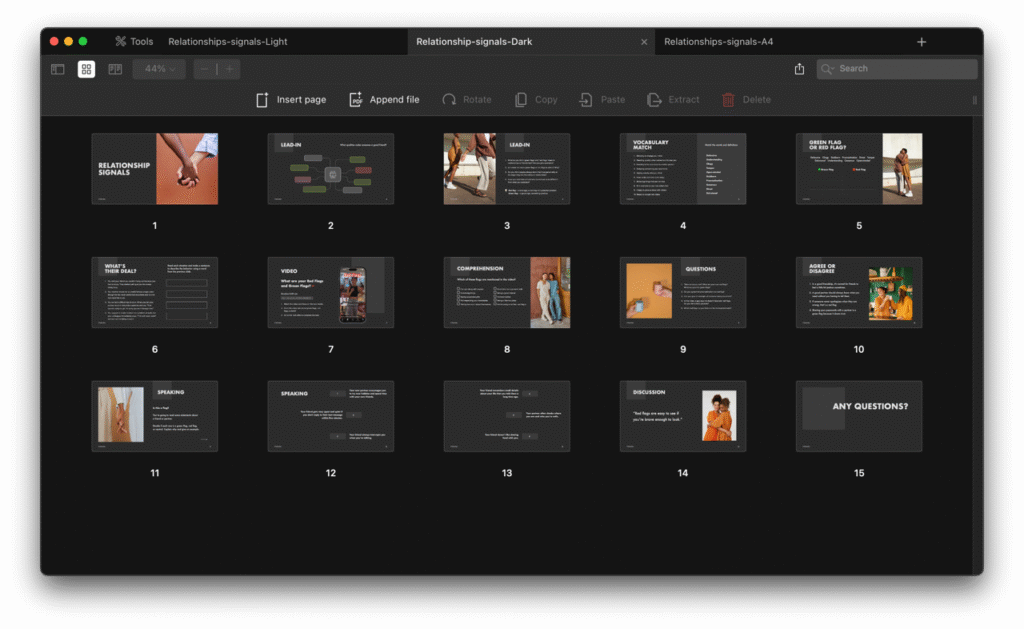
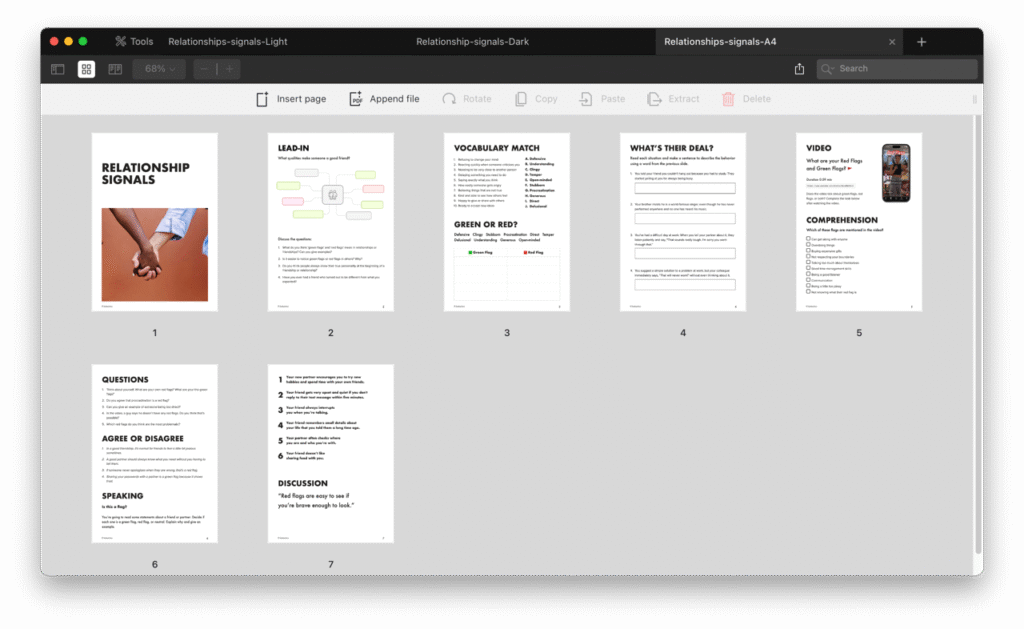
Contents
- Lead-in
- Vocabulary match
- Green flag or red flag?
- What’s their deal?
- Video
- Comprehension
- Questions
- Agree or Disagree
- Speaking
- Discussion
Start with the brainstorming activity about good friend qualities. Write ideas on the board. Then do the lead-in questions. Question 1 introduces red and green flags with the tip box. Students give examples before seeing vocabulary. Move to the matching exercise. Students match ten words to definitions covering positive traits like understanding and generous plus negative ones like stubborn and defensive. Drill pronunciation on “delusional” and “procrastination.”
Do the sorting activity. Students decide if each word is a green or red flag. Most are obvious, but “direct” can be debated. The situations section gives four examples. Students read each and describe the behavior using lesson vocabulary. Do the first one together, then let pairs finish. Play the video showing people sharing their flags. Students tick which ones were mentioned, then answer five questions. Question 4 about having no red flags usually gets strong responses.
The agree or disagree section has four relationship statements. Number 2 about partners knowing what you need without telling them often divides students. The speaking activity gives six scenarios. Students decide if each is green flag, red flag, or neutral, then explain with examples. Scenario 4 about checking locations gets strong reactions. End with the quote about being brave enough to see red flags. Ask what it means and if they agree.