
Quiet Cracking
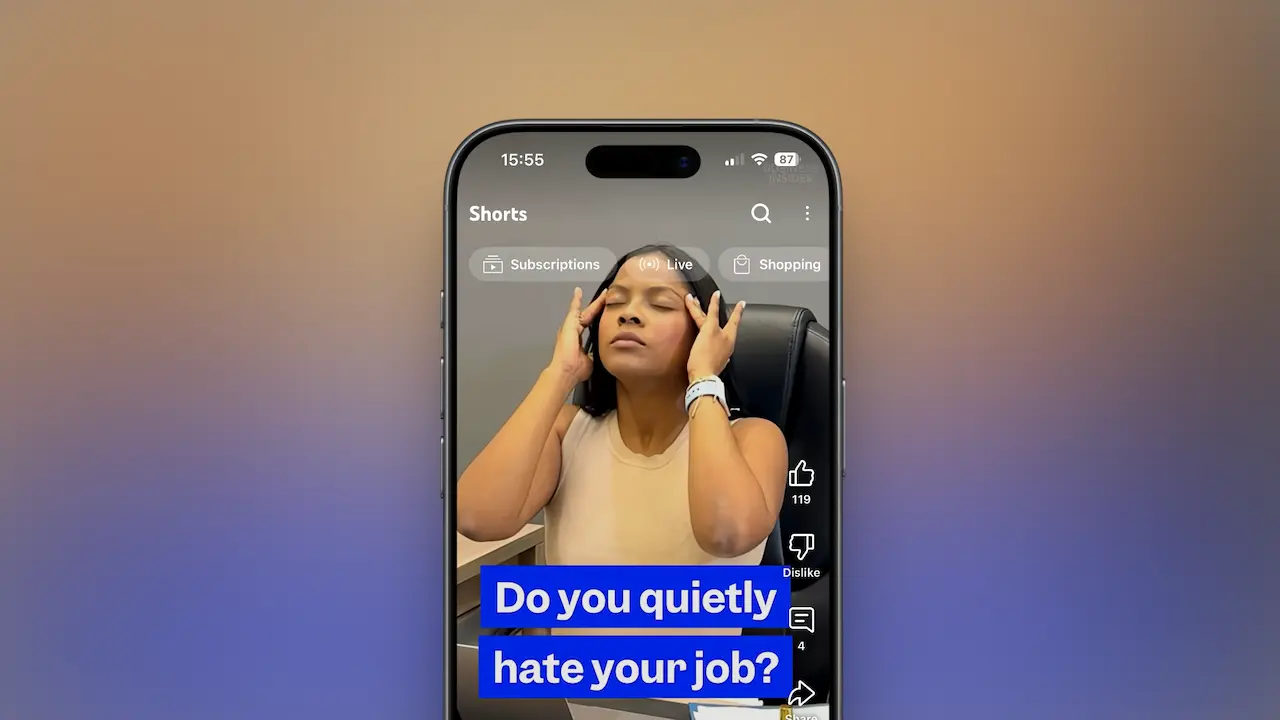
This B2 lesson explores quiet cracking, the silent struggle of staying in a job you hate but can’t leave. Students learn vocabulary like fatigue, hyper-fixating, and rocky job market, then watch a video about workers experiencing this phenomenon. Activities include chart analysis, gap-fill listening, and debating whether work situations show burnout or just bad days.
Lesson overview
- Learn workplace burnout vocabulary including quiet cracking, fatigue, being unheard, and mental end date
- Watch a video explaining why workers stay in jobs they hate despite declining satisfaction
- Analyze a chart showing US employee satisfaction dropping from 28% to 18% over ten years
- Debate whether six workplace situations show quiet cracking or just a difficult day
| Level | Vocabulary | Video Length | Lesson Time |
| B2 / Upper-Intermediate | 8 words | 1:24 min | 60 min |


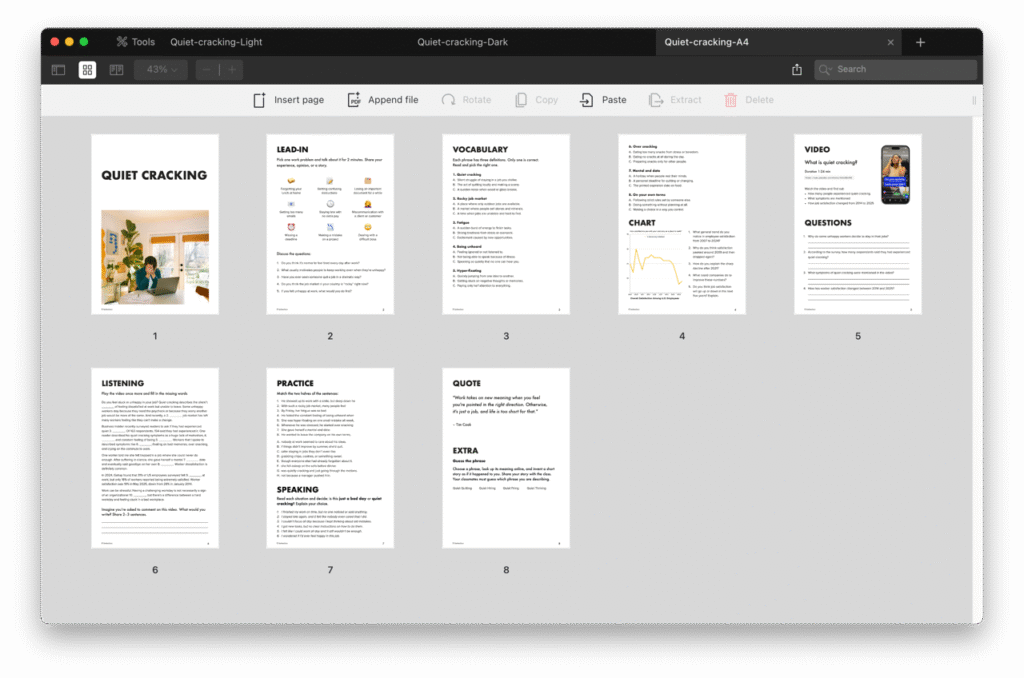
Vocabulary
- Quiet cracking
- Rocky job market
- Fatigue
- Being unheard
- Hyper-fixating
- Over snacking
- Mental end date
- On your own terms
Contents
- Lead-in
- Vocabulary
- Chart
- Video
- Questions
- Listening
- Your comment
- Practice
- Speaking
- Quote
- Extra
Start with the work problem grid. Students pick one scenario and talk for two minutes. This gets them sharing real experiences before introducing quiet cracking. Then do the lead-in questions. Question 4 introduces “rocky job market” which appears in the vocabulary. Move to the vocabulary exercises. Each phrase has three definitions and students pick the correct one. Check answers and clarify terms like “hyper-fixating” and “on your own terms.”
The chart shows satisfaction trends from 2007 to 2024. Students answer five questions about patterns. The sharp decline after 2021 usually sparks discussion about pandemic effects and changing work culture. Play the video explaining quiet cracking. Students note how many people experienced it, what symptoms appeared, and satisfaction changes. After watching, they answer four comprehension questions. Then play it again for the gap-fill listening with ten blanks. This reinforces vocabulary in context.
The comment writing task has students draft a short reaction to the video as if posting online. This bridges comprehension and opinion. The matching practice connects sentence halves using target vocabulary. The speaking activity gives six workplace situations. Students decide if each shows quiet cracking or just a bad day, then explain their reasoning. Situation 3 about thinking about old mistakes often gets identified as hyper-fixating. End with the Tim Cook quote about work needing meaning. The extra task has students research related phrases like quiet quitting or quiet firing, invent stories, and have classmates guess which phrase they’re describing.
