
Provocative Halloween Costumes

This C1 lesson uses the Playboy bunny costume as a lens to talk about Halloween, objectification, and feminist debate. Students read a 1000-word article tracing how a 1960s work uniform became one of the most popular Halloween costumes ever, and learn vocabulary like “exposé,” “contentious subject,” and “cultural zeitgeist.” It’s a lesson that pushes students to form and defend complex opinions on a topic most people have strong feelings about.
Lesson overview
- Learn twelve advanced vocabulary words including “replicated,” “empowering,” “embellished,” and “outlandish”
- Read an article about the Playboy bunny suit’s history from uniform to Halloween costume to feminist symbol
- Discuss where the line falls between empowerment and objectification in costume choices
- Match vocabulary words to real-world concepts and find costumes online for classmates
| Level | Vocabulary | Reading Time | Lesson Time |
| C1 / Advanced | 12 words | 1000 words / 5 min | 60 min |
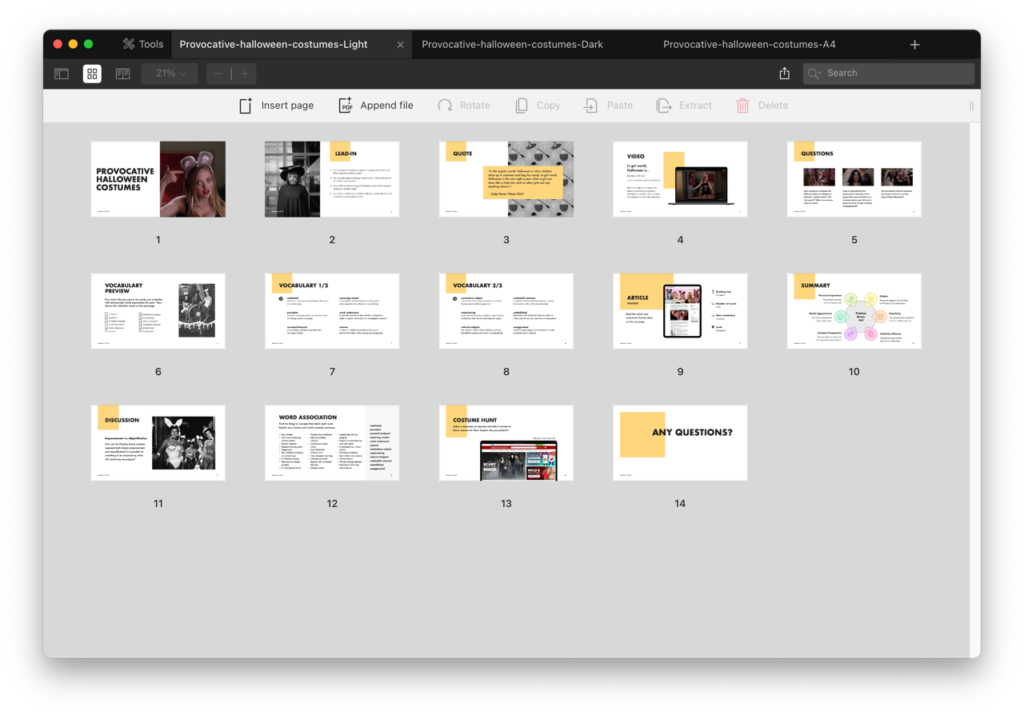
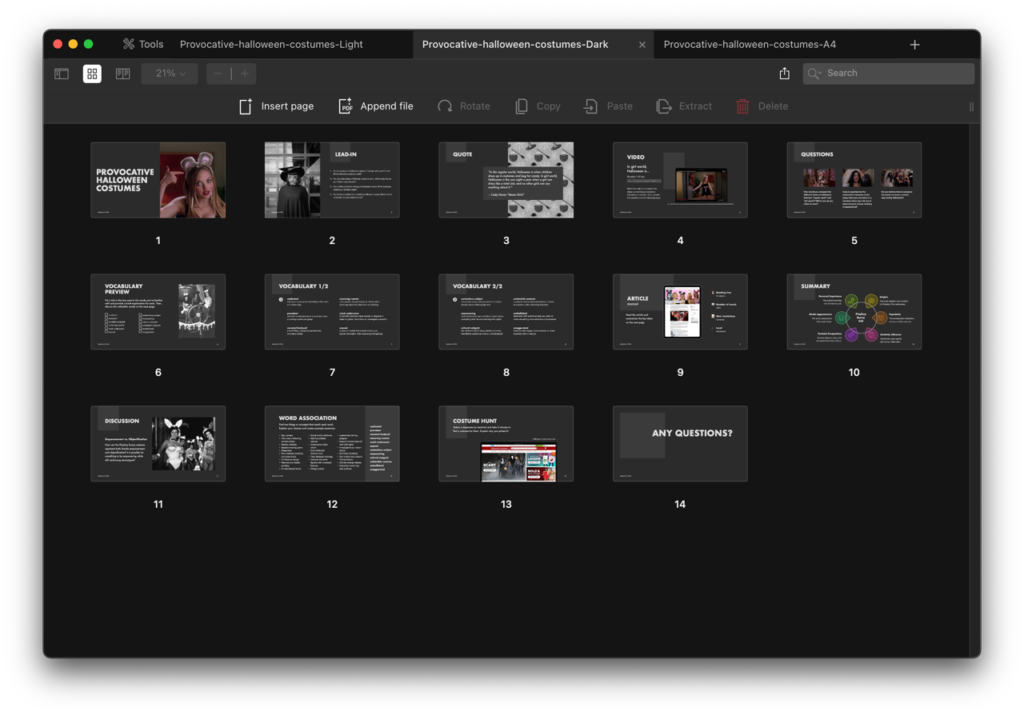
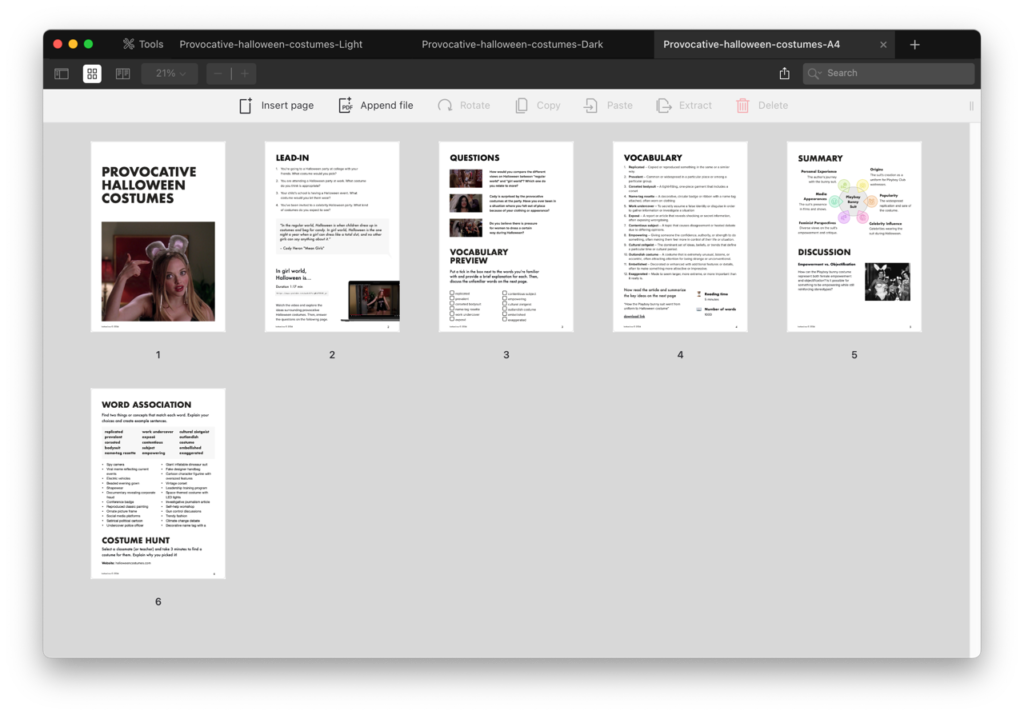
Vocabulary
- replicated
- prevalent
- corseted bodysuit
- name-tag rosette
- work undercover
- exposé
- contentious subject
- empowering
- cultural zietgeist
- outlandish costume
- embellished
- exaggerated
Contents
- Lead-in
- Quote
- Short video
- Questions
- Vocabulary preview
- Vocabulary
- Article
- Summary
- Discussion
- Word association
- Costume hunt
The lead-in questions immediately set different social contexts for costume choices. A college party, a work event, a children’s school event, and a celebrity party each have different rules about what’s acceptable. This gets students thinking about audience and appropriateness before the heavier topics arrive. After the discussion, show the Mean Girls quote. Read it together and ask for reactions. Then play the one-minute video clip of the scene. The five comprehension questions that follow push students into personal territory: Have you ever felt out of place because of what you were wearing? Do women face pressure to dress a certain way on Halloween? Let the conversation flow here because it builds the foundation for the article.
Cover the twelve vocabulary words across two slides. The first six are more concrete: “replicated,” “prevalent,” “corseted bodysuit,” “name-tag rosette,” “work undercover,” and “exposé.” The second six are more abstract: “contentious subject,” “empowering,” “cultural zeitgeist,” “outlandish costume,” “embellished,” and “exaggerated.” “Cultural zeitgeist” is the toughest one. Try something like “The zeitgeist is whatever everyone is thinking about and talking about during a specific time. Right now, AI is part of the cultural zeitgeist.” For “contentious subject,” use “A contentious subject is something people argue about, like politics or gun control.” Make sure students can pronounce “zeitgeist” and “exposé” before moving on.
Give students about five to six minutes to read the article. It covers the bunny suit’s origins, Gloria Steinem’s undercover investigation, the rise of sexy Halloween costumes in American culture, and the author’s personal experience making her own rhinestone-covered bunny suit. The summary activity uses a visual web with six connected topics: origins, popularity, celebrity influence, media appearances, feminist perspectives, and personal experience. Students retell the key ideas using this structure. The empowerment versus objectification discussion question is the centerpiece of the lesson. Can something be empowering and objectifying at the same time? This is a genuinely hard question that C1 students should be able to engage with.
The word association exercise gives students twenty-four real-world items and concepts to match with the twelve vocabulary words, two per word. For example, “exposé” matches with “documentary revealing corporate fraud” and “investigative journalism article.” Students explain their choices and write example sentences. This is a deeper vocabulary activity than simple definitions because students need to understand how each word works in different contexts. End with the costume hunt. Students pick a classmate or teacher, browse a Halloween costume website for three minutes, and find a costume for that person. They present their choice and explain why they picked it. It’s a light, funny way to close out a lesson that covers some serious ground.
