
Polyworking

This B2 lesson covers polyworking, the trend of working multiple jobs at once. Students read an article about why people take on extra work and learn business vocabulary like “hedge against,” “side gig,” and “plateau.” The lesson includes chart analysis, discussion about work-life balance, and practice with the prefix “poly-.”
Lesson overview
- Practice business vocabulary related to jobs, money, and financial security
- Read about why millennials and younger workers have multiple income sources
- Discuss work culture, financial stress, and the future of traditional employment
- Learn how the prefix “poly-” works in different words
| Level | Vocabulary | Reading Time | Lesson Time |
| B2 / Upper-Intermediate | 10 words | 660 words / 4 min | 60 min |
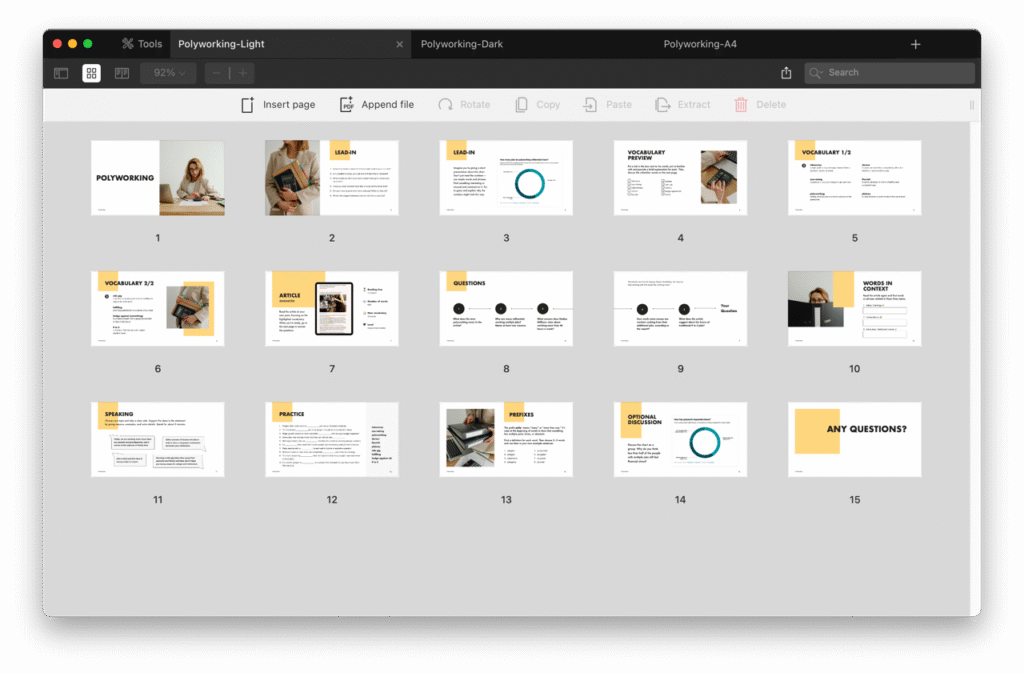
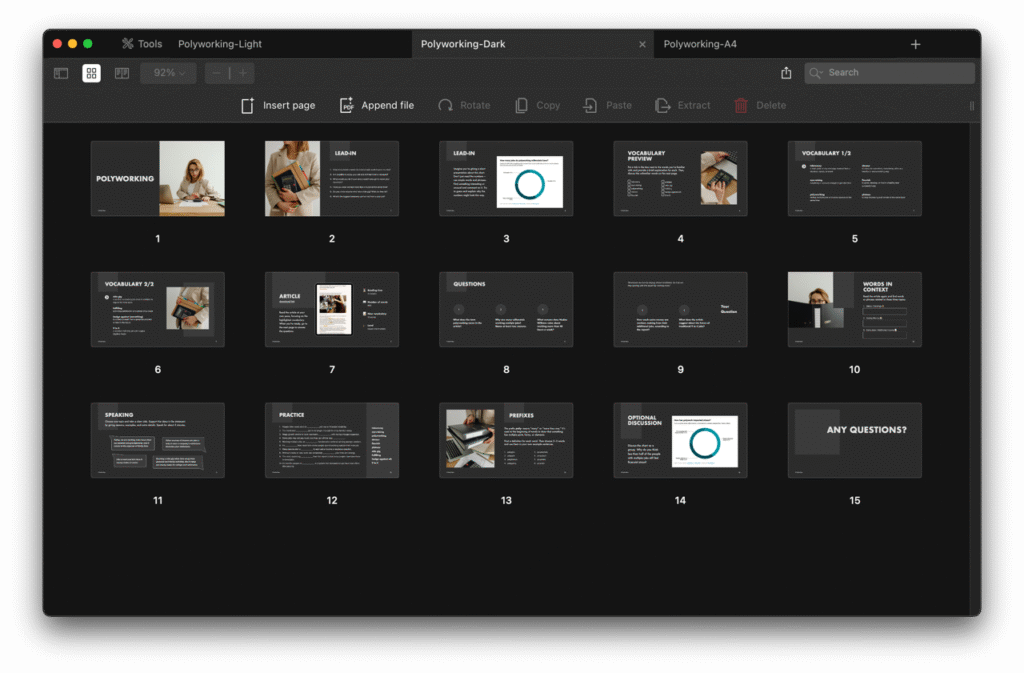
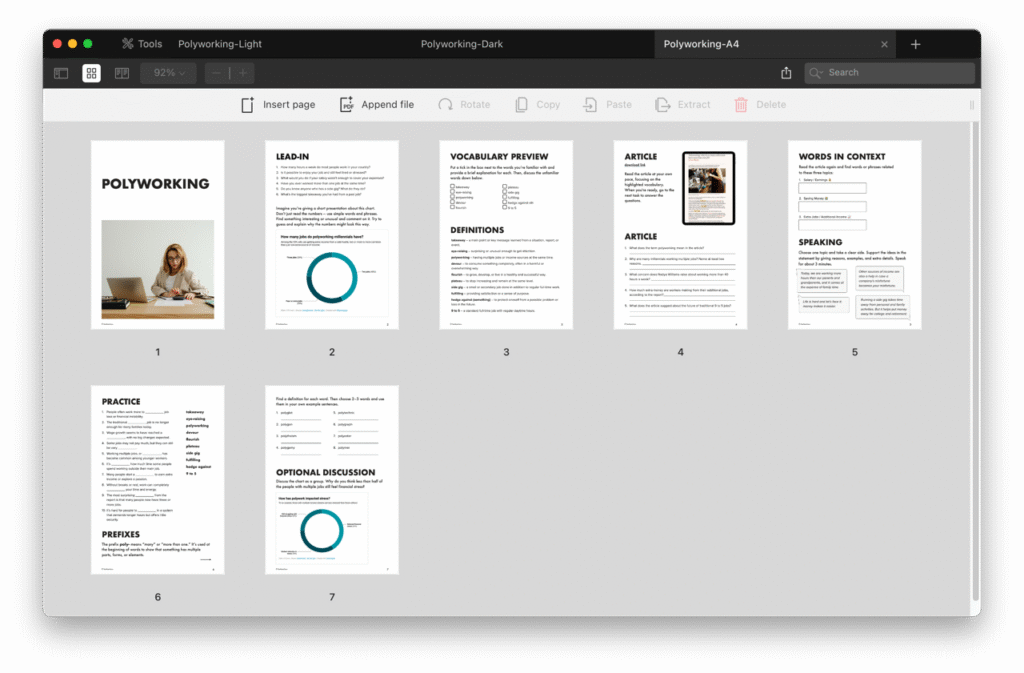
Vocabulary
- takeaway
- eye-raising
- polyworking
- devour
- flourish
- plateau
- side gig
- fulfilling
- hedge against sth
- 9 to 5
Contents
- Lead-in
- Chart
- Vocabulary preview
- Definitions
- Article
- Comprehension
- Words in context
- Speaking
- Practice
- Prefixes
- Optional discussion
Start with the lead-in questions about work hours and side jobs. Question six uses “takeaway,” which is one of the target words, so students get early exposure to it. Then move to the chart showing reasons people work multiple jobs. Students describe what they see and try to explain the patterns. This works on both speaking skills and chart analysis.
The vocabulary preview lets students self-assess which words they know. They tick the ones they recognize and explain them before you go through the full list. Words like “flourish” and “devour” have broader uses beyond just work contexts, so these are useful additions to their vocabulary.
The article is 660 words, which takes most B2 students about four minutes to read. They can read silently or you can have stronger students read sections aloud. The comprehension questions check understanding without being too easy. Question five about the future of 9 to 5 jobs requires inference, not just finding a sentence in the text.
The words in context activity sends students back to the article to find related terms in three categories. This helps them see how vocabulary connects to themes. The speaking task gives four different statements about work and money. Students pick one and speak for three minutes defending that position. This works well because they can choose a topic they actually have opinions about. The prefix activity at the end teaches “poly-” through examples like polyglot and polygon. Students define these words and make their own sentences with two or three of them.
