
Packing for a Trip

This A2 lesson teaches practical vocabulary and tips for packing efficiently. Students learn words like “packing cubes,” “roll,” and “save space,” then read about how to organize a suitcase. The activities include error correction, naming exercises, and creating packing lists for different trip types like camping or city tours.
Lesson overview
- Learn ten essential travel items from swimsuits to phone chargers
- Practice verbs related to packing like roll, fold, and carry
- Read a simple guide on organizing luggage for different destinations
- Develop speaking skills by explaining packing choices for specific trips
| Level | Vocabulary | Lesson Time |
| A2 / Pre-Intermediate | 17 words | 60 min |


Vocabulary
- swimsuit
- sunglasses
- sunscreen
- jacket
- hat
- packing cubes
- phone charger
- toothbrush
- medicine
- snacks
- pack
- bring
- make a list
- roll
- fold
- save space
- carry
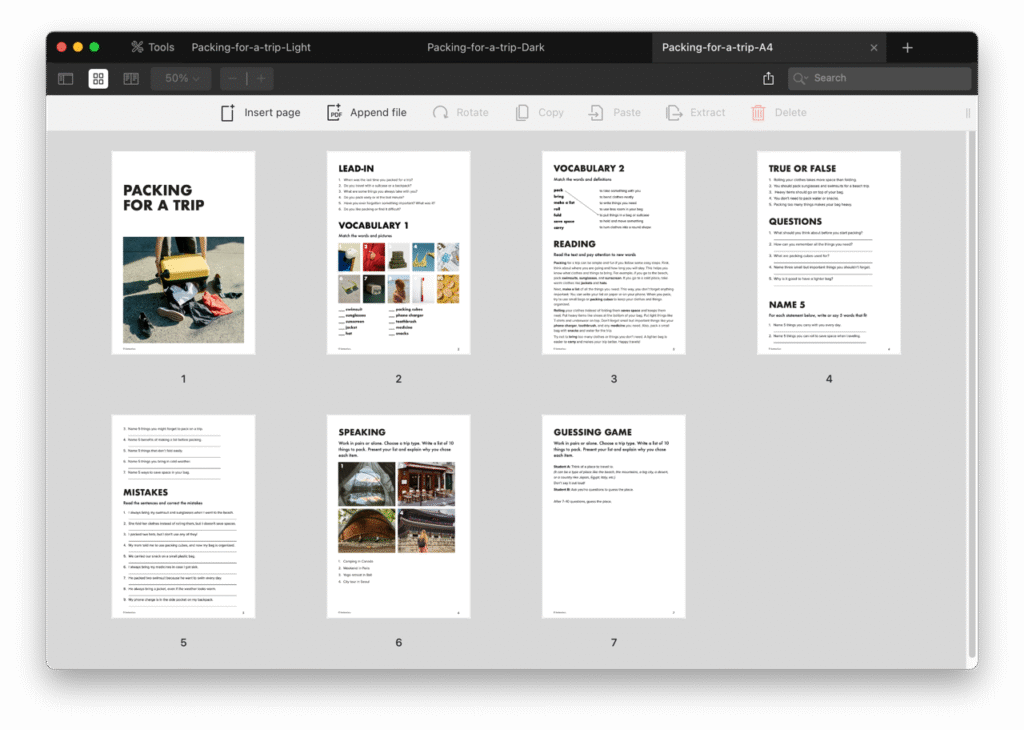
Contents
- Lead-in
- Vocabulary 1
- Vocabulary 2
- Reading
- True or false
- Questions
- Name 5
- Mistakes
- Speaking
- Guessing game
Start with the lead-in questions about packing habits. Question four about packing early versus last minute usually divides the class into two camps, which makes for good discussion. Question five about forgetting something important gets students sharing stories, which activates vocabulary they already know about travel items.
The first vocabulary section shows ten common travel items through pictures. Students name things like sunscreen, jacket, and toothbrush. After checking answers, ask which items they always pack to personalize the vocabulary. The second vocabulary set matches verbs to definitions. “Roll” versus “fold” is important because the reading explains that rolling saves space. “Save space” and “carry” connect to the practical advice in the text about keeping bags light.
The reading is about 180 words and gives step-by-step packing advice. It starts with thinking about destination and length of stay, then making a list, using packing cubes, and rolling clothes. The examples mention beach trips needing swimsuits and cold places needing jackets, which connects back to the vocabulary. The true or false section checks basic comprehension. Statement one is false because rolling saves space, not takes more. Statement three is false because heavy items go at the bottom.
The five questions check understanding more deeply. Question three about packing cubes asks students to explain their purpose, not just recognize the word. Question five about lighter bags being better requires them to infer benefits like easier carrying and more comfortable travel.
The “Name 5” activity pushes students to generate vocabulary rather than just recognize it. Some prompts are easier, like naming five things you carry daily. Others require more thought, like five things that don’t fold easily. This works well as pair work where students help each other brainstorm.
The error correction has nine sentences with grammar and vocabulary mistakes. Sentence two has “fold” used correctly but “spaces” should be singular. Sentence six uses “got” but needs “get” to match the present tense pattern. Sentence nine has “charge” instead of “charger” and wrong preposition use. These mistakes reflect common A2 errors.
The speaking task gives four trip types with pictures: camping in Canada, weekend in Paris, yoga retreat in Bali, and city tour in Seoul. Students pick one, list ten items to pack, and explain their choices. This recycles all the lesson vocabulary in a personalized context. The guessing game has one student think of a destination while the other asks yes/no questions to figure it out. This practices question formation and vocabulary in a fun, interactive way.
