
On the Road

This intermediate B1 lesson teaches essential driving vocabulary and road safety concepts through engaging stories and activities. Students learn car parts, driving phrases, and road etiquette while practicing reading fluency and conversational skills. The lesson combines practical vocabulary with fun discussions about real driving situations that intermediate learners can relate to.
Lesson overview
- Learn car vocabulary including exterior and interior parts
- Practice common driving phrases such as fender bender, pull over, and road rage
- Develop reading fluency by practicing short stories about driving situations
- Discuss road safety rules and debate statements about driving behavior
| Level | Vocabulary | Lesson Time |
| B1 / Intermediate | 9 phrases and 16 words | 60 min |
Vocabulary
- Fender bender
- Pull over
- Buckle up
- Stay in your lane
- Rolling stop
- Hit the brakes
- Tailgate
- Road rage
- Zoom ahead
- Honk
- Headlight
- Rear bumper
- Hood
- Wheel
- Handle
- Windshield
- Front bumper
- Mirror
- Tire
- Screen
- Rearview mirror
- Steering wheel
- Seat
- Armrest
- Air vent
- Horn
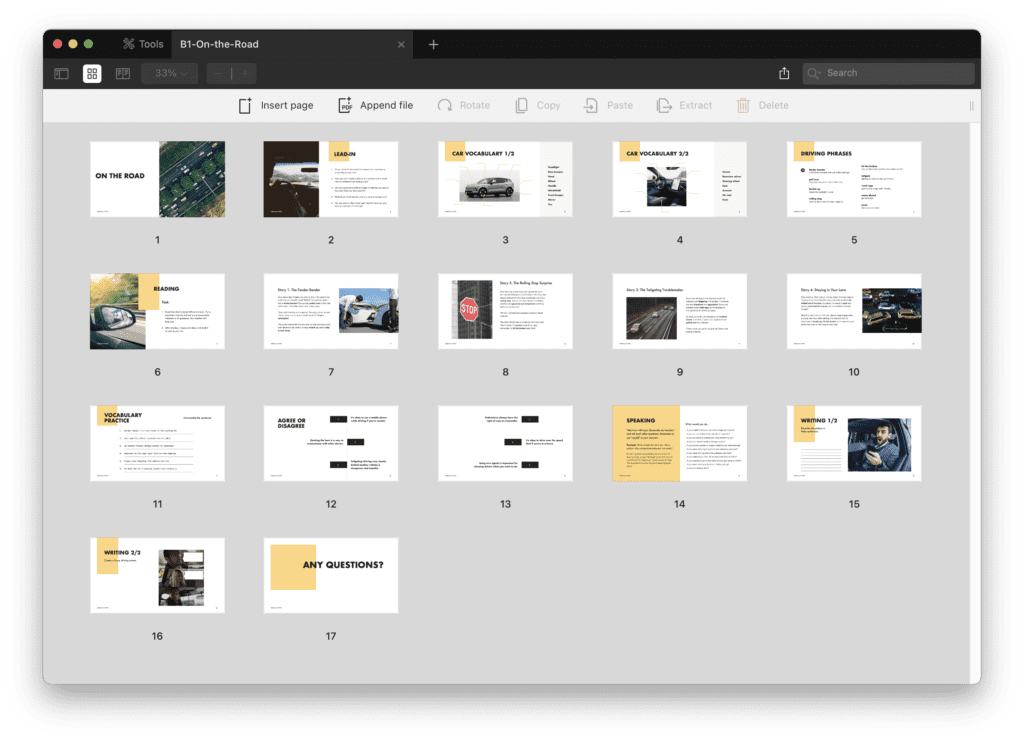
Contents
- Lead-in
- Car vocabulary 1
- Car vocabulary 2
- Driving phrases
- Vocabulary
- Reading
- Vocabulary practice
- Agree / disagree
- Speaking
- Writing
- Create a meme
Kick things off with the lead-in questions to get people chatting about driving. Ask whether they think everyone should learn to drive and get them to share any road rage stories. This taps into what they already know and loosens them up to talk about the topic.
Move into vocab using the car diagrams. Go through the exterior parts first, then the interior. Have students label things on the images or play a pointing game where you call out a word and they touch the right part. Way more interactive and actually sticks with intermediate students.
Hit the driving phrases section next. Stuff like buckle up and hit the brakes is essential for real conversations about driving. Build example sentences together and have students physically act out the phrases. The reading section is the main event. Students read four short stories about driving disasters involving fender benders, rolling stops, tailgating, and staying in lanes. Get them practicing reading aloud for pronunciation and fluency. After that, each student retells one story in their own words to build speaking confidence.
Use the vocab practice page with the unscrambling activity to nail down the new phrases. Students work solo or in pairs to put together correct sentences. The agree or disagree section is great for debate practice where they have to back up their opinions on driving behaviors like phone use and honking. Gets them thinking critically about road safety.
End with the conditional speaking activity about driving emergencies. Students practice second conditional by answering stuff like “What would you do if you ran out of fuel?” This puts the vocab to use naturally while working on grammar accuracy. The writing exercises let them get creative describing a distracted driver photo and making a funny driving meme with the template provided.
