Old Stuff, New Life

Lesson overview
This B1 ESL lesson plan explores Sweden’s innovative second hand shopping mall where nothing is new and nothing goes to landfill. Students learn practical vocabulary for discussing recycling, repair, and sustainable living while working through engaging activities about reuse and thrift shopping. The lesson includes authentic video content, discussion questions about consumer habits, and creative upcycling challenges that make environmental topics accessible and personally relevant for intermediate learners.
| Level | Vocabulary | Video Length | Lesson Time |
| B1 / Intermediate | 12 words | 1:09 min | 60 min |

Vocabulary
- second hand
- reuse
- recycle
- upcycle
- sort
- refurbish
- repair
- transform
- outdated
- landfill
- workshop
- sustainable living
Contents
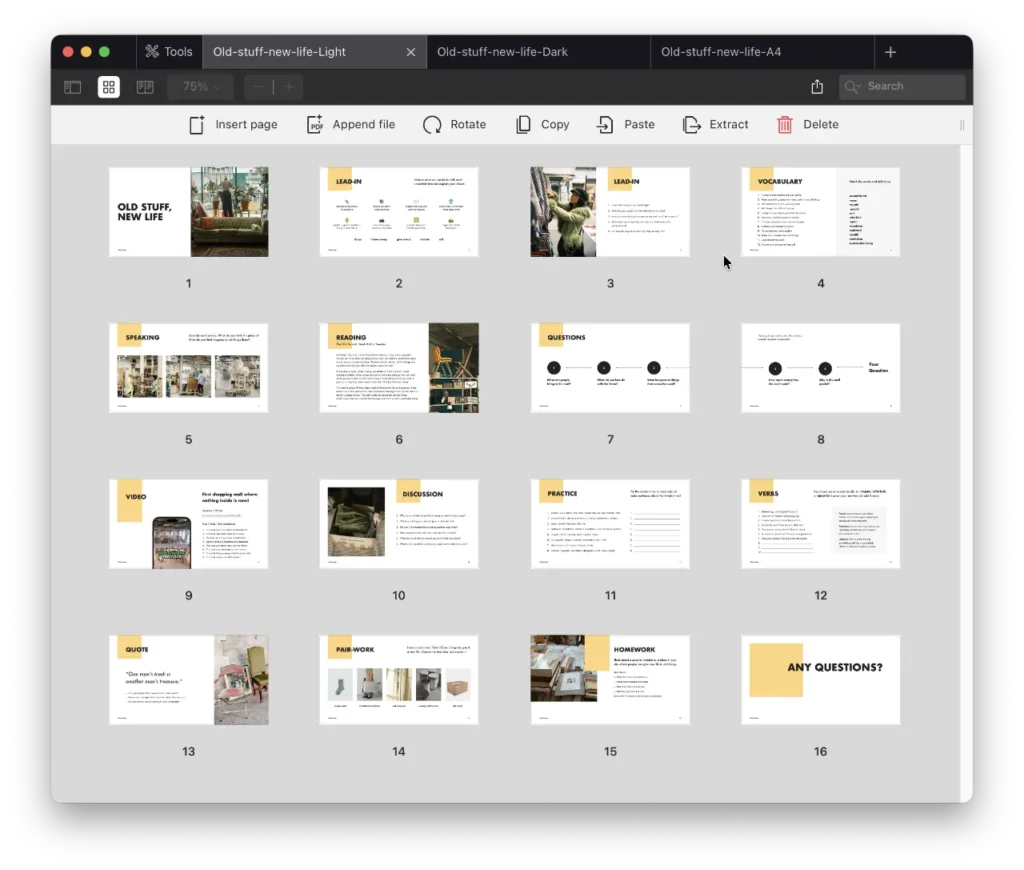
- Lead-in
- Vocabulary
- Speaking
- Reading
- Questions
- Video
- Discussion
- Practice
- Verbs
- Quote
- Pair-work
- Homework
Teaching guide
Lead-in
This opening section uses a practical decision-making activity to activate students’ prior knowledge about recycling and reuse habits. Students work through eight scenarios involving unwanted items like old shoes, books, and damaged bags, choosing whether to keep, throw away, give away, donate, or sell each one. This B1-level ESL warm-up naturally introduces vocabulary related to second hand shopping and sustainable living while encouraging students to reflect on their personal consumption habits. The activity works well as pair work or small group discussion, giving students opportunities to explain and justify their choices using present simple and modal verbs. Following this, five discussion questions deepen the conversation around recycling practices, second hand purchases, and environmental awareness. These questions help teachers assess students’ familiarity with thrift shopping concepts and recycling systems in their local context, making the lesson immediately relevant to their lives.
Vocabulary
The vocabulary section introduces twelve essential terms for discussing recycling, reuse, and sustainable shopping at the B1 level. Students encounter words like second hand, upcycle, refurbish, repair, landfill, and sustainable living through a matching activity that pairs each term with a clear, accessible definition. This ESL lesson plan emphasizes practical vocabulary that students can immediately apply when discussing thrift shopping, repair services, and recycling initiatives. The matching format allows students to work independently or in pairs, comparing answers and discussing any unfamiliar terms before checking with the teacher. These words form the foundation for all subsequent activities, so teachers should ensure students understand the distinctions between similar concepts like repair, refurbish, and upcycle. Consider drilling pronunciation, particularly with longer words like sustainable and refurbish, and eliciting example sentences to confirm comprehension before moving forward.
Speaking, Reading, Questions
This section bridges visual literacy with reading comprehension through a three-stage process. Students first examine three photographs of the Swedish second hand mall, describing what they see and predicting the mall’s purpose. This pre-reading discussion activates schema and introduces the lesson’s central concept without overwhelming students with new information. The reading text then explains how Sweden’s first second hand shopping mall operates, detailing how workers sort, repair, refurbish, and upcycle donated items while sending nothing to landfill. The language remains accessible for B1 learners while incorporating target vocabulary naturally throughout. Five comprehension questions check understanding of key details about what items the mall accepts, how workers process donations, and why this recycling initiative matters both economically and educationally. Teachers can use these questions for individual work, pair checking, or whole-class discussion, and the final question invites students to create their own question about the text, promoting critical engagement with the material.
Video, True-False-Not given, Discussion
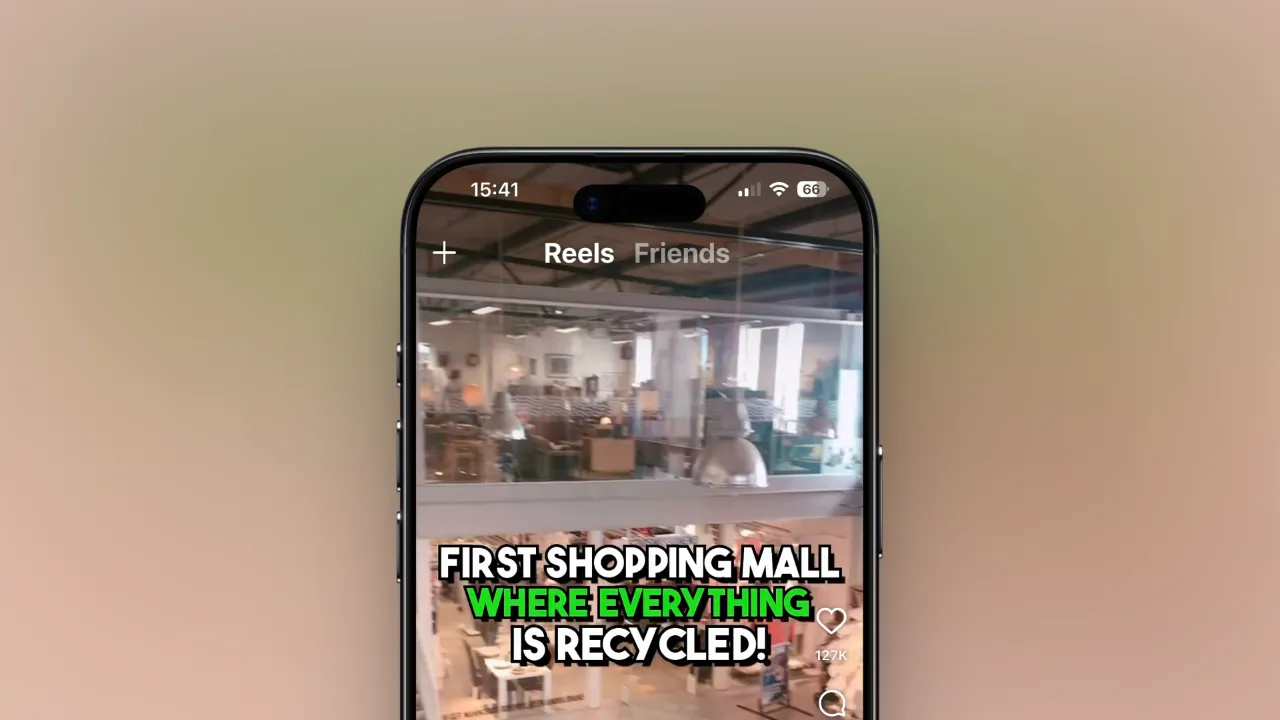
Students watch a one-minute Instagram video showing the Swedish second hand mall in action, providing authentic visual context for the reading material. The True/False/Not mentioned activity requires students to distinguish between explicitly stated information, false claims, and details the video doesn’t address. This ESL listening comprehension task develops critical thinking skills as students must justify their answers by referencing specific moments from the video. Teachers may need to play the video twice, once for general understanding and again for detailed comprehension. The discussion section then opens up with six thought-provoking questions about consumer culture, environmental impact, and attitudes toward second hand items versus new purchases. These questions work well as small group discussions where B1 students can practice expressing opinions, agreeing and disagreeing, and supporting their views with reasons and examples. The conversation naturally recycles vocabulary from earlier sections while encouraging students to connect the Swedish mall concept to their own shopping habits and local recycling options.
Practice, Verbs
The practice section consolidates learning through sentence unscrambling and focused work on action verbs central to recycling and reuse. Students rearrange jumbled words to create grammatically correct sentences about the mall, reinforcing both vocabulary and sentence structure. This mechanical practice helps B1 learners internalize collocations like “sustainable living promotes” and “workers transform outdated furniture.” The verbs section then addresses a common confusion point by explaining the differences between repair, refurbish, and upcycle through clear definitions and twenty real-world scenarios. Students read short situations like “Broken leg on the table? I fixed it” and categorize each as repair, refurbish, or upcycle. This activity deepens understanding of these similar but distinct concepts, which are essential for discussing second hand goods and recycling processes accurately. Teachers should circulate during this activity, checking that students understand why each scenario fits its category and encouraging them to create three additional examples, which personalizes the learning and confirms mastery.
Quote, Pair-work
The quote “One man’s trash is another man’s treasure” provides a cultural touchpoint for discussing second hand shopping and reuse from a philosophical angle. Students explain the saying in their own words, share personal examples of when this proved true in their lives, and consider whether similar expressions exist in their native languages. This activity validates the concept of thrift shopping and reusing items while practicing paraphrasing and storytelling skills appropriate for B1 learners. The pair-work activity then challenges students to think creatively about upcycling by examining five items: a single sock, scratched suitcase, old curtains, empty coffee tins, and an old crate. Working together, students brainstorm two or three ways to give each item new life, then select their best idea and explain it to the class. This collaborative task encourages creative problem-solving while recycling vocabulary related to repair, transform, and reuse. Teachers can extend this by having pairs vote on the most practical or most creative upcycling idea, creating friendly competition that maintains engagement.
Homework
The homework assignment asks students to research and present information about a local or online platform where people can buy second hand items or give old things new life. Students prepare a two-minute talk covering what the place or website is, what items people find there, why it’s useful or popular, and whether they personally use it. This speaking task requires students to apply lesson vocabulary about recycling, thrift shopping, and reuse in a personalized context while developing presentation skills. The assignment connects classroom learning to real-world resources in students’ communities, making sustainable living practices feel accessible and relevant. Teachers can use these presentations in the following lesson as speaking practice, encouraging classmates to ask follow-up questions and share their own experiences with the platforms mentioned. This homework naturally reviews all key vocabulary while building students’ confidence discussing environmental topics and second hand shopping in English.